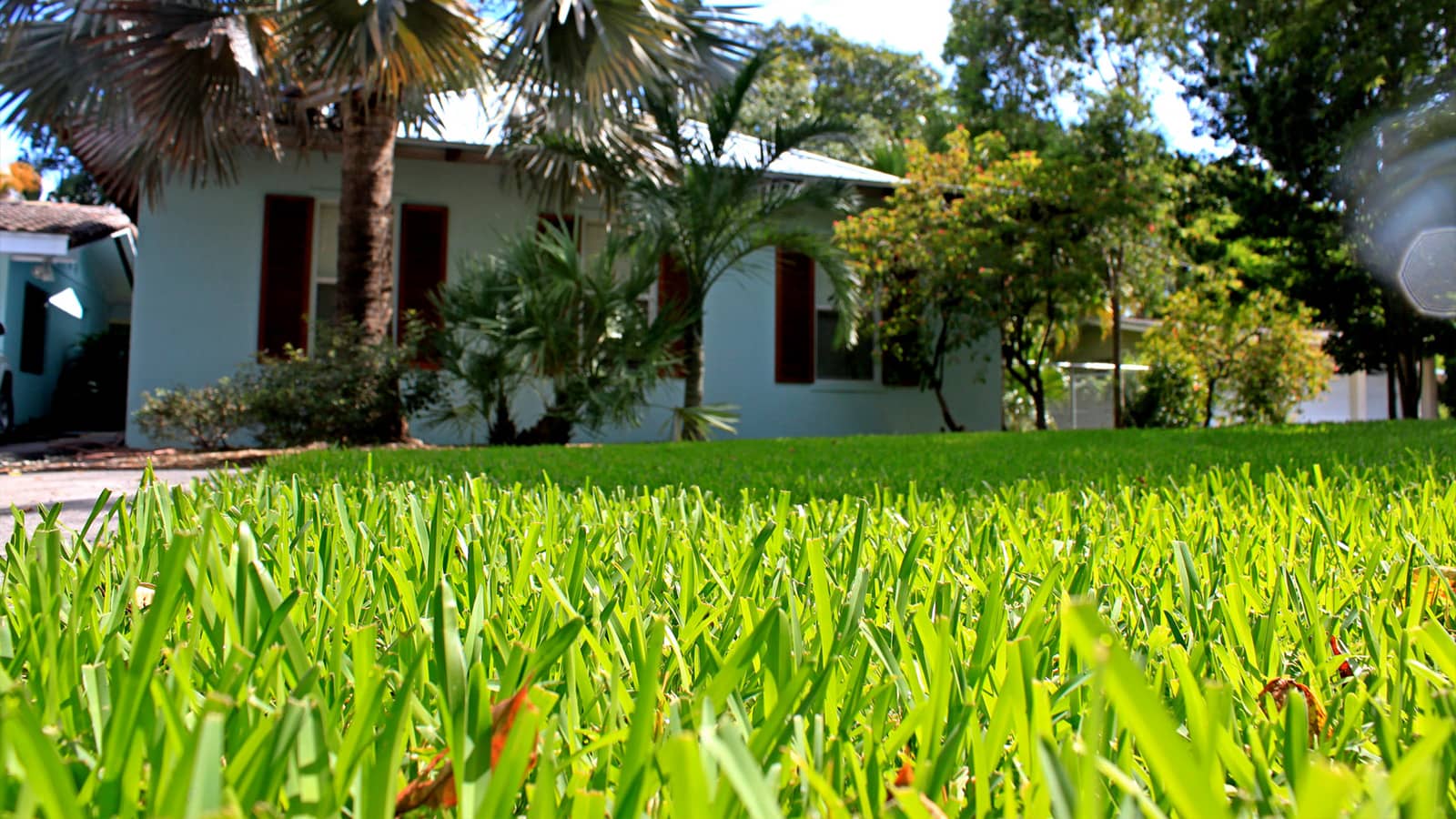
Florida residents know that when it comes to choosing a grass for their yards, St. Augustine grasses are a top contender. St. Augustines are popular for their looks, ability to hold up in Florida’s intense climate and ease of maintenance among other qualities.
The state of Florida encounters high temperatures, extreme humidity, periods of dryness, a lot of rain and even hurricanes. A living product will need to be able to withstand some of these environmental challenges—and certain types of St. Augustine are well suited for this.
There are many types of St. Augustine grasses to choose from, so today we want to help you identify the variety best fit for your yard. Here are just a few of the reasons why St. Augustine sod is a great pick for your Florida lawn:
- St. Augustine grasses are warm season grass varieties, which allow them to flourish in the South—St. Augustine grasses also thrive in subtropical conditions and coastal regions.
- St. Augustine sod is tolerant of high temperatures and holds its color well in drought conditions.
- St. Augustine is the most shade-tolerant warm season turfgrass variety available, so if you have a lot of shade you’ll need to manage, St. Augustine is your best option.
- St. Augustine grows a very dense canopy, which makes the grass durable to foot traffic and it outcompetes weeds easily.
- St. Augustine is generally low maintenance with watering and fertilization requirements.
About St. Augustine Grass Seed
A lot of homeowners are interested in purchasing St. Augustine grass seed. A St. Augustine lawn cannot be grown via St. Augustine grass seed. Why? There is simply no such thing! St. Augustine grass can be installed via grass plugs or as sod on rolls or pallets, but there is no such thing as St. Augustine grass seed.
So what kind of St. Augustine grass is the best grass for Florida lawns? Take a look at this list to learn about the features of a few you might want to consider.
CitraBlue St. Augustine
Developed by the University of Florida Research Program, it’s no wonder that this particular variety is well-suited for the Sunshine State. The striking, deep blue-green color of this grass makes it highly desirable for homeowners seeking to enhance their curb appeal. CitraBlue® St. Augustine needs less fertilizer to achieve a high level of performance, is shade-tolerant and has improved disease resistance.
Take a look at some of the university research studies that were conducted on CitraBlue in regards to breeding objectives, disease resistance and fertilizer requirements.
Additionally, CitraBlue’s lateral growing pattern allows it to be mowed less often and it also demonstrates great chinch bug resistance (a common issue for Florida lawns!). This is a great option for families who use their yard for children and pet play; it can tolerate stressors such as heat, drought, shade and traffic.
CitraBlue St. Augustine Characteristics
- Ideal Use: Home lawns, commercial landscapes, golf and sports
- Mow Height: 2–3 inches
- Blade Width: Medium (5–7 mm)
- Wear Tolerance: Very Good
- Injury Recovery: Very Good
- Shade Tolerance: Good
- Drought Tolerance: Very Good
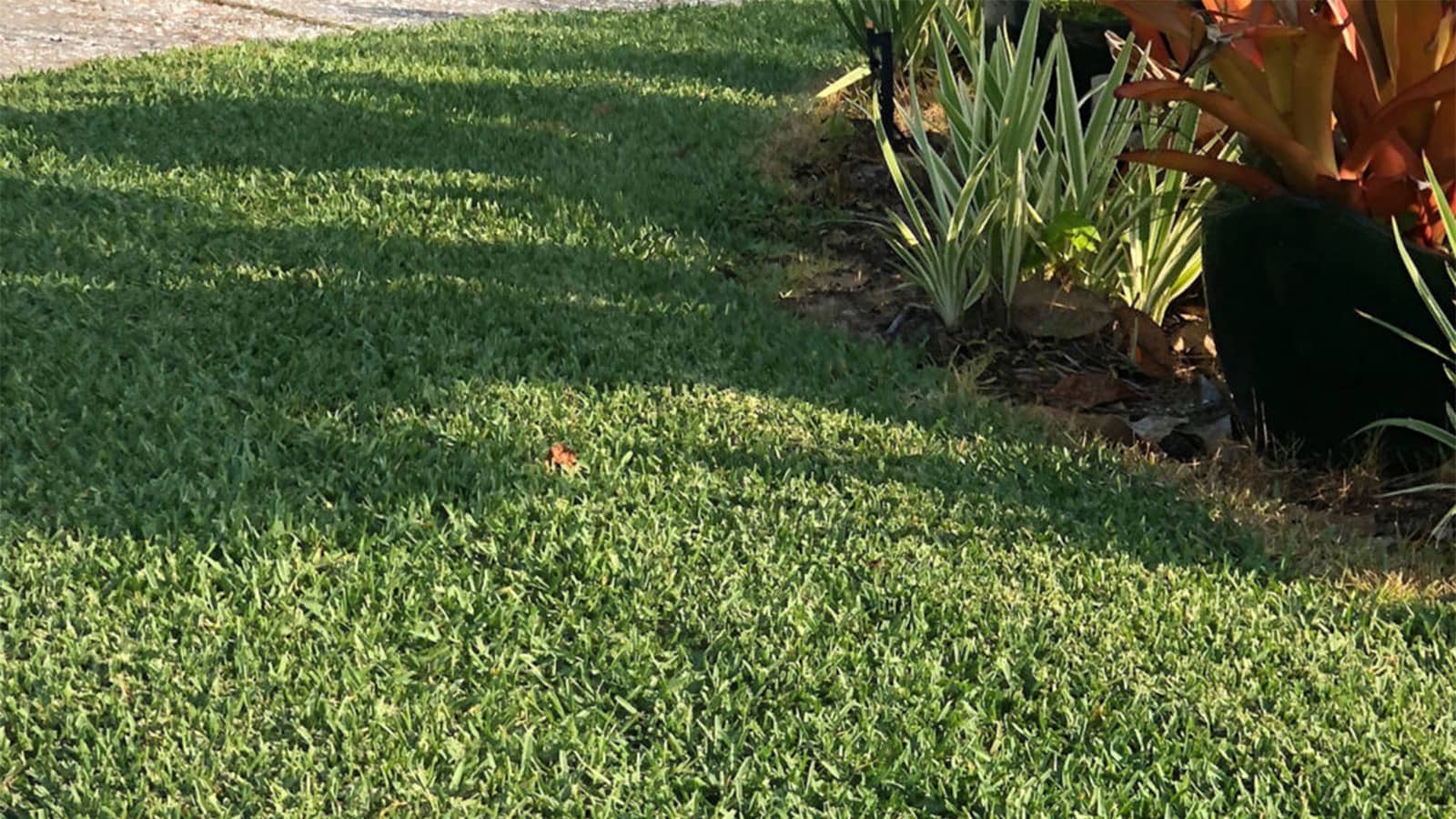
Palmetto St. Augustine
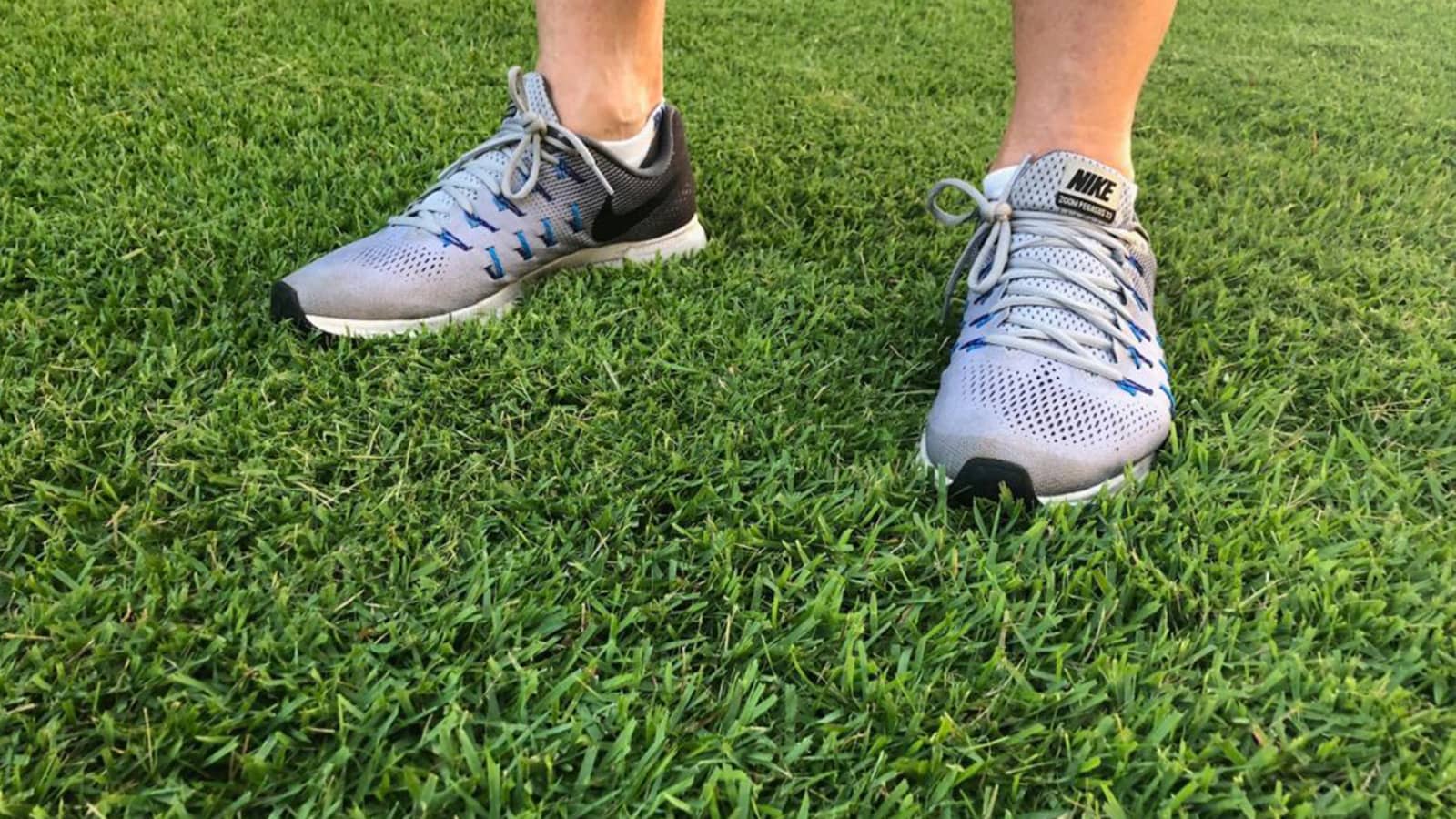
This St. Augustine grass is the most popular patented turfgrass in the world with more than two billion sq. ft. sold and counting. Although Palmetto St. Augustine is an extremely versatile grass suitable for various applications, its features are particularly well-suited for Florida lawns.
Palmetto is often selected for its better color and finer texture, but it also demonstrates superior shade, cold, frost, heat and drought tolerance due to its deep root system. In fact, Palmetto is one of the most shade-tolerant of the warm season grasses available. Palmetto is unlike other turfgrasses in its resistance to the Lethal Viral Necrosis (LVN). Homeowners love the soft, fine texture and emerald green color Palmetto St. Augustine boasts.
Palmetto St. Augustine Characteristics
- Ideal Use: Home lawns and commercial landscapes
- Mow Height: 1.5–2.5 inches
- Blade Width: 8–9 mm
- Wear Tolerance: Good
- Injury Recovery: Very Good
- Shade Tolerance: Very Good
- Drought Tolerance: Good
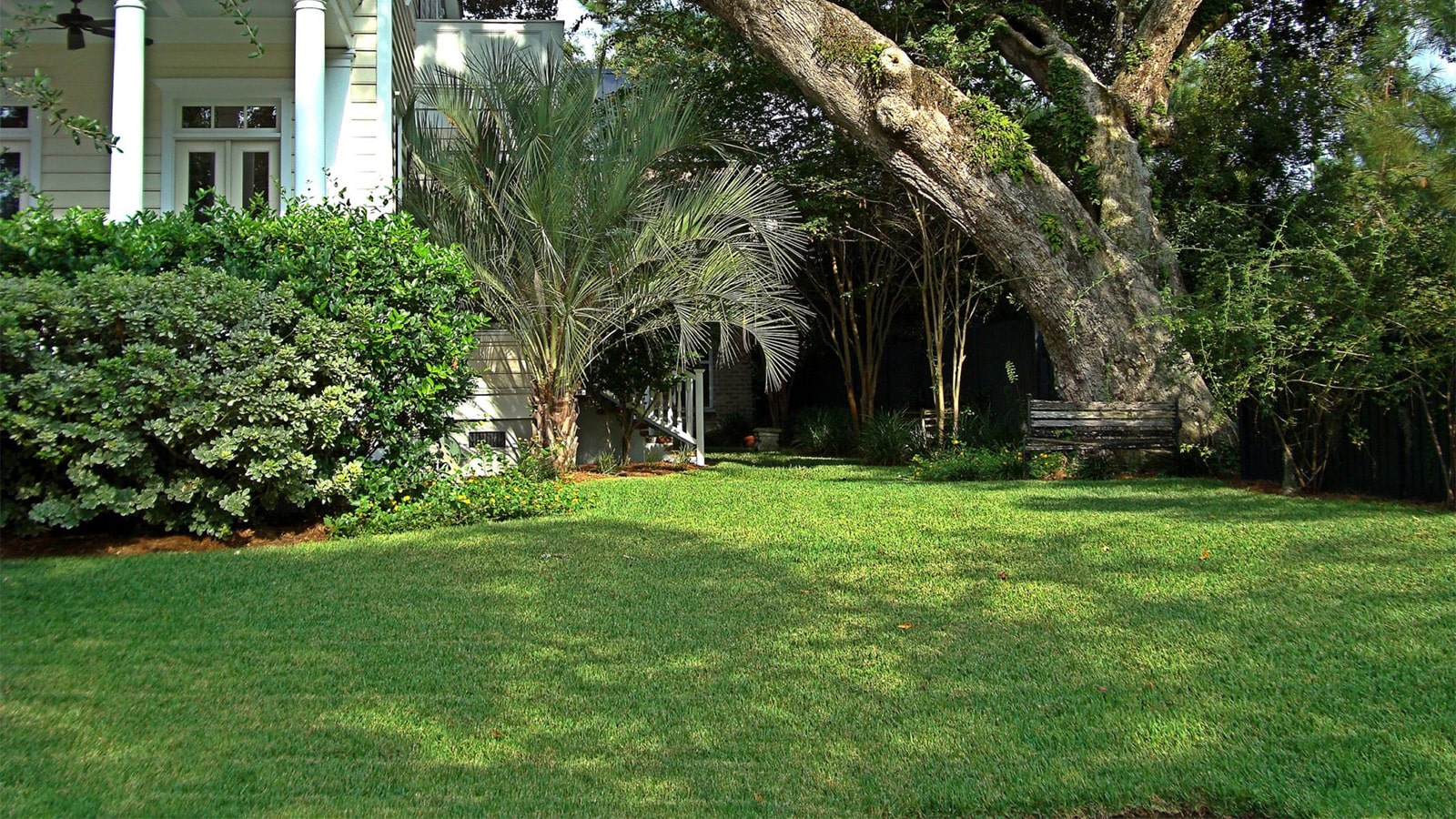
Cobalt St. Augustine
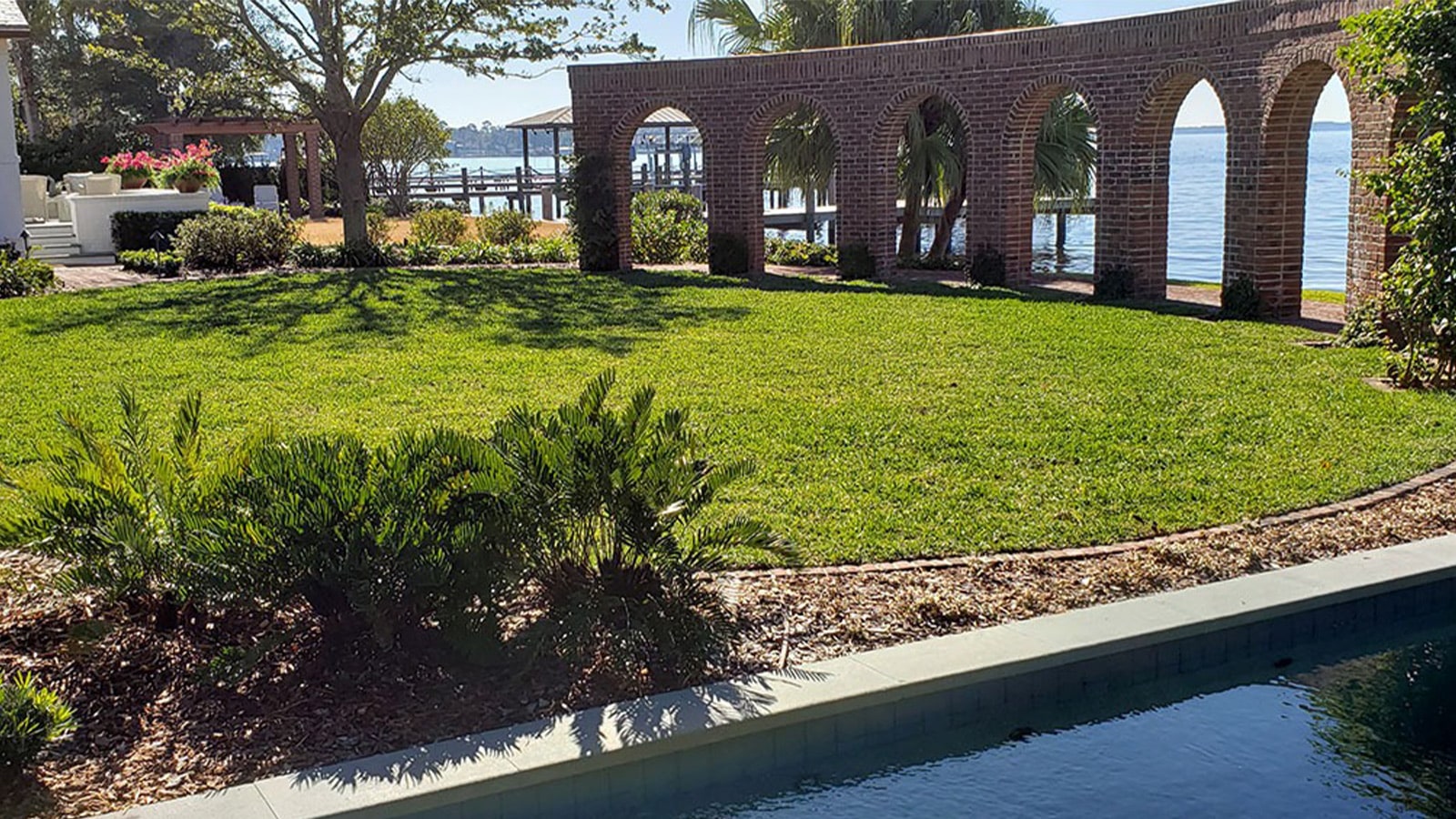
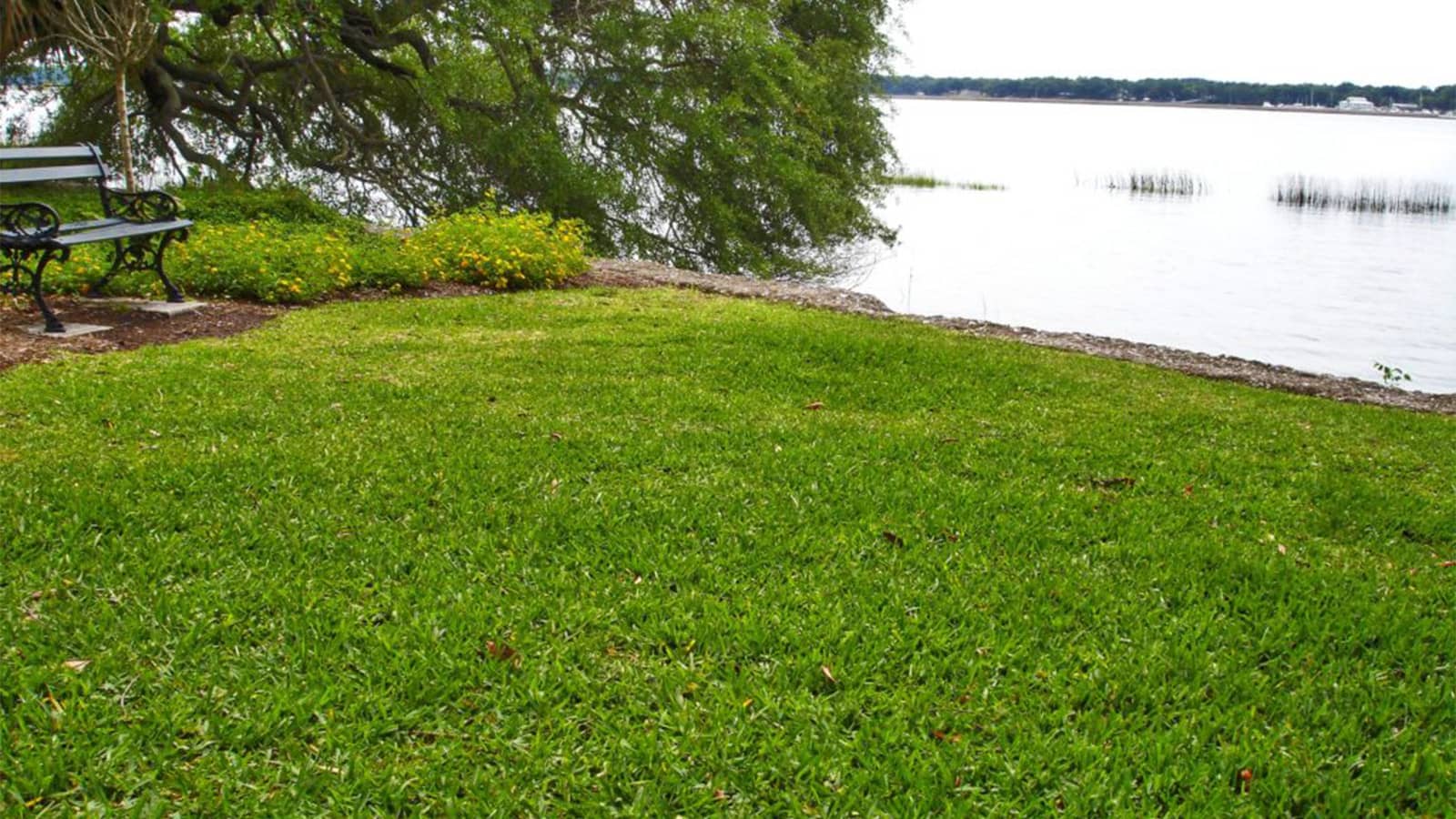
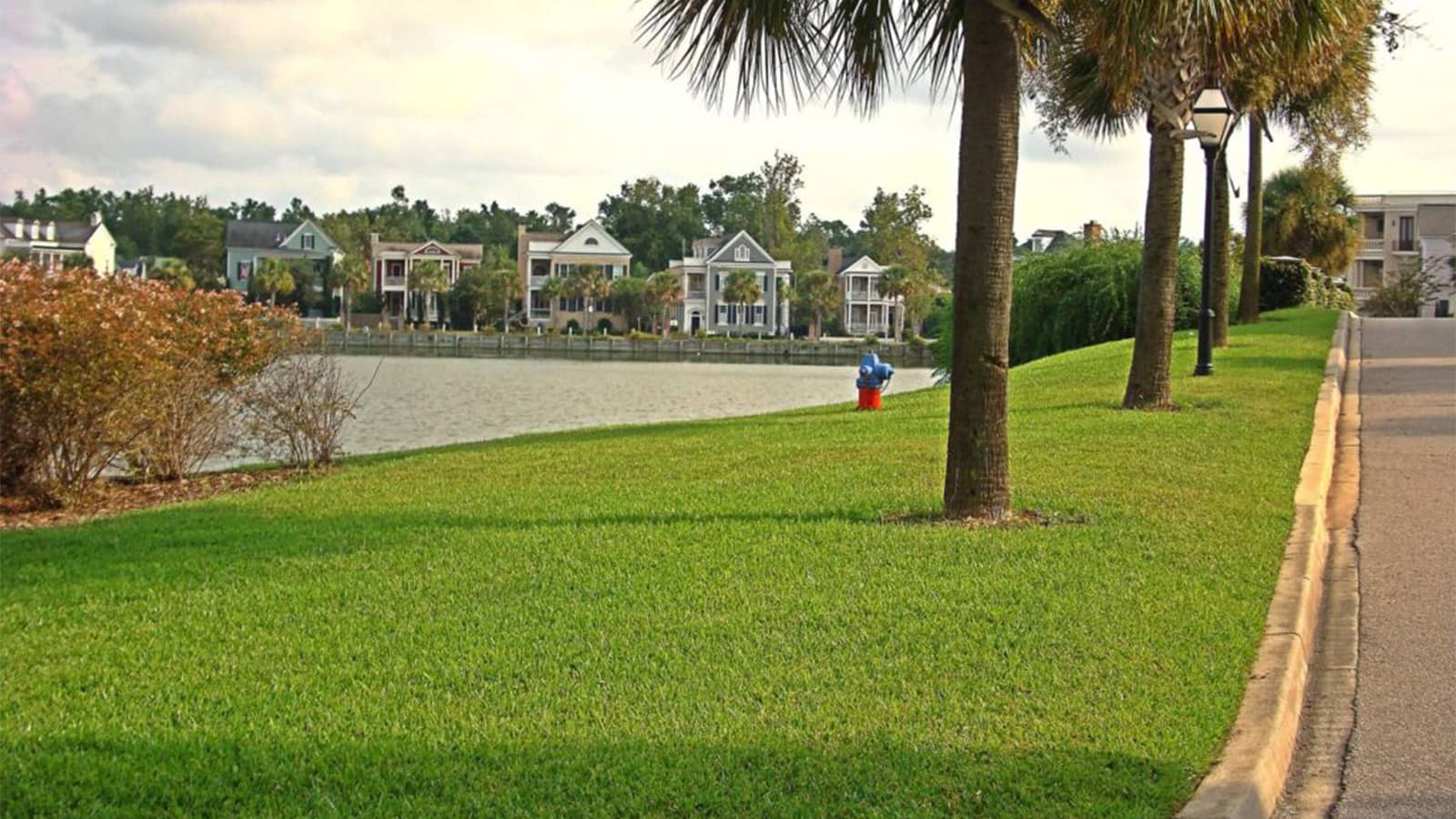
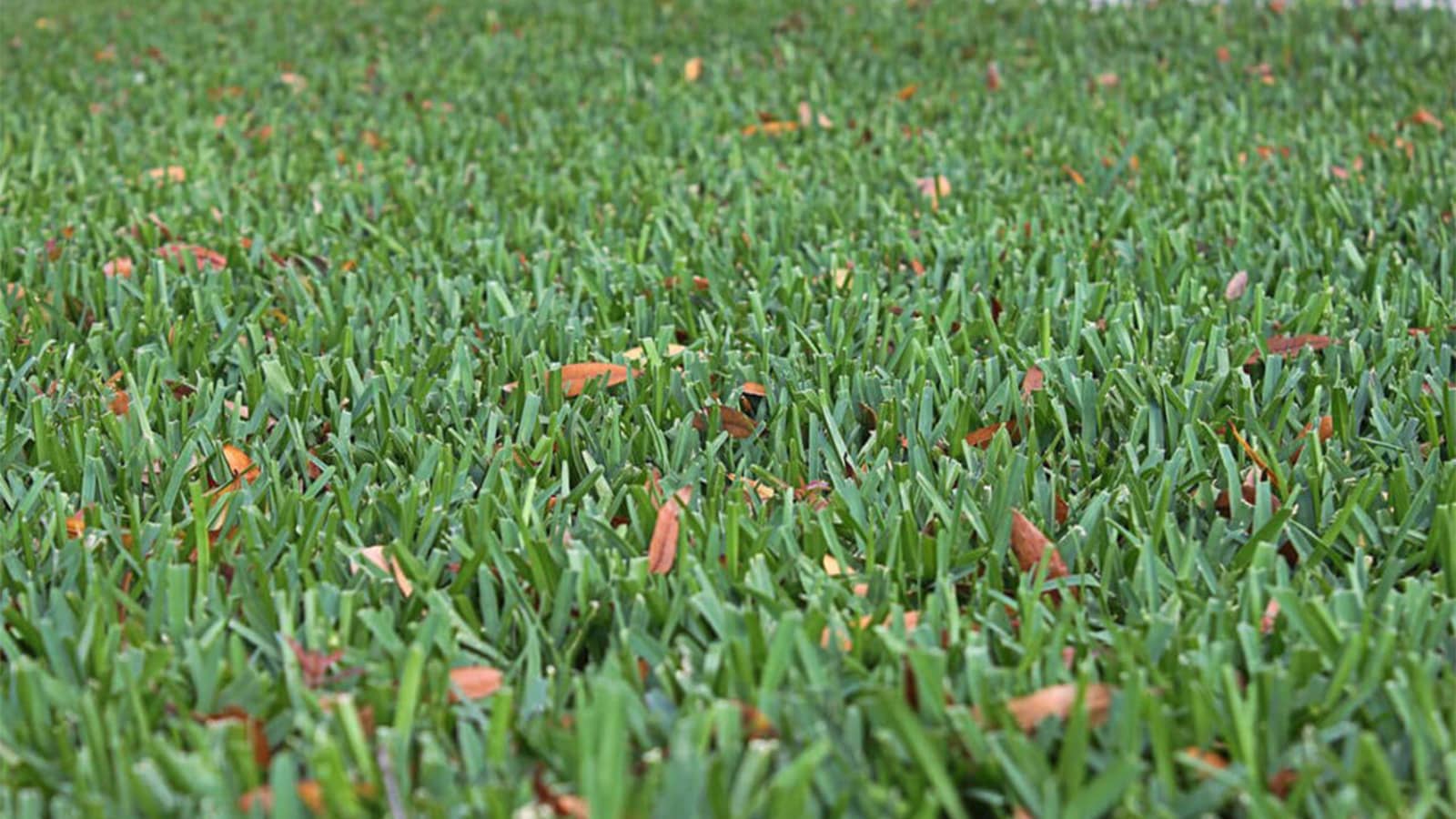
Cobalt is one of the newest turfgrasses developed through university research, bred specifically for resilience in Florida’s demanding conditions. It is highly tolerant of drought and salinity, making it a great choice for coastal regions. Cobalt also features excellent cold and shade tolerance, with a strong resistance to common turf diseases.
Cobalt St. Augustine Characteristics
- Ideal Use: Residential lawns, commercial landscapes, coastal properties
- Mow Height: 2–3 inches
- Blade Width: Medium (6–8 mm)
- Wear Tolerance: Very Good
- Shade Tolerance: Very Good
- Drought Tolerance: Excellent
- Salt Tolerance: Excellent
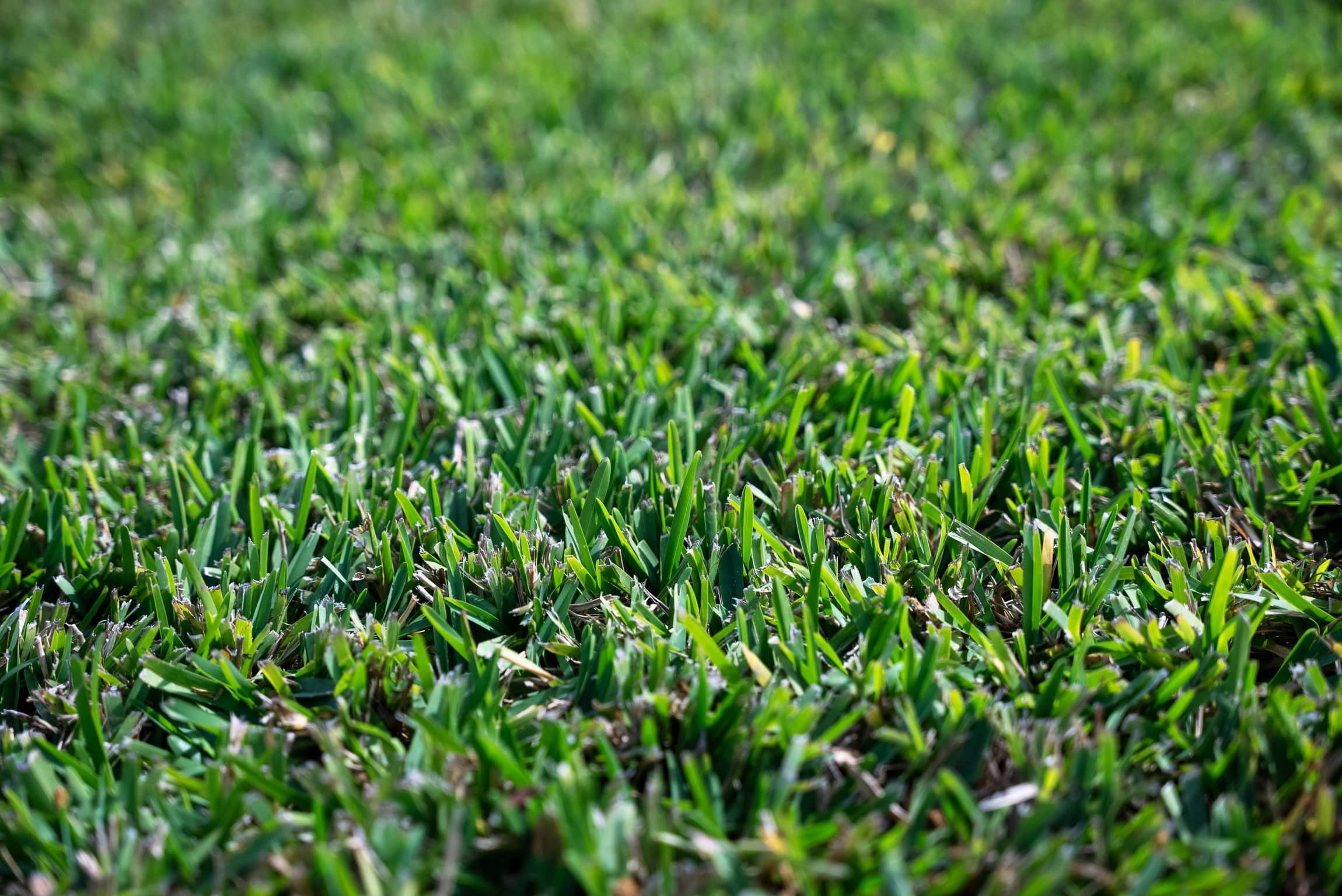
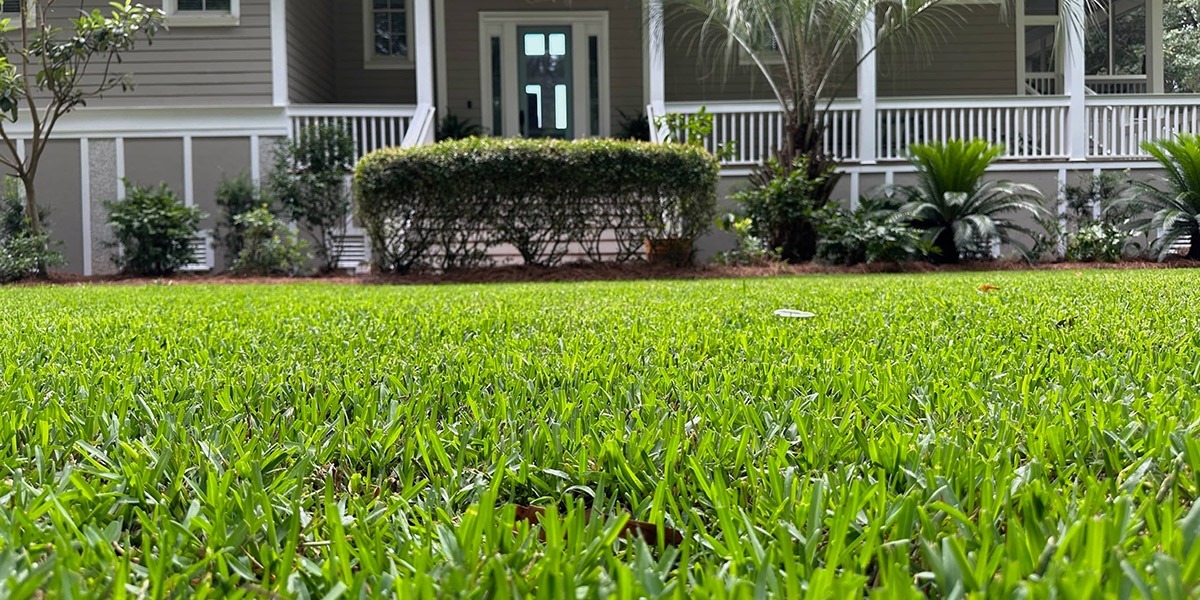
Sola St. Augustine
Sola is a dwarf St. Augustine variety designed for homeowners seeking a low-maintenance, dense, and fine-textured grass. It performs well in both sun and shade, has excellent wear tolerance and requires less mowing due to its slower vertical growth. Sola also demonstrates strong resistance to disease and insect pressure.
Sola St. Augustine is a newer grass varities with limited availability at this time.
Sola St. Augustine Characteristics
- Ideal Use: Residential lawns, shaded properties, high-traffic areas
- Mow Height: 1.5–2.5 inches
- Blade Width: Fine (5–6 mm)
- Wear Tolerance: Excellent
- Shade Tolerance: Very Good
- Drought Tolerance: Good
- Maintenance: Reduced mowing, moderate inputs
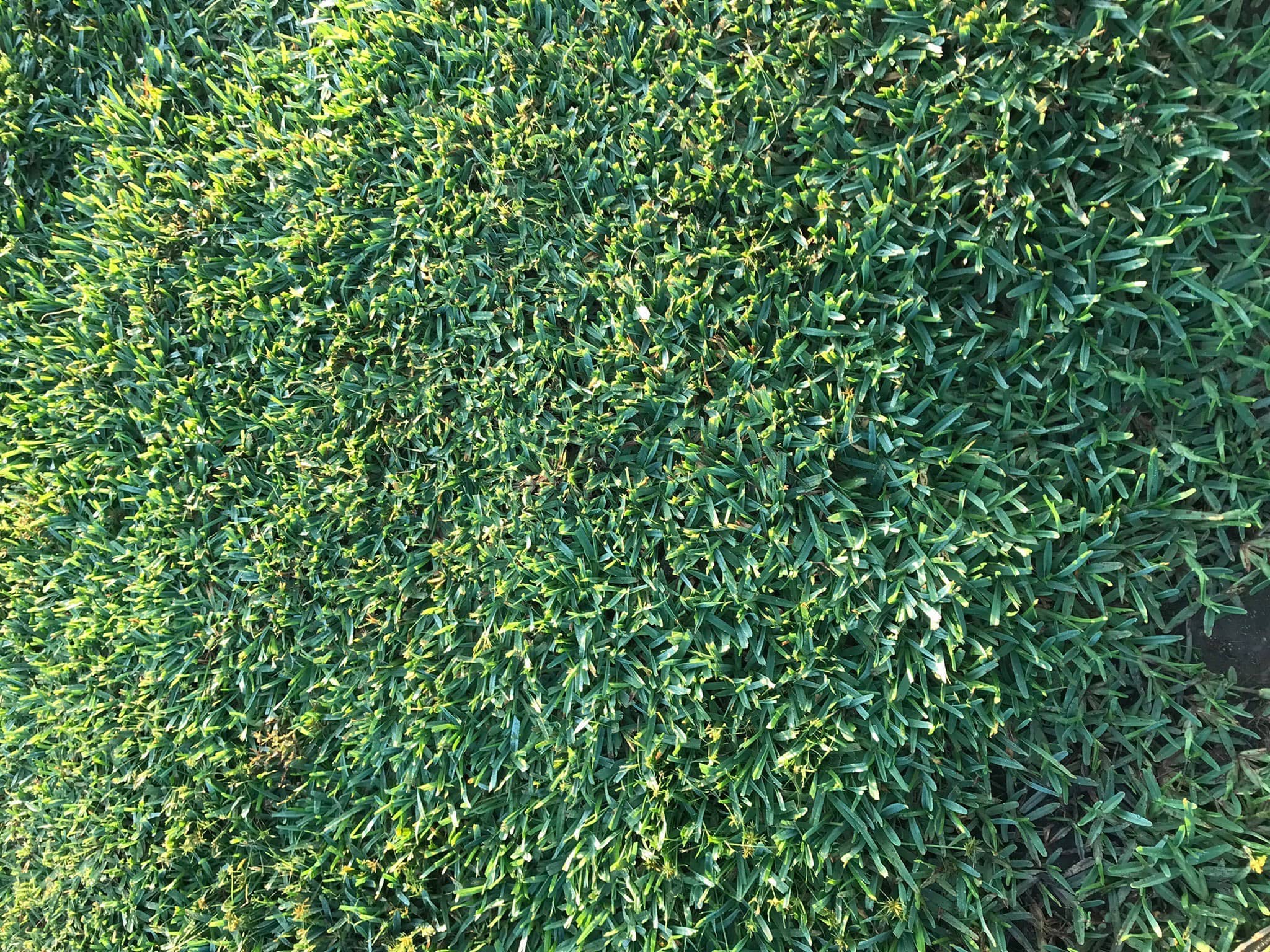
Other St. Augustine Varieties
While CitraBlue, Palmetto and Cobalt are among the top-performing choices for Florida lawns, other options like Seville, Floratam, Bitterblue and ProVista also have a place in the market.
Seville St. Augustine
Seville has long been used in Florida for its soft, fine texture and low growth habit. However, Florida’s climate exposes several weaknesses in this older variety:
- Limited cold tolerance, especially in North and Central Florida
- Disease susceptibility in humid, rainy summers (large patch & gray leaf spot)
- Only moderate shade tolerance—often thinning under tree canopies
- Can struggle in high-pH coastal soils
Better Option in Florida: CitraBlue St. Augustine
Why CitraBlue Performs Better in Florida:
- Exceptional disease resistance tailored for Florida’s humidity
- Improved shade adaptation compared to Seville
- Unique blue-green color that stays vibrant through Florida’s winter
- Stronger density, helping reduce weed pressure in challenging coastal environments
Floratam St. Augustine
Floratam is one of Florida’s most widely planted legacy St. Augustine varieties thanks to its vigorous growth and heat tolerance. However, Florida’s newer landscapes and evolving pest pressures highlight several limitations:
- Very poor shade tolerance, making it unreliable under Florida oaks and palm canopies
- Vulnerability to cold snaps, especially in North & Central Florida
- Susceptibility to fungal diseases during Florida’s long humid season
- Coarse texture with inconsistent winter color
Better Alternatives for Florida: Palmetto AND CitraBlue St. Augustine
Palmetto isn’t just a better all-around performer than Floratam—it carries official recognition from the University of Florida as the only St. Augustine variety with demonstrated resistance to LVN, a major advantage for Florida landscapes where this pest is increasingly common.
Why Palmetto Outperforms Floratam in Florida:
- UF-recognized LVN resistance—the only St. Augustine cultivar with this official designation
- Much better shade tolerance, ideal for partially shaded Florida yards
- Enhanced cold tolerance, providing stronger recovery from Florida’s winter events
- Softer texture and improved visual quality
- More consistent year-round color, including stronger winter appearance
CitraBlue was developed in Florida to address the state’s most persistent turf challenges: disease pressure, humidity and shade. While not UF-designated as LVN-resistant like Palmetto, CitraBlue has shown promising resistance to LVN in years of field observations, making it a strong competitor to Floratam.
Why CitraBlue Outperforms Floratam in Florida:
- Superior resistance to large patch and gray leaf spot—two major Floratam weaknesses
- Unique blue-green color that stays vibrant through winter
- Improved shade performance, especially beneficial in Florida’s tree-covered neighborhoods
- Lower vertical growth, meaning less mowing in Florida’s long growing season
- Observed LVN tolerance in Florida field trials, though not officially UF-recognized
Bitterblue St. Augustine
Bitterblue has been used in Florida for its finer texture and moderate shade tolerance, but like other legacy varieties, it shows weaknesses:
- High susceptibility to disease, particularly in Florida’s high humidity
- Weak winter color compared to newer cultivars
- Only moderate shade tolerance, not suitable for deeply shaded Florida yards
- Slower recovery after stress or drought
Better Option in Florida: CitraBlue St. Augustine
Why CitraBlue Performs Better in Florida:
- Superior resistance to large patch and gray leaf spot, major Florida issues
- Blue-green color that holds stronger through winter
- Better shade performance, ideal for Florida homes with tree canopy
- Improved density and uniformity, helping prevent weed invasion
ProVista St. Augustine
ProVista is a glyphosate-tolerant St. Augustine grass that enables simplified weed control. While this feature is useful, Florida homeowners may encounter challenges:
- Less vibrant winter color than improved cultivars
- Shade performance is weaker than Palmetto, CitraBlue or Cobalt
- Disease vulnerability can still be an issue despite easier weed control
Better Option in Florida: Cobalt St. Augustine
Why Cobalt Performs Better in Florida:
- Industry-leading shade tolerance, outperforming ProVista beneath Florida oak and palm canopies
- Top-tier drought resilience, ideal for Florida’s sandy soils
- Excellent disease resistance, reducing fungicide needs
- Richer year-round color with improved density
Choosing a St. Augustine variety that performs well in Florida is essential for achieving a healthy, durable lawn that can handle the state’s unique climate. While St. Augustine remains Florida’s most popular turfgrass, zoysia varieties are also becoming an increasingly popular option for homeowners who want high performance and low maintenance.
Exploring both can help you decide which grass best fits your landscape needs.