
Ever glanced at your lawn and wondered, "What kind of grass is this?" Knowing your grass type is key if you've recently moved or are considering renovating your lawn. Don’t worry if your yard is a mix of different grasses—you’re not alone. Quickly identify your lawn's variety with our Turfgrass Identification Guide and simple steps.
Remember, your grass type largely depends on your location. For example, in Boston, MA, you're likely looking at cool-season varieties, which narrows down the possibilities significantly. We've listed some common types below to help you get started.
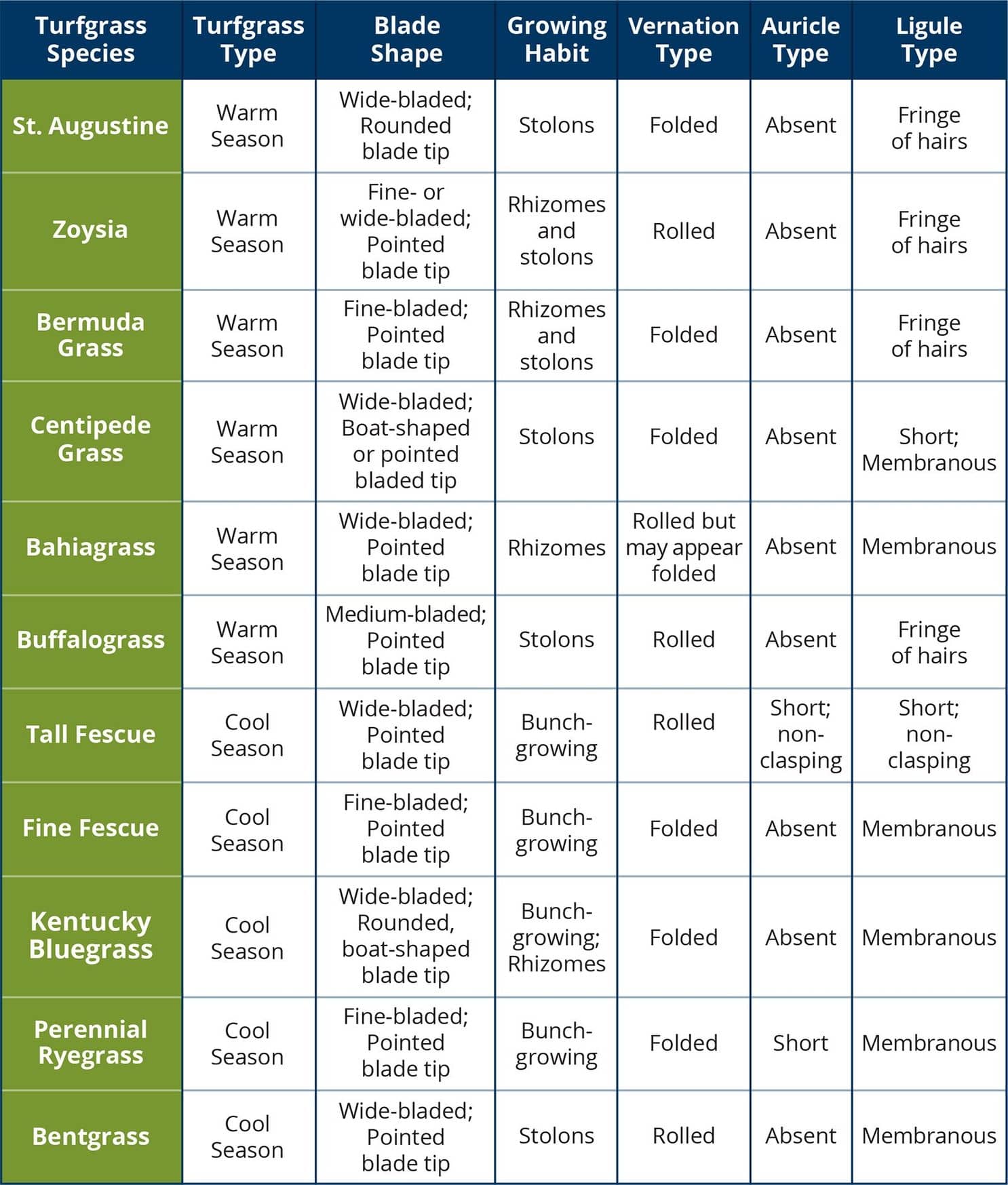
Turfgrass Identification Chart
Step 1: Find out which growing zone you're located in
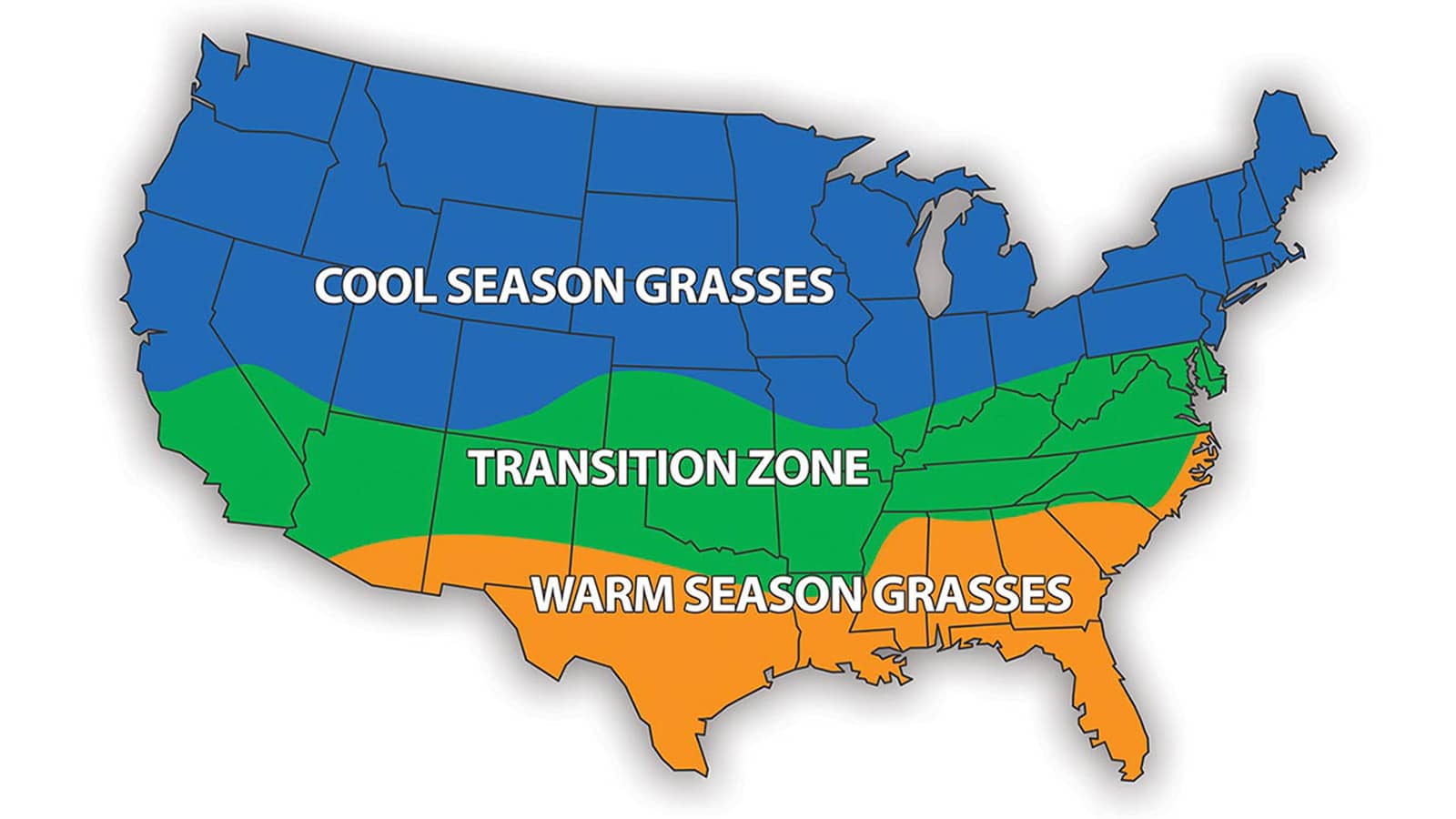
Cool season grasses thrive in the cooler, humid climates of the Midwest, Pacific Northwest, and Northeast, ideally between 60°F and 70°F. They stay active during winter, unlike warm season varieties, which prefer 80°F to 95°F and go dormant below 65°F.
and go dormant under 65°F, cool season grasses remain active throughout the winter. The transition zone, featuring a mix of these climates, stretches across the central United States.
Types of Cool Season Grass:
- Tall fescue
- Fine fescue
- Kentucky bluegrass
- Perennial ryegrass
- Bentgrass
Types of Warm Season Grass:
- Zoysia
- St. Augustine
- Bermuda grass
- Centipede grass
- Bahiagrass
- Buffalograss
Step 2: Take a look at the shape of your grass blades
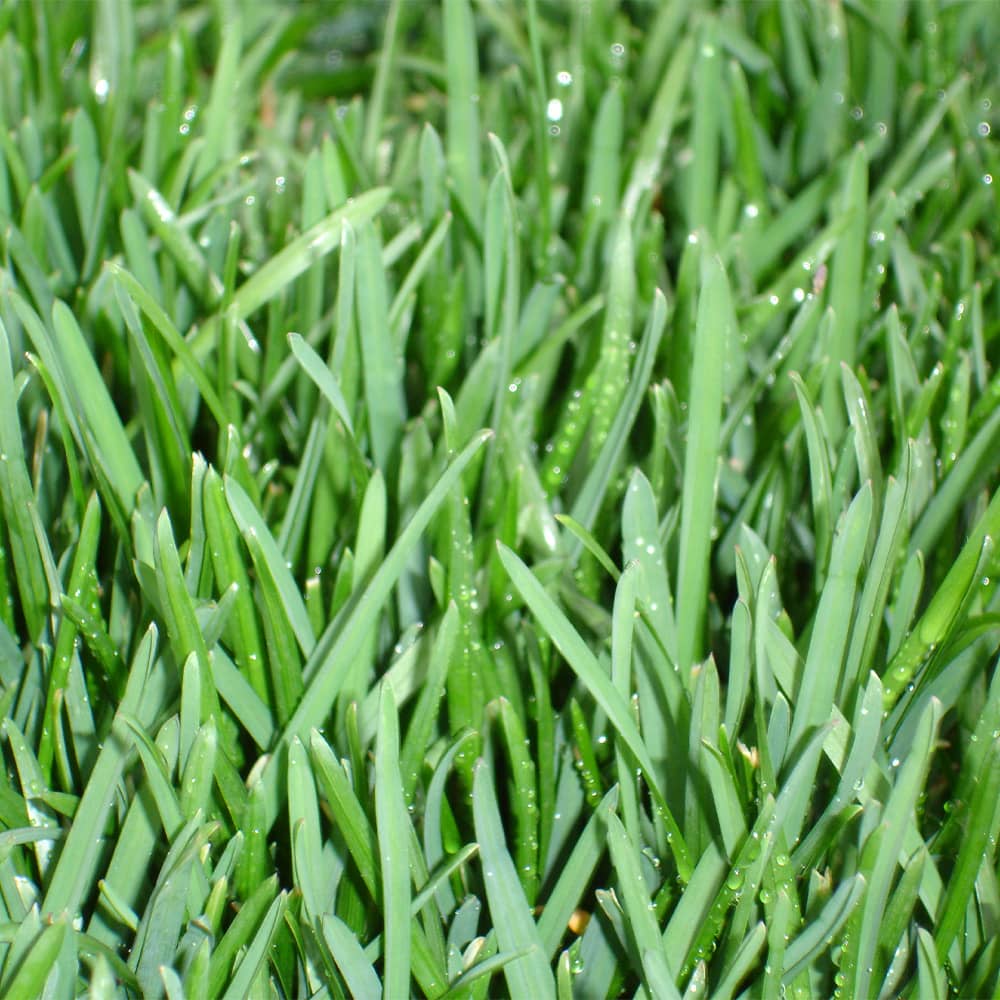
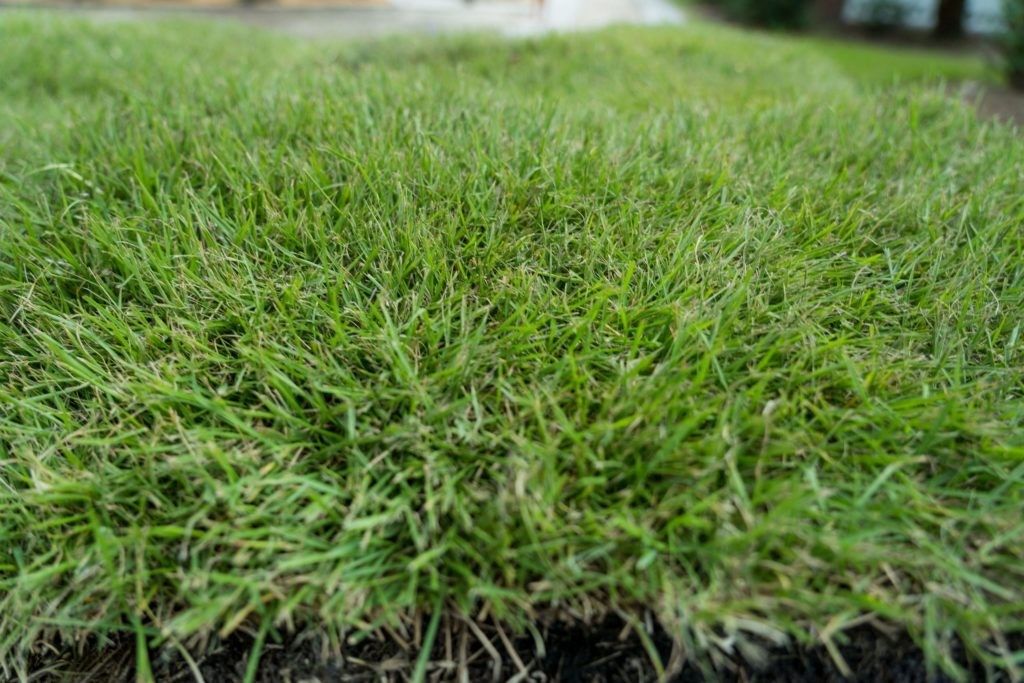
Grass blades vary in width and shape—some are wide, others fine, and ends can be pointed, rounded or boat-shaped. For instance, fine-bladed grasses likely aren't St. Augustine, while wide blades suggest you don’t have perennial ryegrass or fine fescue.
Check the images and lists below to match your grass type with its blade characteristics.
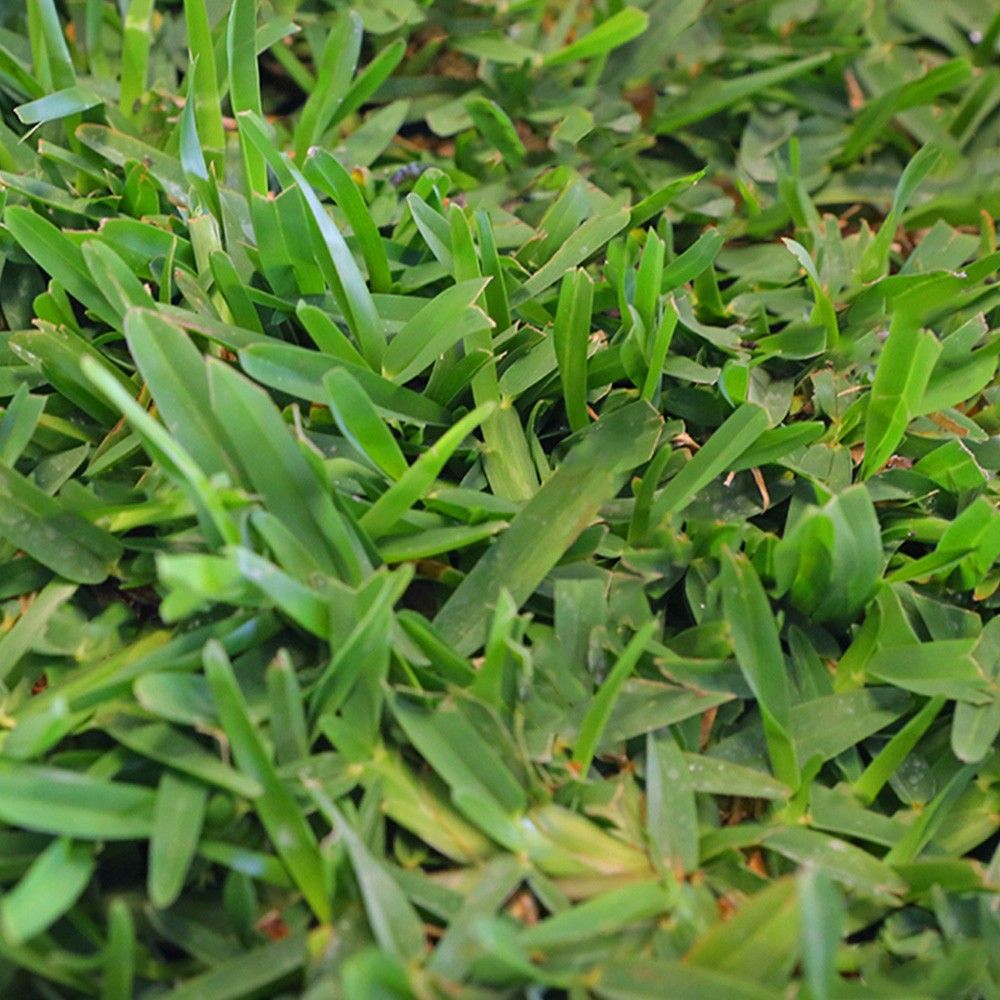
Fine-Bladed Grasses:
- Fine fescue
- Fine-bladed zoysias
- Bermuda grass
- Bentgrass
- Perennial ryegrass
Wide-Bladed Grasses:
- Wide-bladed zoysias
- St. Augustine
- Centipede grass
- Bahiagrass
- Buffalograss
- Tall fescue
- Kentucky bluegrass
Grasses with Pointed Ends:
- Fine fescue
- Perennial ryegrass
- Tall fescue
- Bahiagrass
- Bermuda grass
- Centipede grass
- Zoysia
Grasses with Rounded Ends:
- St. Augustine
- Kentucky bluegrass
Step 3: Determine your grass's growing habit
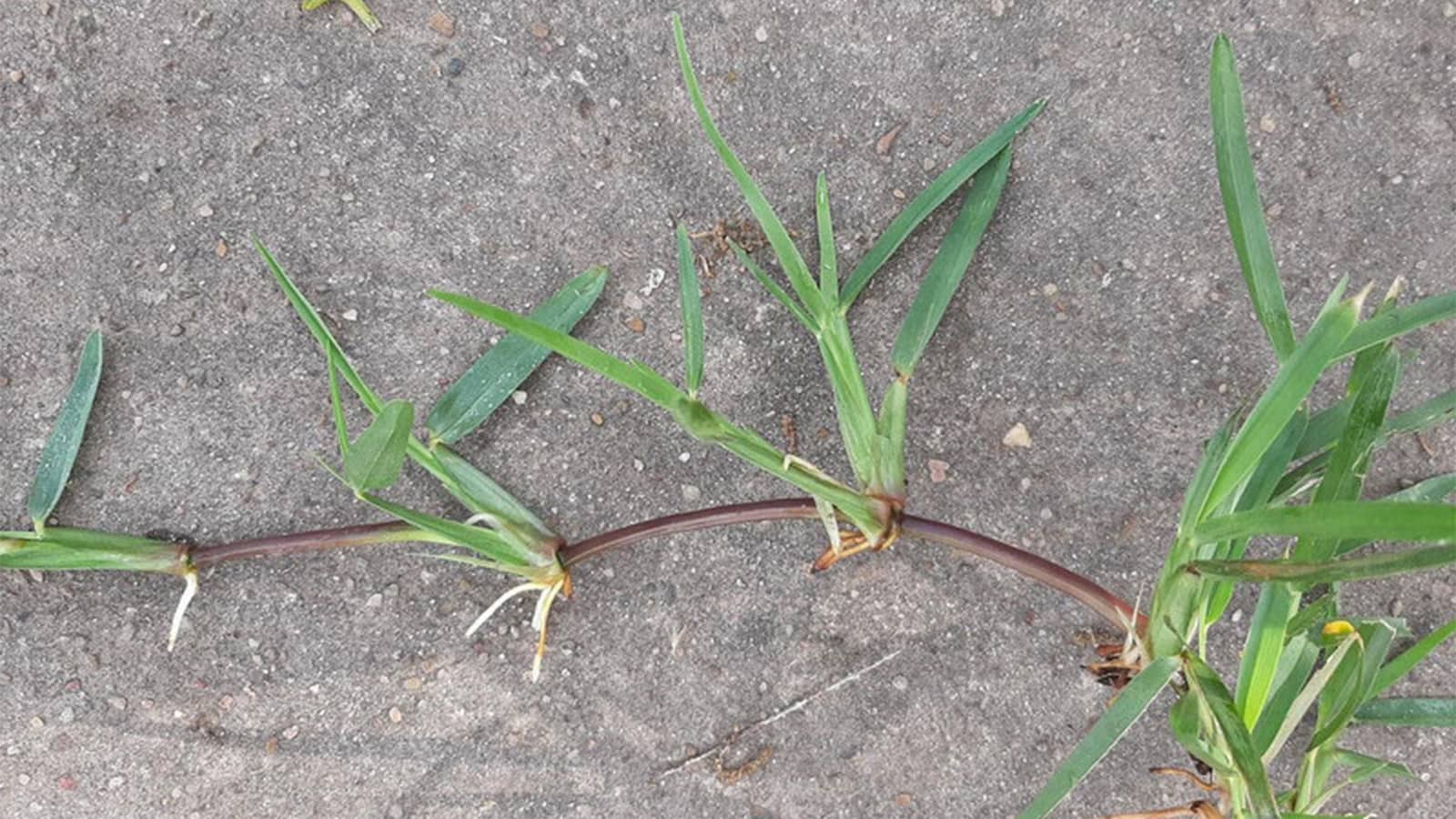
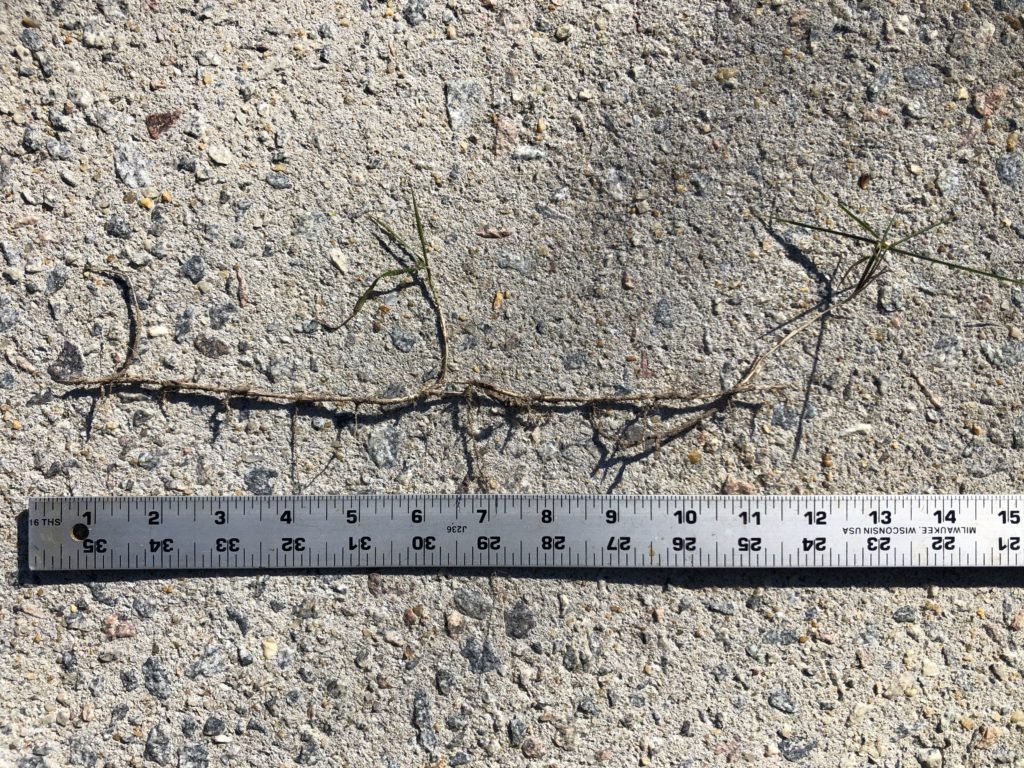
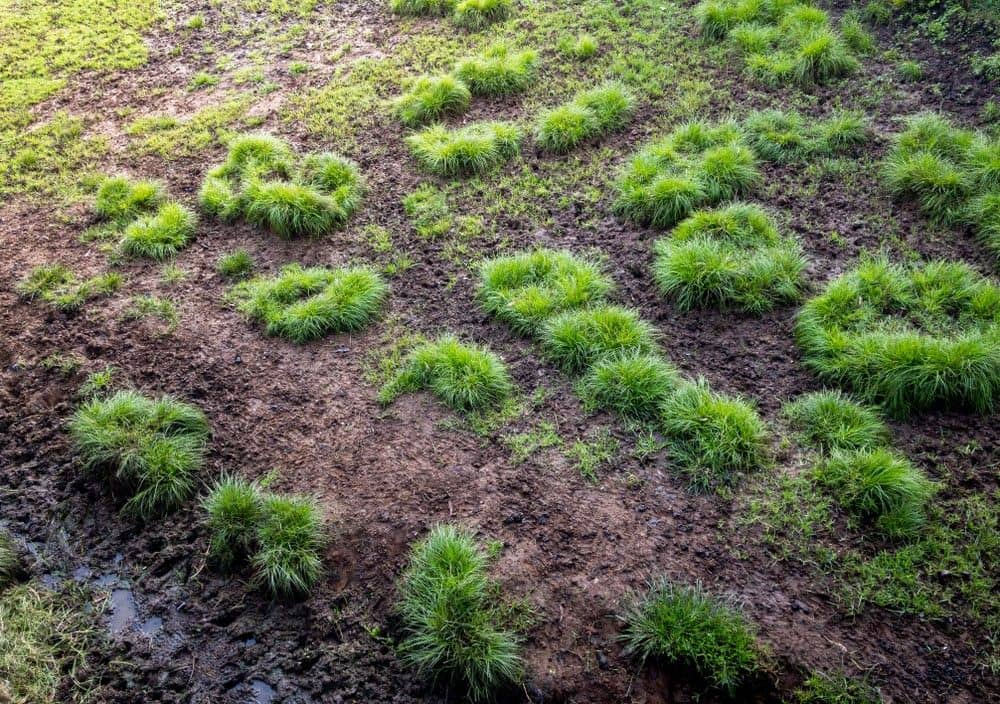
Grasses grow and spread in diverse ways. Some use rhizomes or stolons to spread laterally—stolons above ground and rhizomes below. Others grow in clumps or bunches.
Understanding your grass's growth pattern helps with identifying its type. Check how your grass expands and uses space in your lawn to pinpoint its variety.
Grasses that Use a Stolon Spreading Pattern
- St. Augustine
- Zoysia
- Centipede grass
- Bermuda grass
- Buffalograss
- Bahiagrass
Grasses that Use a Rhizome Spreading Pattern
- Fine fescue
- Kentucky bluegrass
- Bahiagrass
- Bermuda grass
- Zoysia
Grasses that Use a Bunch-Type Growing Pattern
- Fine fescue
- Perennial ryegrass
- Tall cescue
Step 4: Check out the grass's vernation
Vernation, the arrangement of young grass blades within the sheath, is a key identification feature professionals use. Grass vernation can be either folded or rolled. Although it sounds technical, identifying vernation is straightforward. Refer to the provided image from Iowa State University’s Extension and Outreach for a clear comparison of folded versus rolled vernations.
Grasses with a Folded Vernation
- Centipede grass
- Bahiagrass
- Bermuda grass
- Perennial ryegrass
- Fine fescue
- Kentucky bluegrass
- St. Augustine
Grasses with a Rolled Vernation
- Bahiagrass
- Zoysia
- Tall fescue
Step 5: Inspect your grass to see if there are auricles
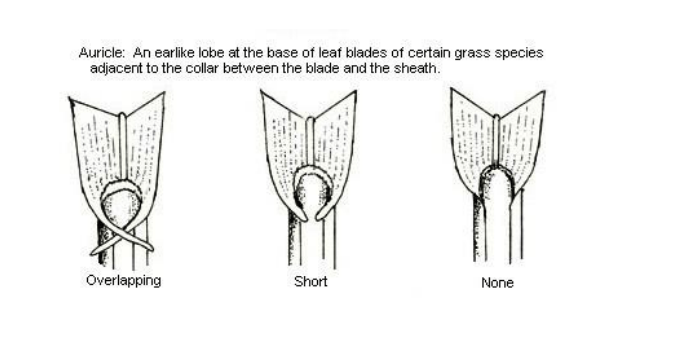
Auricles are another technical feature used to identify grass types. These are short attachments, either claw-shaped, rounded or pointed, located at the base of the grass blade. Not all grasses have auricles, but when present, they can be either clasped or open, aiding in identification.
Grasses with Absent Auricles:
- Bentgrass
- Perennial ryegrass
- Kentucky bluegrass
- Buffalograss
- Bermuda grass
- Zoysia
- Fine fescue
- Bahiagrass
- St. Augustine
- Centipede grass
Grasses with Short Auricles:
- Tall fescue
- Perennial Ryegrass
Grasses with Claw-Like Auricles:
- Perennial ryegrass
Step 6: See what the grass's ligule looks like
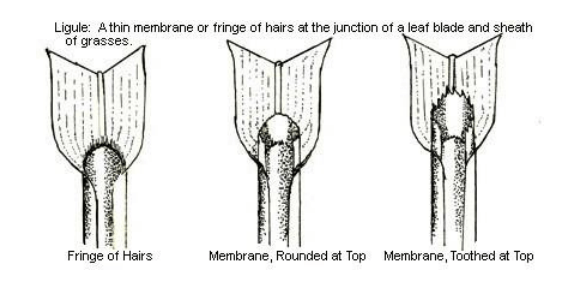
The ligule, a thin membrane or fringe of hairs where the leaf blade meets the sheath, is also important for identifying grass types. Some turfgrasses feature a hairy fringe, others a membranous ligule, and some lack a ligule entirely. Recognizing this feature can help pinpoint the grass type.
Grasses with an Absent Ligule
- Kentucky bluegrass
Grasses with a Fringe of Hairs
- Bermuda grass
- Buffalograss
- Zoysia
- St. Augustine
Grasses with a Membranous Ligule
- Kentucky bluegrass
- Fine fescue
- Tall fescue
- Bahiagrass
- Centipede grass
- Perennial ryegrass
- Bentgrass
How to Identify St. Augustine Grass
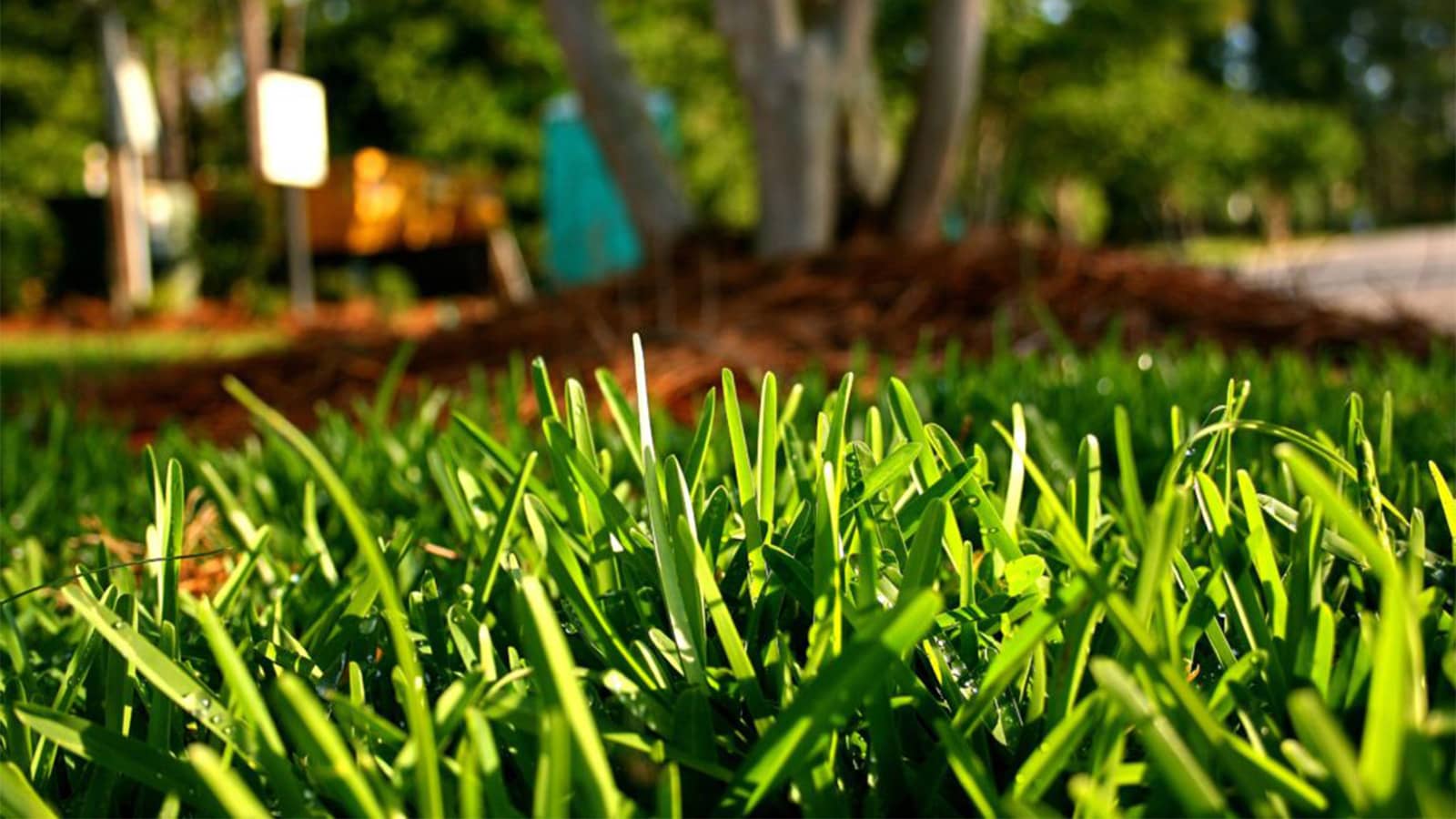
To identify St. Augustine grass, check for very wide, coarse blades with rounded ends. This grass typically grows in the southern two-thirds of the United States and features a dark green color with broad, flat blades that create a dense turf.
St. Augustine Grass Characteristics:
- Type of Grass: Warm season
- Blade Width: Varies by cultivar but generally 8–9 mm wide
- Blade Shape: Rounded blade tip
- Spreading/Growth Habit: Stolons
- Vernation: Folded
- Auricle Type: Absent
- Ligule Type: Fringe of hairs
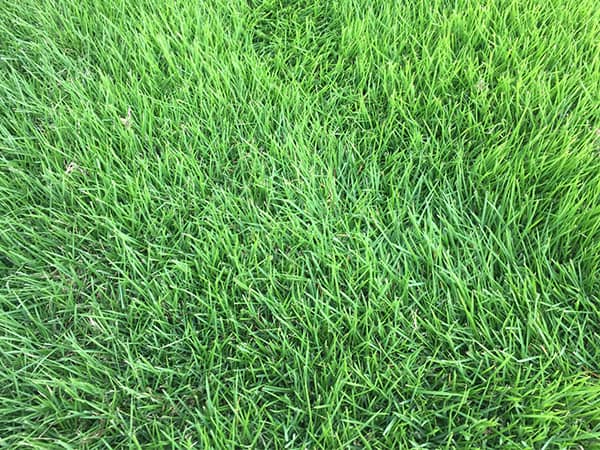
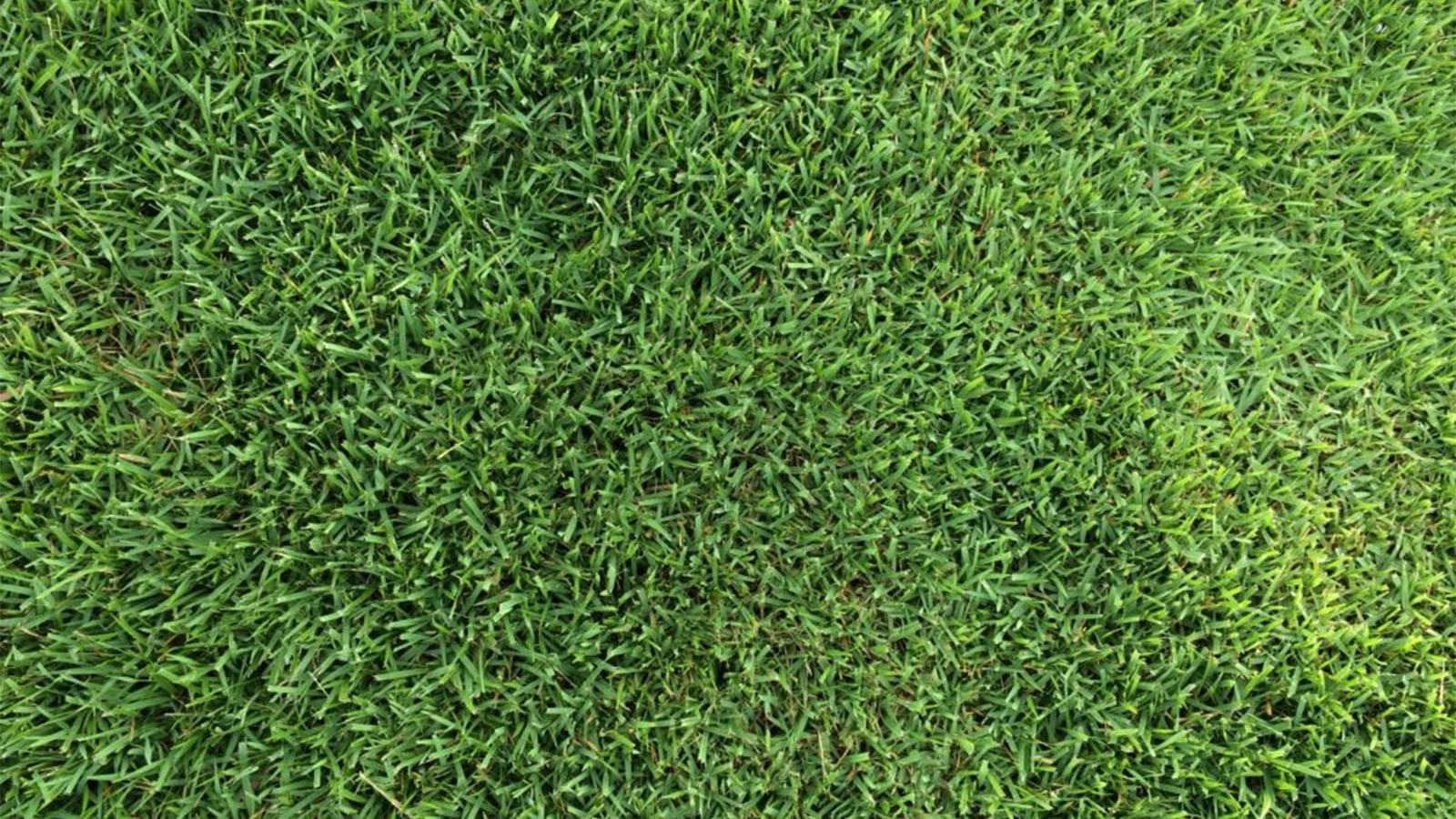
How to Identify Zoysia Grass
Zoysia grass, which can be fine-bladed or wide-bladed, forms a thick, soft ladnscape that suppresses weeds with its stolons spreading horizontally across the soil. It features strong, medium-thick blades that are soft to the touch and thrives in a diverse range of soil conditions.
Zoysia Grass Characteristics:
- Type of Grass: Warm season
- Blade Width: Varies by cultivar but generally 2–7 mm wide
- Blade Shape: Pointed blade tip
- Spreading/Growth Habit: Rhizomes and stolons
- Vernation: Rolled
- Auricle Type: Absent
- Ligule Type: Fringe of hairs
How to Identify Bermuda Grass
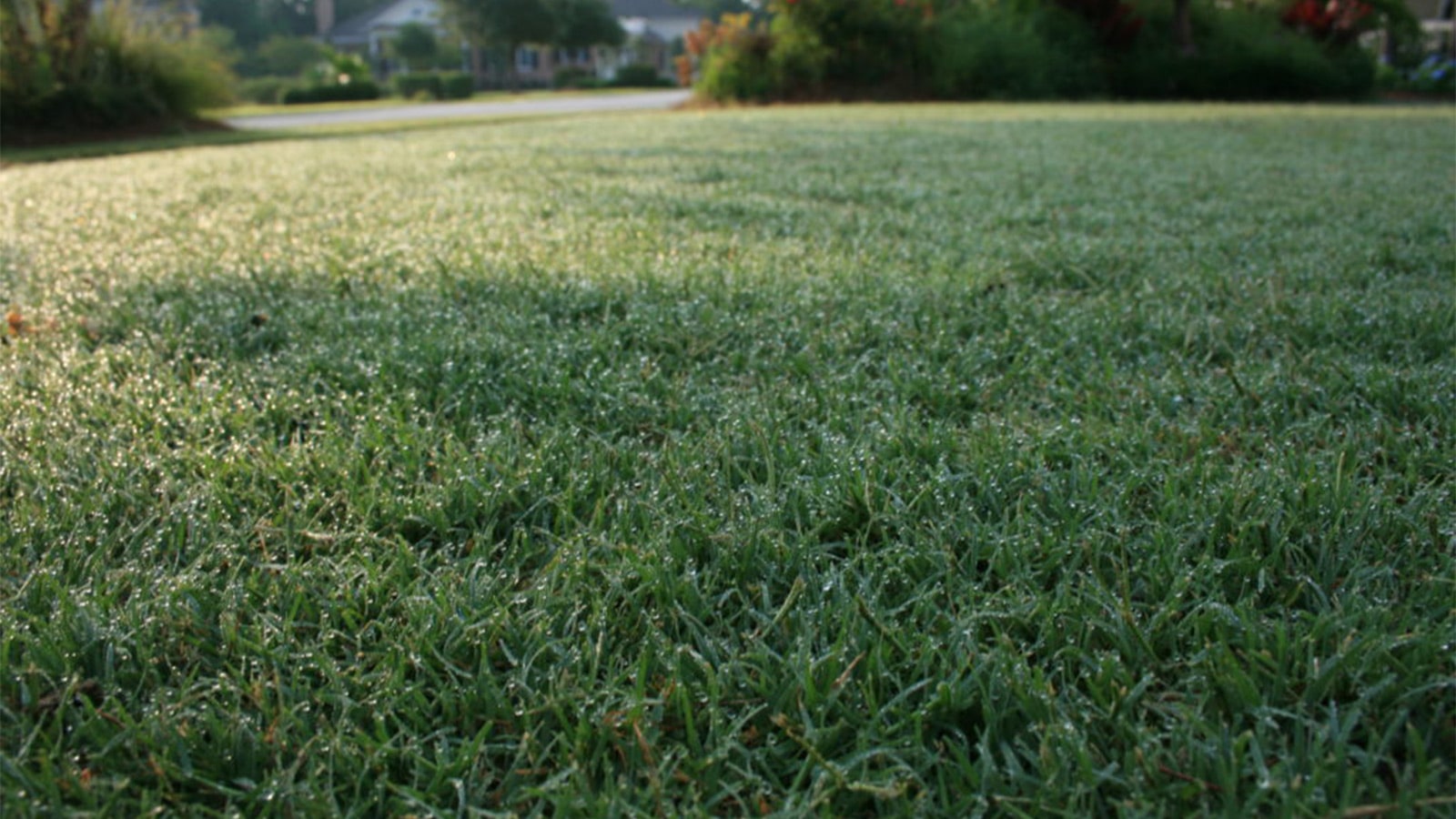
Bermuda grass is fine-textured with a thin grass blade that reaches between 2–16 cm long. Predominantly found in the warm climates of the southern two-thirds of the United States, certain varieties are also bred to tolerate cooler temperatures in the transition zone.
Bermuda Grass Characteristics:
- Type of Grass: Warm season
- Blade Width: Varies by cultivar but typically 1.5–1.7 mm wide
- Blade Shape: Pointed blade tip
- Spreading/Growth Habit: Rhizomes and stolons
- Vernation: Folded
- Auricle Type: Absent
- Ligule Type: Fringe of hairs
How to Identify Centipede Grass
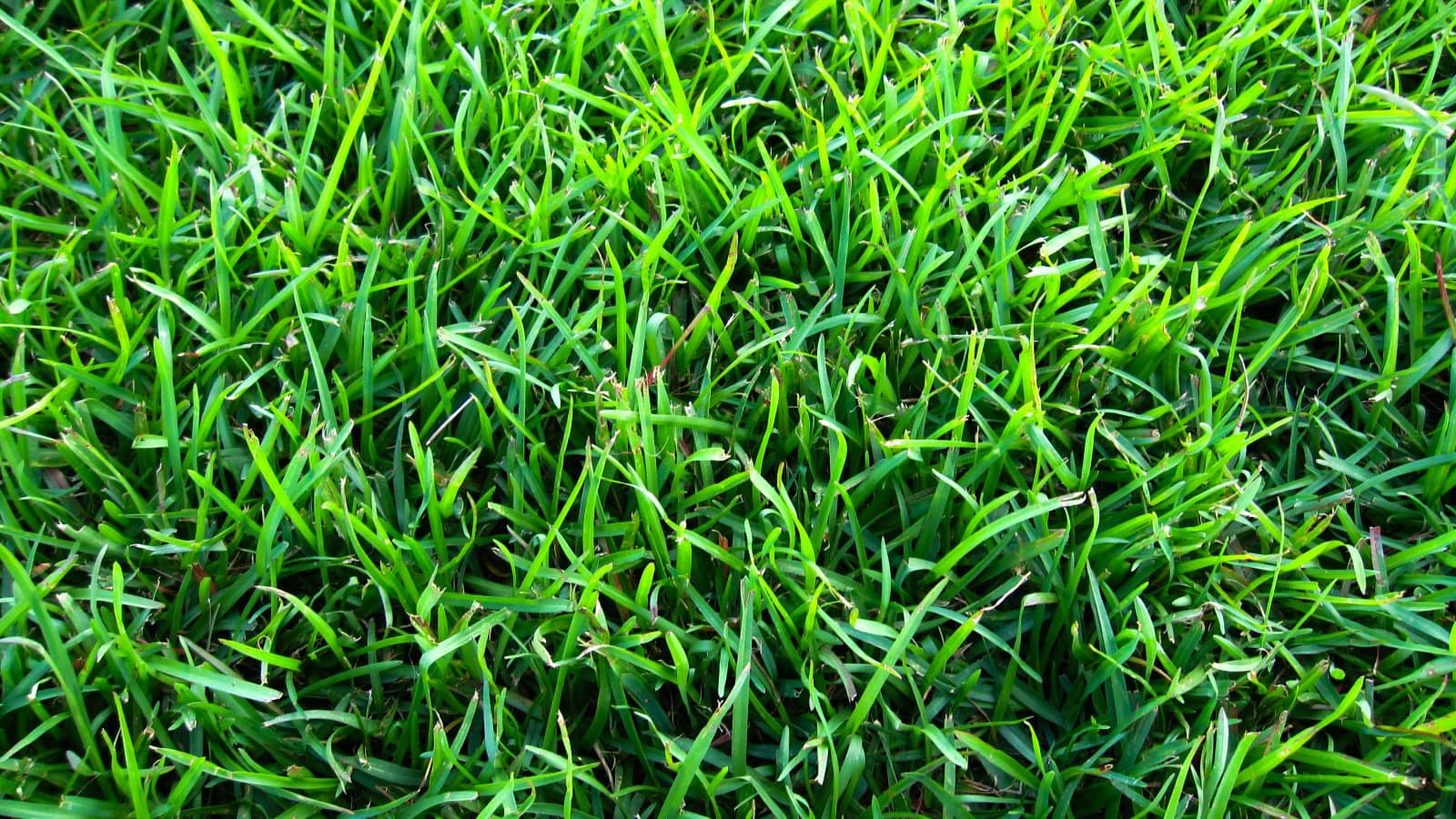
Centipede grass features flat, rounded leaf blades about 30 mm long and 2–4 mm wide. This coarse-textured perennial grass grows independently each year without the need for replanting.
Centipede Grass Characteristics:
- Type of Grass: Warm season
- Blade Width: Varies by cultivar but typically 0.1–0.2 inches wide
- Blade Shape: Pointed blade tip or boat-shaped tip
- Spreading/Growth Habit: Stolons
- Vernation: Folded
- Auricle Type: Absent
- Ligule Type: Membranous
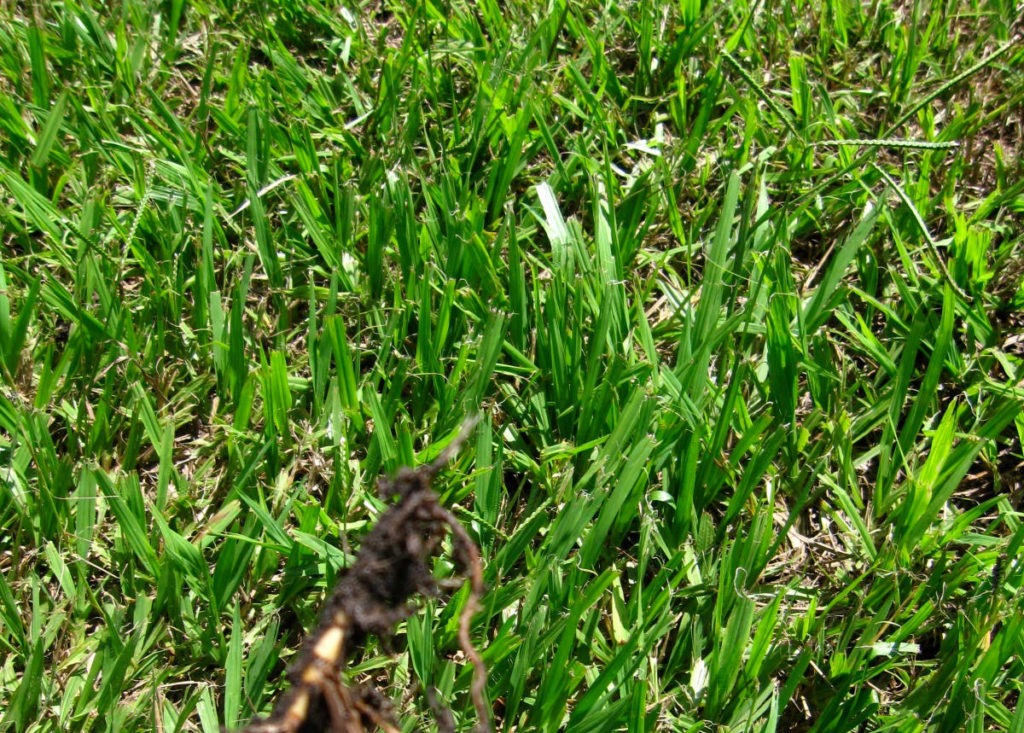
How to Identify Bahiagrass
Bahiagrass is a tropical or subtropical perennial grass that produces a Y-shaped seed head. This aggressive growing turfgrass is performs well in areas experiencing drought. Bahiagrass tolerates a wide range of soil types and has a mat-forming growth habit and coarse textures.
Bahiagrass Characteristics:
- Type of Grass: Warm season
- Blade Width: 4–8 mm wide
- Blade Shape: Pointed blade tip
- Spreading/Growth Habit: Rhizomes
- Vernation: Rolled
- Auricle Type: Absent
- Ligule Type: Membranous
How to Identify Buffalograss
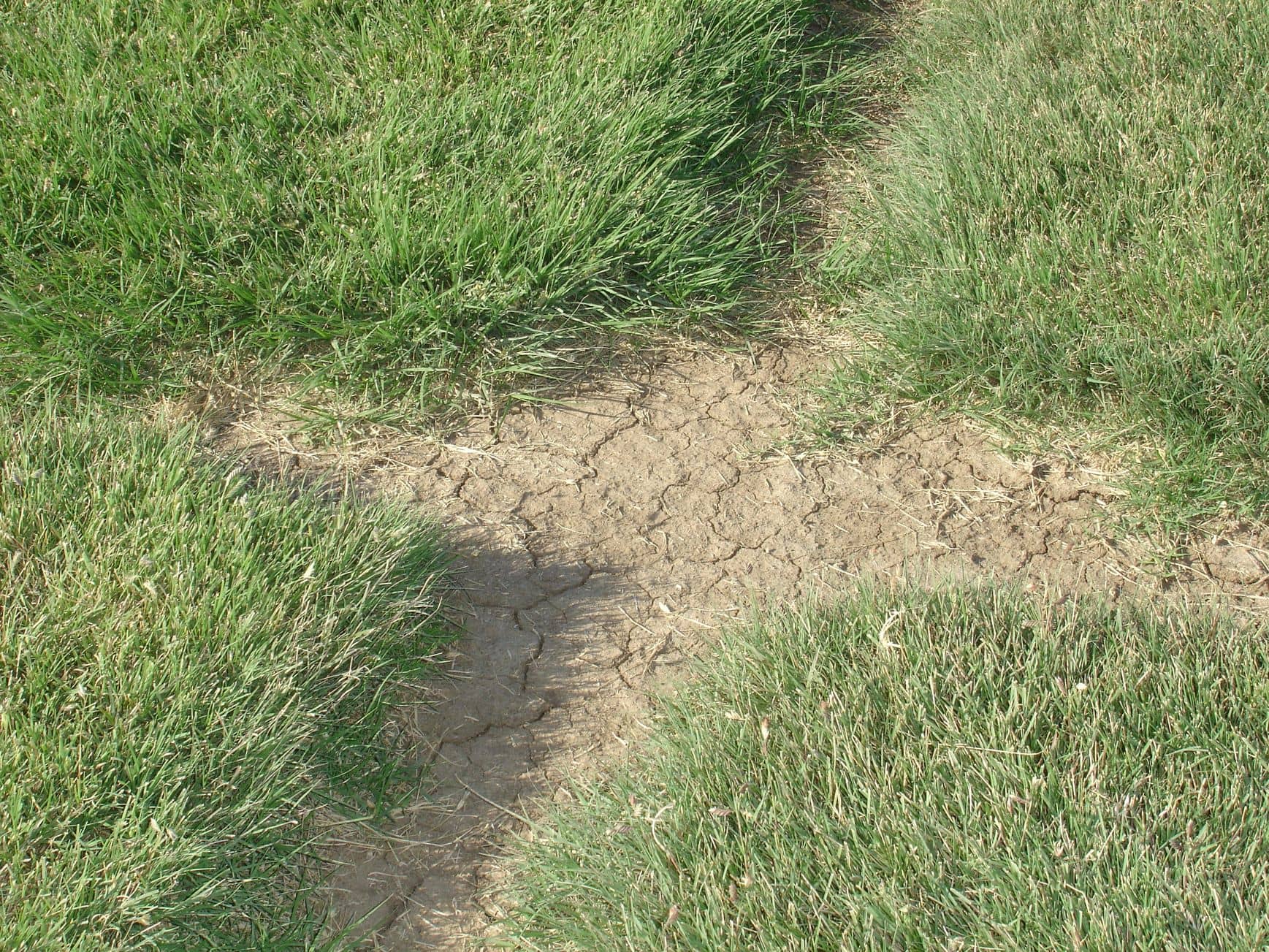
Buffalograss is a fine-leaved grass that originally came from Canada, Mexico and the United States as a prairie grass. Often used by homeowners as a low maintenance option, buffalograss grows best in Texas and anywhere West of the state. This perennial grass is water efficient with great durability.
Buffalograss Characteristics:
- Type of Grass: Warm season
- Blade Width: 1–3 mm
- Blade Shape: Pointed bladed tip
- Spreading/Growth Habit: Rhizomes
- Vernation: Rolled
- Auricle Type: Absent
- Ligule Type: Fringe of hairs
How to Identify Tall Fescue
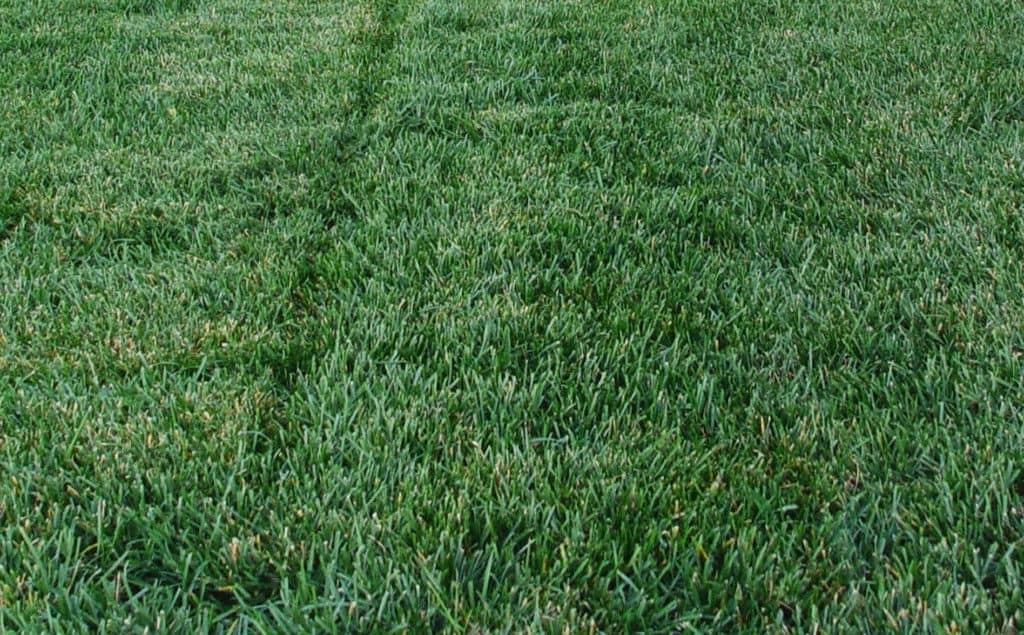
Tall fescue is a cool season grass that can survive cool weather and harsh temperatures. Often used in the most northern parts of the United States, tall fescue is also one of the most shade tolerant turfgrass varieties available. It is drought and heat stress tolerant, coarse textured and dark green in color.
Tall Fescue Characteristics:
- Type of Grass: Cool season
- Blade Width: 0.5 inches wide
- Blade Shape: Pointed blade tip
- Spreading/Growth Habit: Bunch-like growing habit
- Vernation: Rolled
- Auricle Type: Short, non-clasping
- Ligule Type: Membranous
How to Identify Fine Fescue
Like tall fescues, fine fescues are also very shade tolerant and grow in bunch-like growing patterns. Fine fescue is one of the finest-bladed turfgrass varieties available. For this reason, you can often find it mixed with tall fescue in home lawns or commercial landscapes.
Fine Fescue Characteristics:
- Type of Grass: Cool Season
- Blade Width: Roughly 1.5 mm
- Blade Shape: Pointed blade tip
- Spreading/Growth Habit: Bunch-like growing habit
- Vernation: Folded
- Auricle Type: Absent
- Ligule Type: Membranous
How to Identify Kentucky Bluegrass
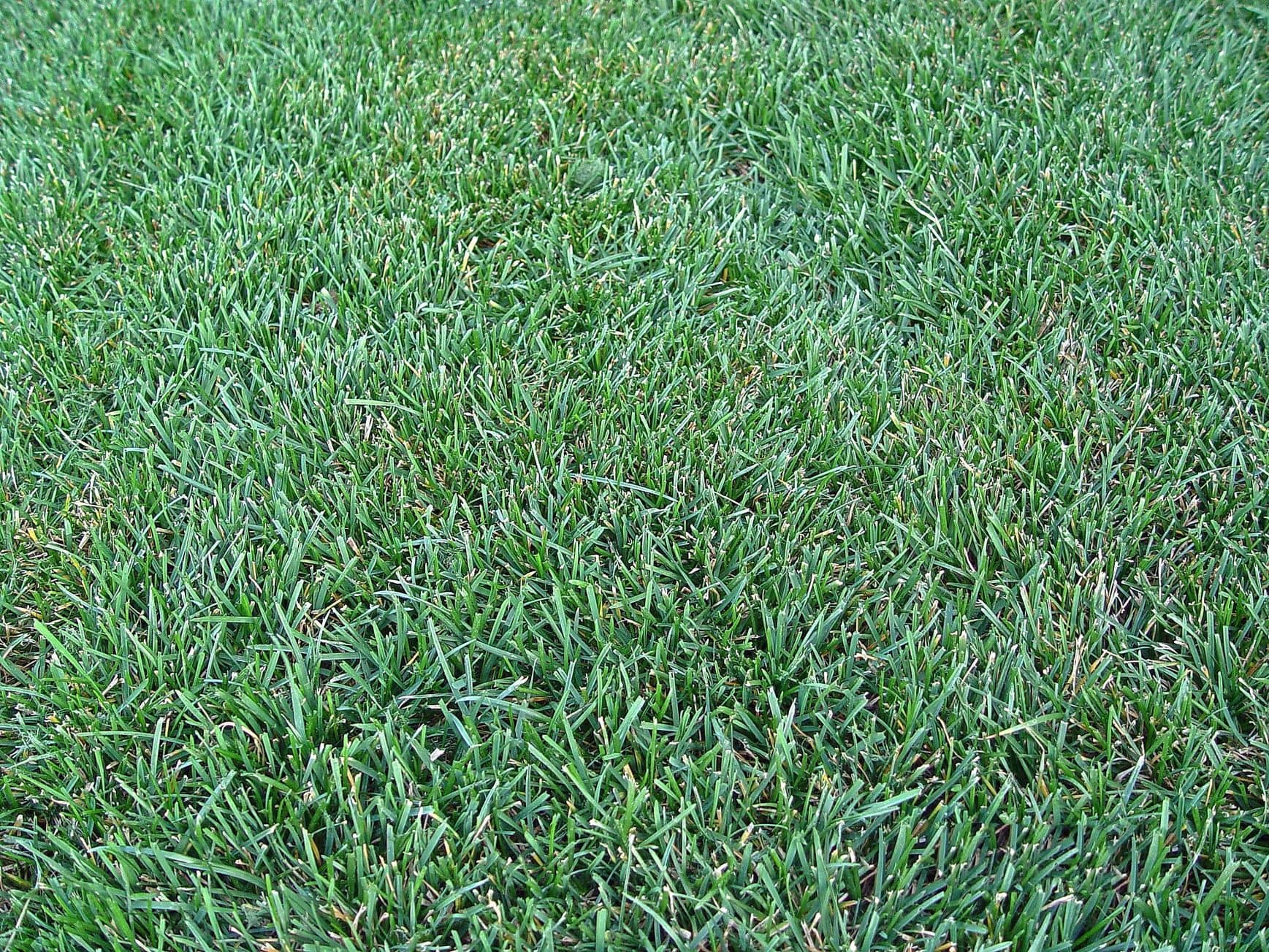
Kentucky bluegrass is a cool season grass that has excellent winter hardiness and a soft feel. Kentucky bluegrass is usually easy to identify due to its unique boat-shaped leaves and bluish-green color depicted in the image below.
Kentucky Bluegrass Characteristics:
- Type of Grass: Cool season grass
- Blade Width: 2–4 mm wide
- Blade Shape: Rounded, boat-shaped blade tip
- Spreading/Growth Habit: Bunch-like growing habit and rhizomes
- Vernation: Folded
- Auricle Type: Absent
- Ligule Type: Membranous
How to Identify Perennial Ryegrass
Perennial ryegrass can be used as a permanent turfgrass in home lawns located up in the northern areas of the United States as well as the transition zone. It can also be used in the southern two-thirds of the United States to overseed warm season lawns during winter dormancy like bermuda grass and zoysia grass.
Perennial ryegrass is usually slightly darker than annual ryegrass, however, it still maintains its bright green reputation. Perennial ryegrass has a very fine texture in comparison to annual ryegrass’s coarse feel.
Perennial Ryegrass Characteristics:
- Type of Grass: Cool season
- Blade Width:
- Blade Shape: Pointed blade tip
- Spreading/Growth Habit: Bunch-like growing habit
- Vernation: Folded
- Auricle Type: Short
- Ligule Type: Membranous
How to Identify Bentgrass
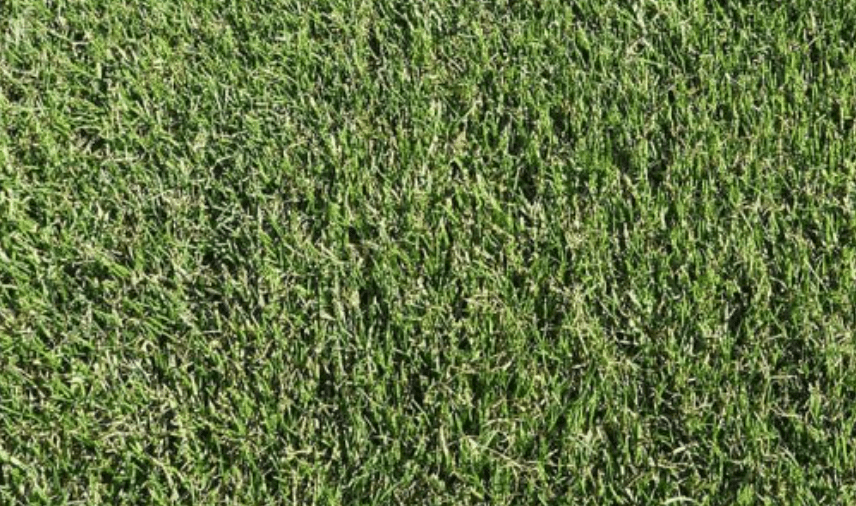
Bentgrass is a cool season turfgrass variety that grows in lighter-colored patches anywhere between 6 inches to 2 feet in height. In the summer, it turns a wilted brown as it goes into dormancy and returns to its lighter green color in the fall. Bentgrass typically has a shallow root system, yet it can withstand foot traffic and frequent mowing.
Bentgrass Characteristics:
- Type of Grass: Cool season grass
- Blade Width: 2–5 mm wide
- Blade Shape: Pointed blade tip
- Spreading/Growth Habit: Stolons
- Vernation: Rolled
- Auricle Type: Absent
- Ligule Type: Membranous
How to Choose the Best Type of Grass for My Lawn
Once you identify your lawn's grass type, you might consider switching to a variety better suited to your needs. The choice depends on factors like your local climate, budget and specific needs—whether you require a shade-tolerant variety, low-maintenance grass or a type durable enough for pets and children.
To navigate these options, explore our resources: start with our blog on selecting the right grass and check out our care guides for maintaining various grass types throughout the year. These tools are designed to help you keep your lawn in peak condition.