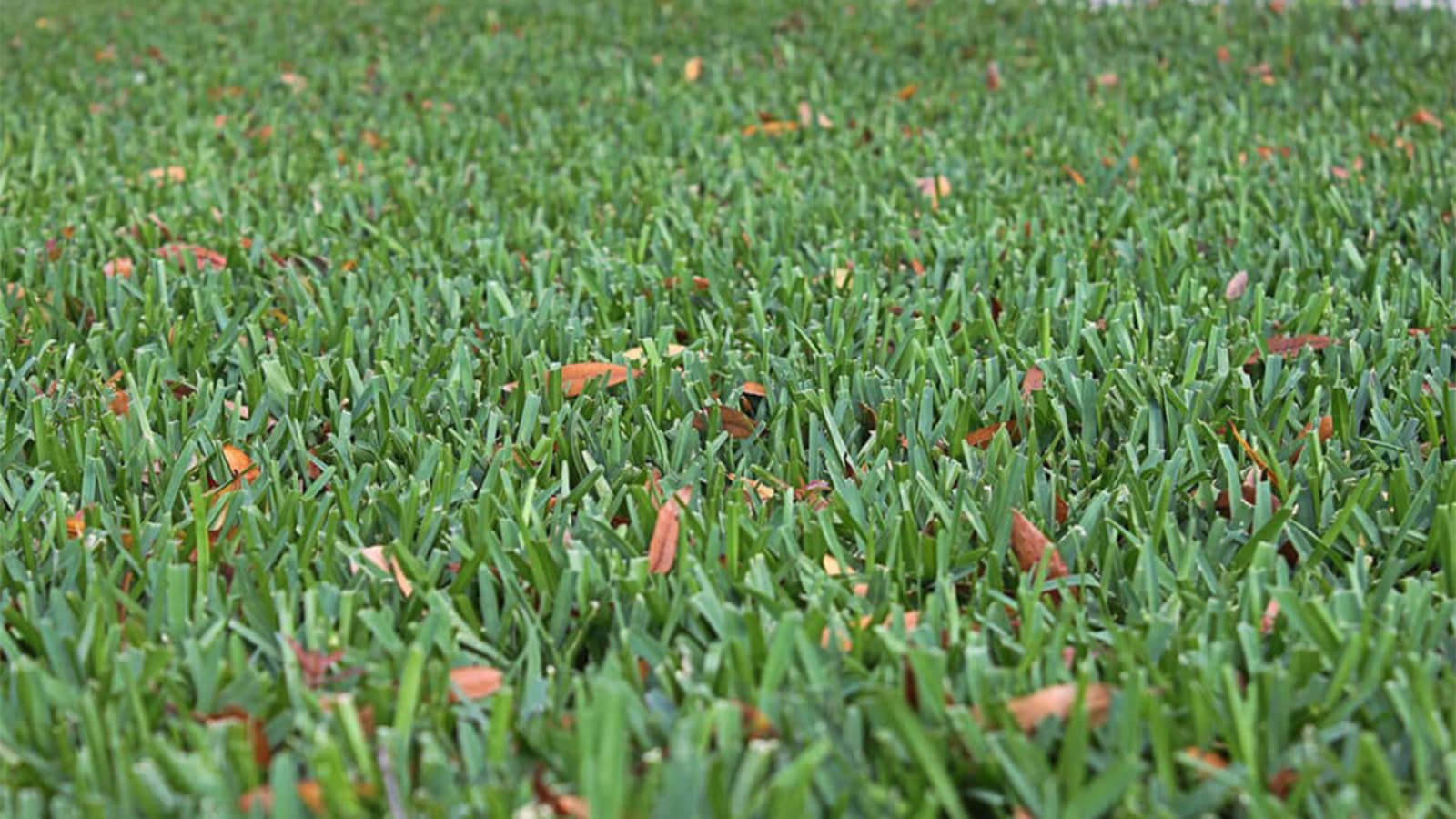
The type of grass you choose can completely transform your yard’s look and performance.
St. Augustine Grass: A favorite across the southern U.S., loved for its thick, tropical blades and rich tropical color. However, here’s something many homeowners don’t realize—not all St. Augustine grass varieties are the same. In fact, there are several varieties, each with unique strengths suited to different climates, soil types and levels of sun exposure.
Choosing the right one can mean the difference between a lawn that simply survives and one that truly thrives.
Common Types of St. Augustine Grass Varieties
St. Augustine Grass Comparison
| Characteristic | Palmetto | CitraBlue | Cobalt | Sola |
|---|---|---|---|---|
| Blade Width | Medium | Coarse | Coarse | Medium |
| Color | Dark Emerald-Green | Dark Blue-Green | Dark Green | Dark Green |
| Drought Tolerance | ★★★☆☆ | ★★★★☆ | ★★★★☆ | ★★★☆☆ |
| Irrigation Requirements | ★★☆☆☆ | ★★★★☆ | ★★★★★ | ★★★★☆ |
| Disease Tolerance | ★★★☆☆ | ★★★★★ | ★★★★☆ | ★★★★☆ |
| Wear Tolerance | ★★★☆☆ | ★★☆☆☆ | ★★★★☆ | ★★★☆☆ |
| Shade Tolerance | ★★★★☆ | ★★★★★ | ★★★★☆ | ★★★★☆ |
| Spring Green-Up | ★★☆☆☆ | ★★☆☆☆ | ★★★☆☆ | ★★★☆☆ |
| Fall Color Retention | ★★★★☆ | ★★★★☆ | ★★★★☆ | ★★★★☆ |
| Winter Survivability | ★★★★☆ | ★★★☆☆ | ★★★★☆ | ★★★★☆ |
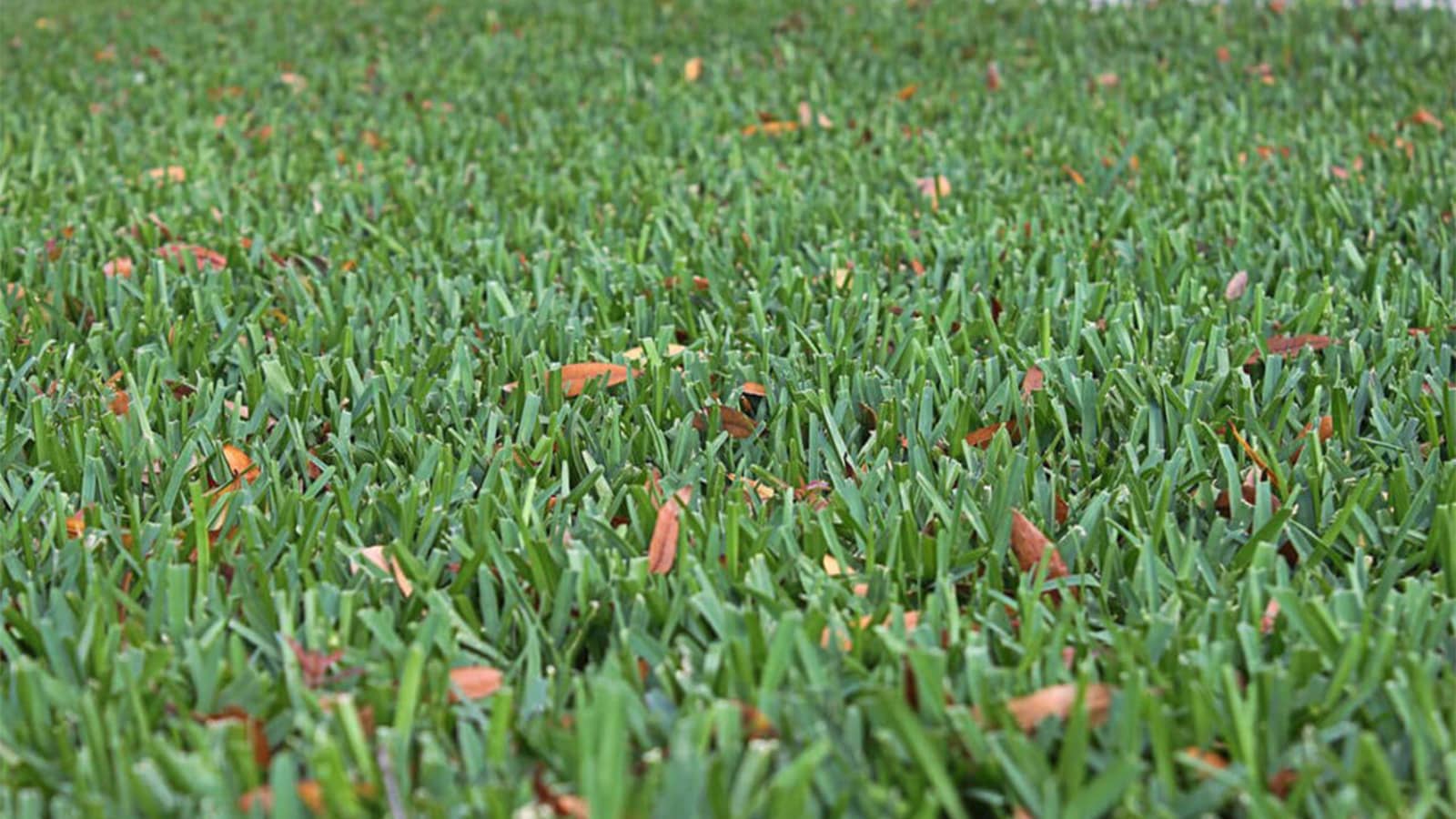
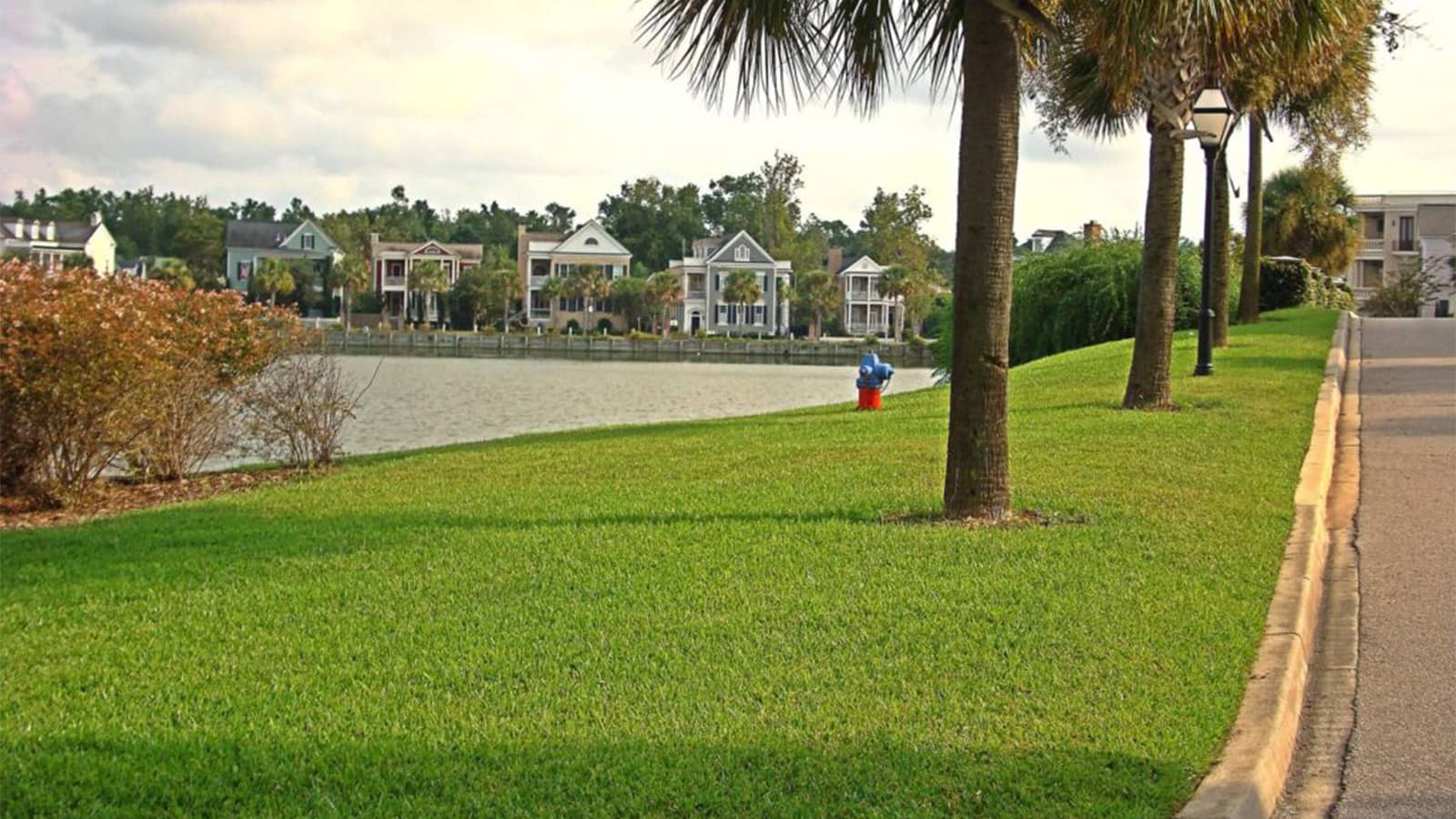
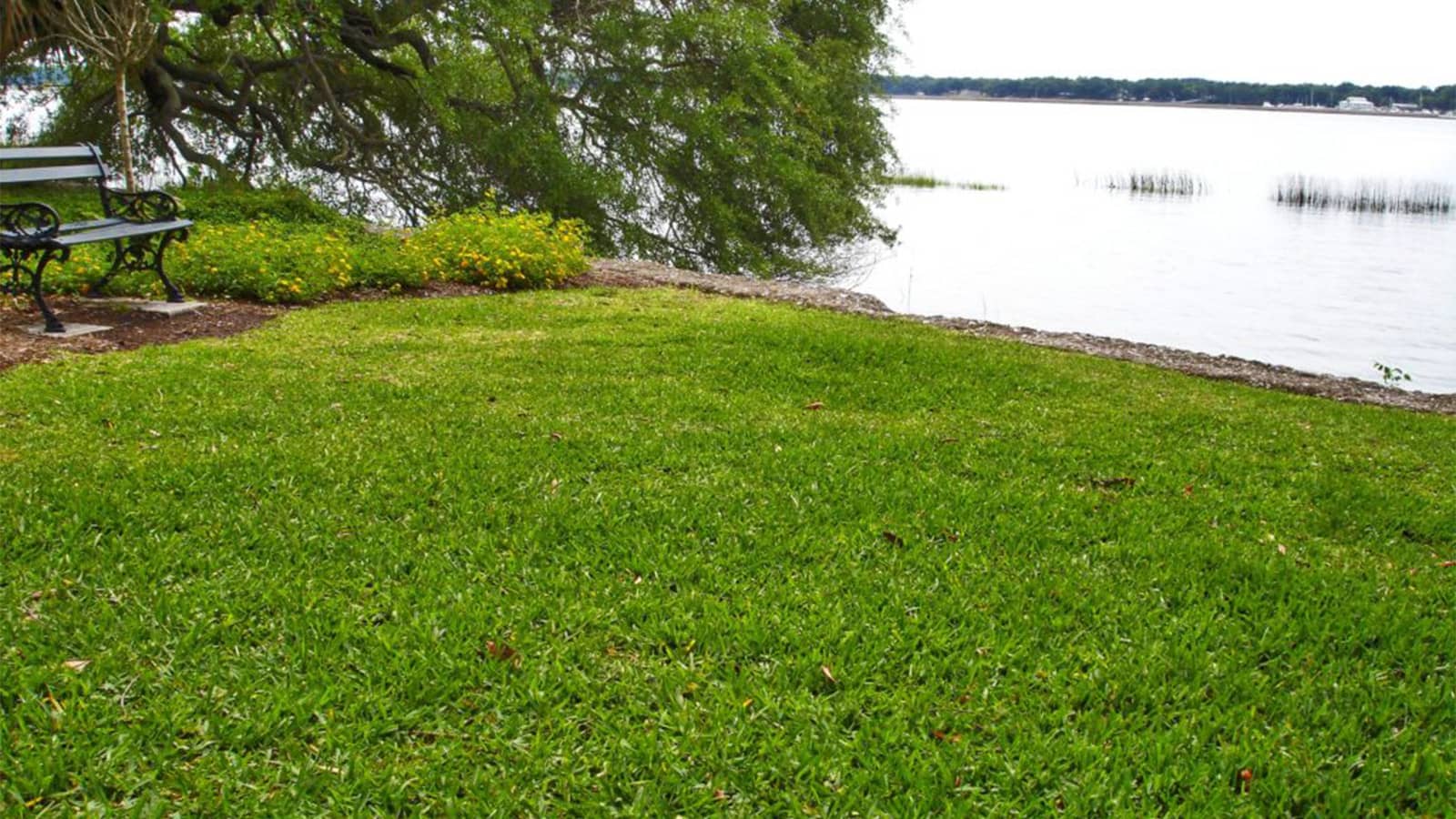
Palmetto St. Augustine
📌 Best For:
- Yards with mixed sun and shade
- Homeowners wanting a classic emerald-green look
- Lawns needing strong, all-around durability (shade, cold, heat, drought)
- Areas needing resistance to Lethal Viral Necrosis (LVN)
Key Features:
- Finer blades than most St. Augustines with a soft feel
- Deep emerald-green color
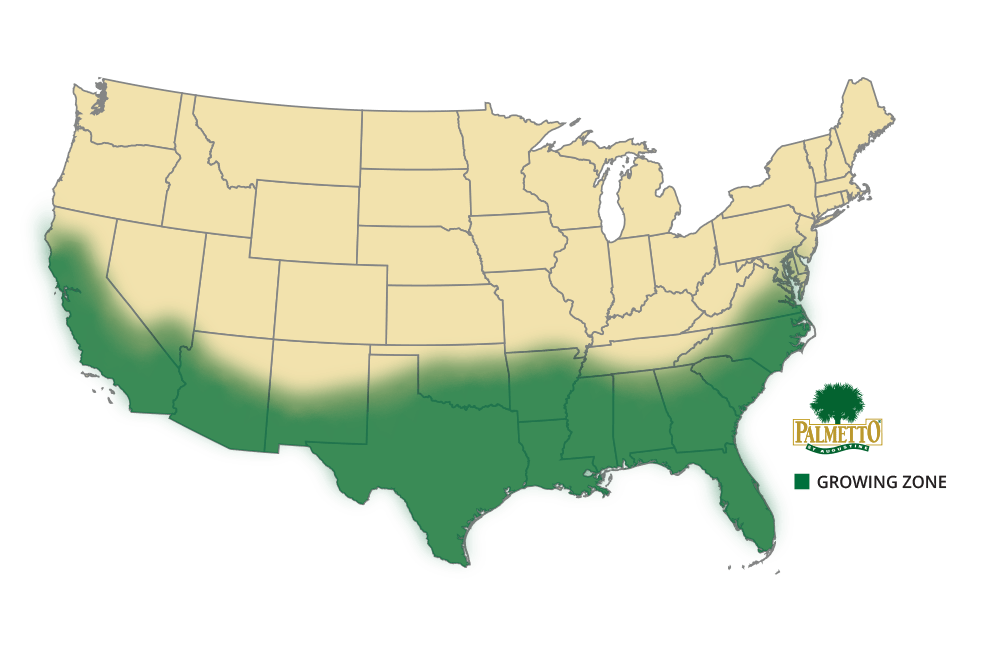
- Performs well from coast to coast across the South
- Low-maintenance growth habit and appearance
Performance Strengths:
- Unique resistance to Lethal Viral Necrosis
- Excellent shade tolerance (among the best; rivals CitraBlue®)
- Strong cold and frost tolerance
- Handles heat and drought better than many St. Augustine varieties
- Adapts to a wide range of soil types and environmental conditions
Why Homeowners Choose Palmetto St. Augustine:
- Delivers beauty and performance where others struggle
- Offers reliability in challenging environments
- Maintains a thick, green appearance with minimal effort
- Considered one of the most trusted and versatile St. Augustine varieties available
CitraBlue St. Augustine
📌 Best For:
- Homeowners wanting a rich, blue-green lawn with standout color
- Yards with moderate to heavy shade
- Families needing a turf that handles foot traffic, heat and drought
- Low-maintenance lawns with reduced mowing and fertilization needs
Key Features:
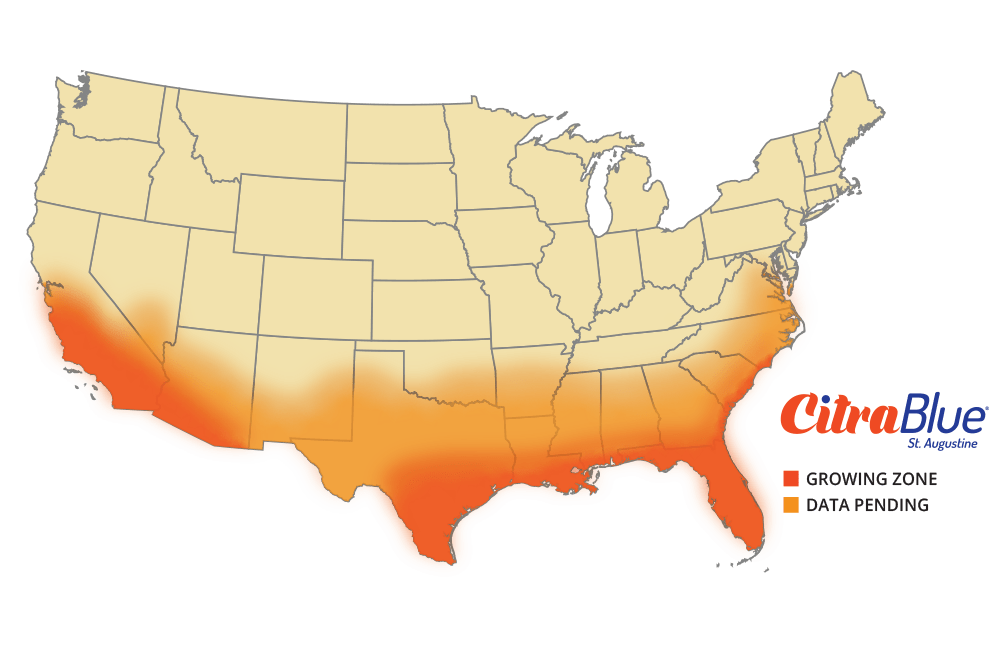
- Developed by the University of Florida Turfgrass Breeding Program
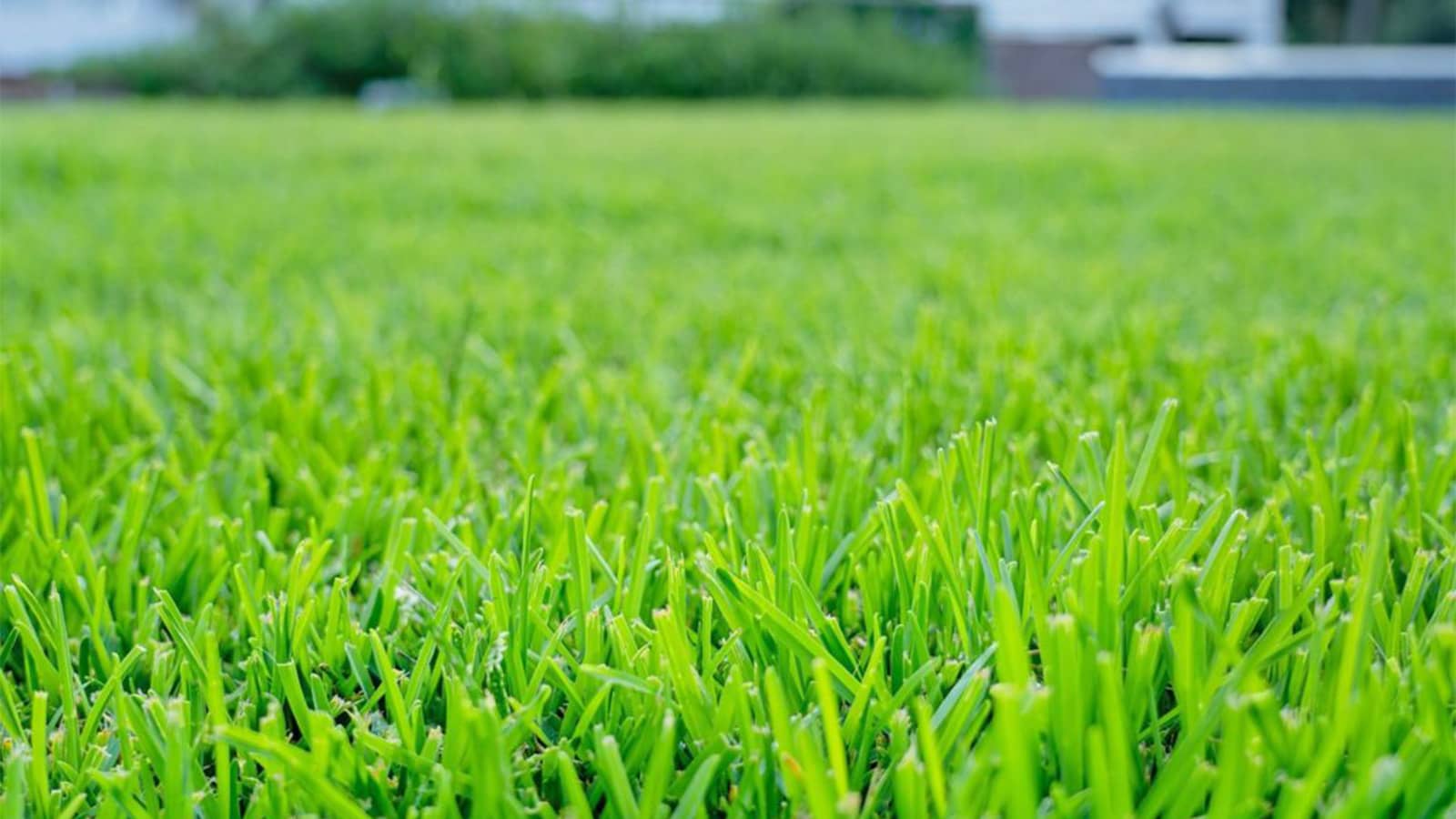
- Signature deep blue-green color for a distinctive, premium appearance
- Low nitrogen requirement, reducing fertilizer usage
- Dense, lateral growth habit for a tight, carpet-like lawn
Performance Strengths:
- Excellent shade tolerance, comparable to Palmetto
- Superior disease resistance to:
- Gray leaf spot
- Large patch
- Take-all root rot
- Natural chinch bug resistance
- A thick lateral spread means less frequent mowing
- Deep root system improves:
- Drought tolerance
- Heat resilience
- Foot traffic performance
- Shade endurance
Why Homeowners Choose CitraBlue:
- Combines beauty with toughness for year-round appeal
- Requires fewer inputs (lower fertilizer + reduced mowing)
- Maintains a dense lawn even in challenging conditions
- Ideal for active households with kids, pets or high-use areas
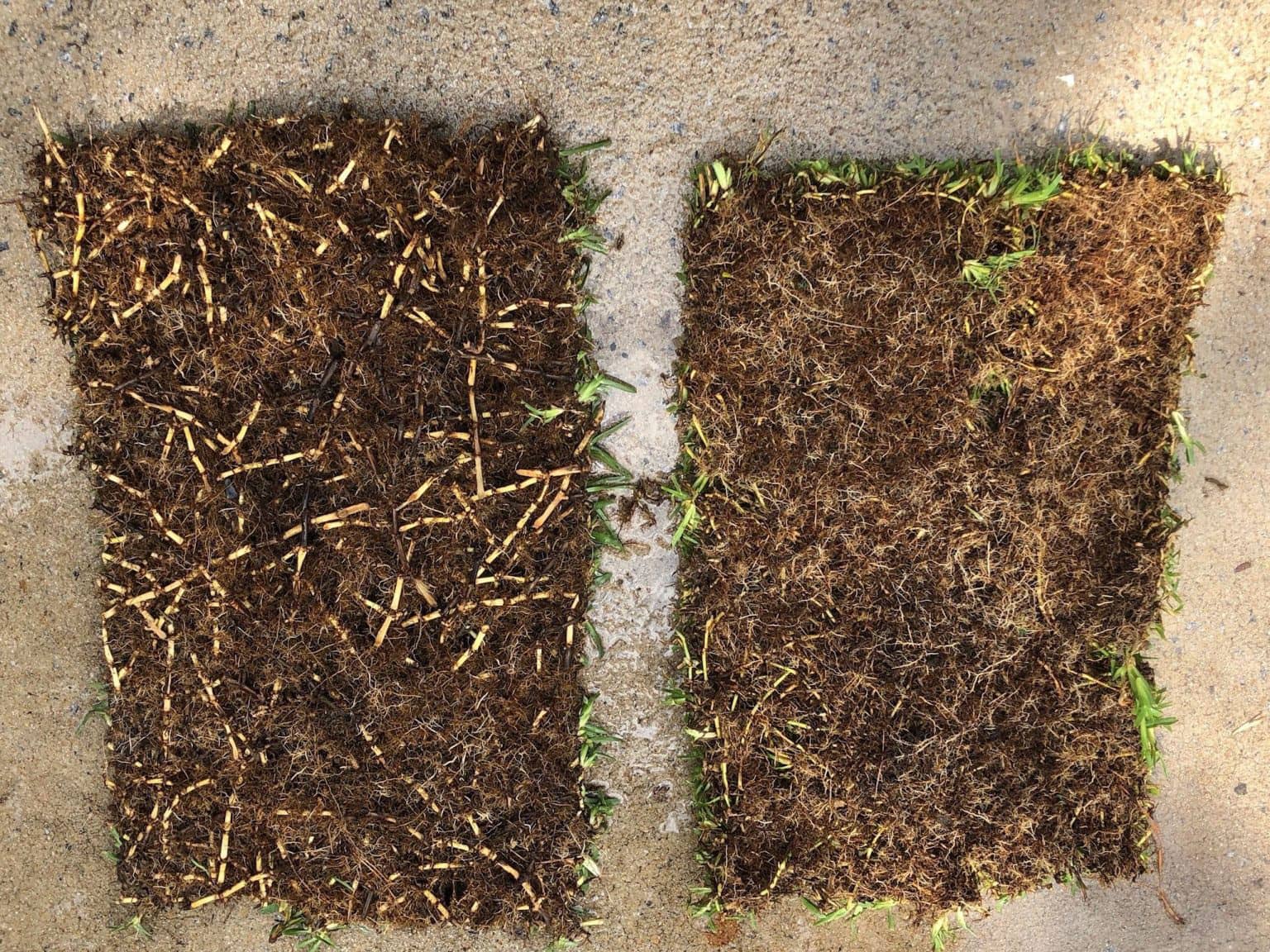
Pictured above: CitraBlue (left) and Floratam (right) demonstrating a difference in roots and rhizomes.
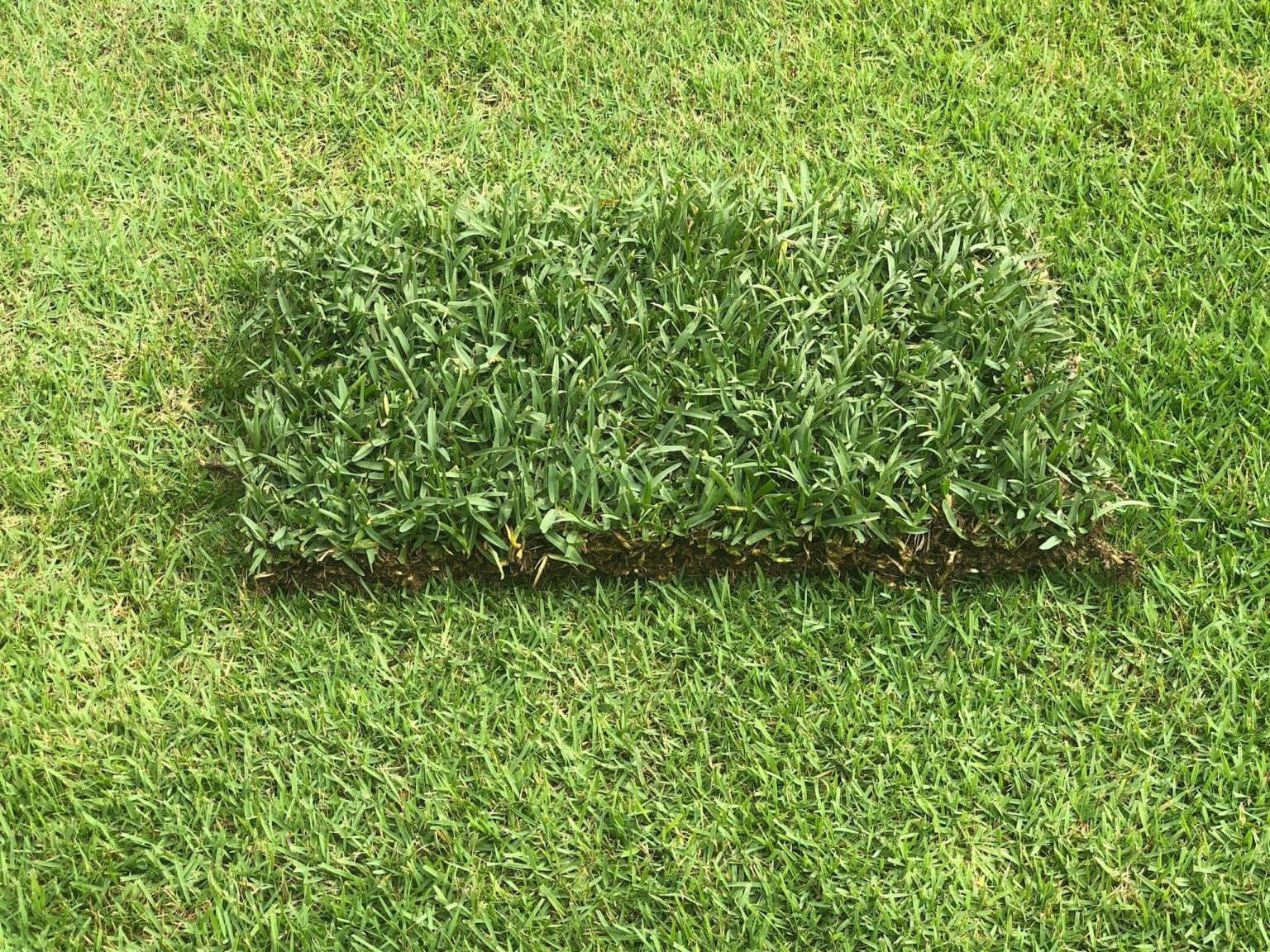
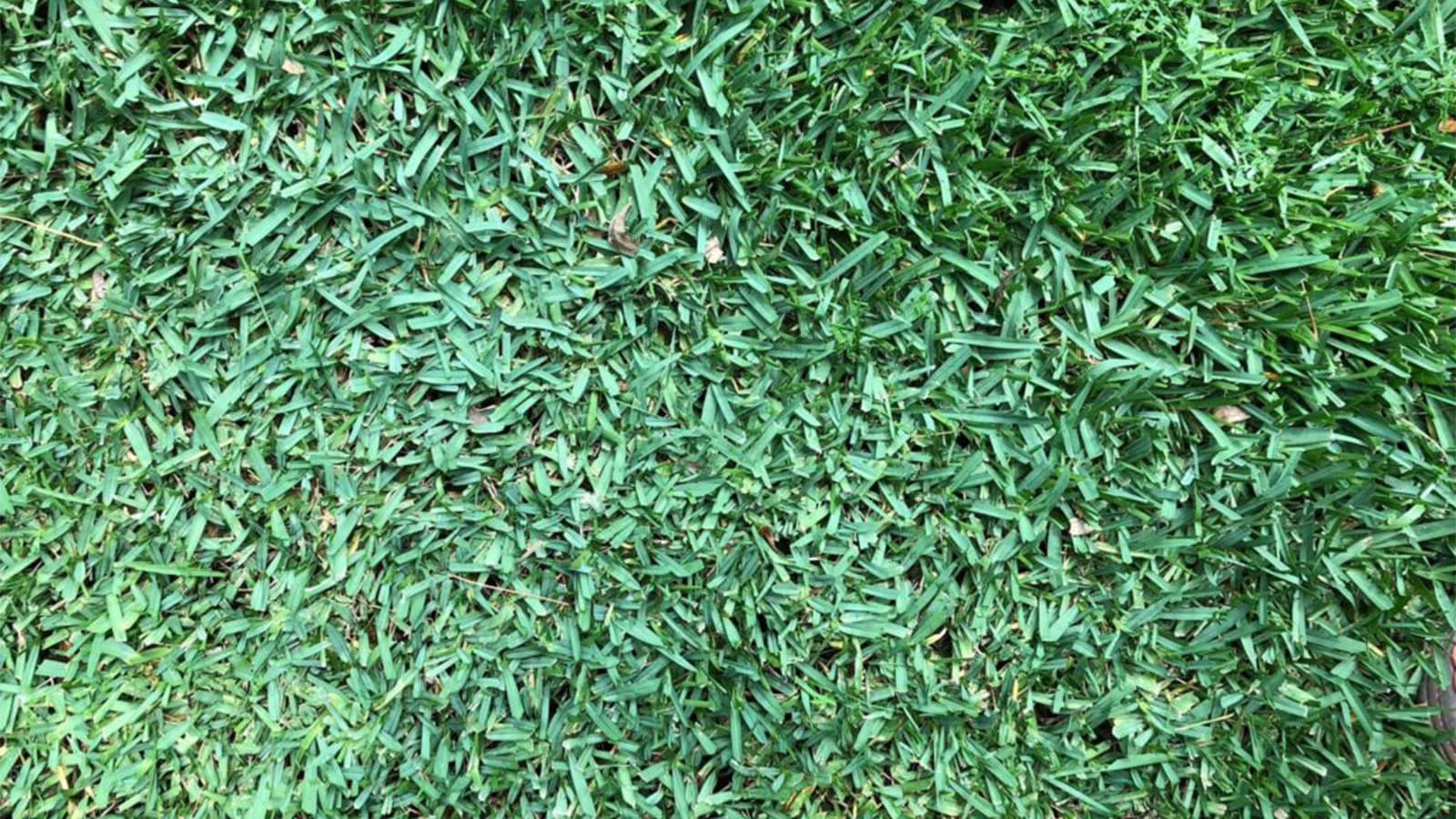
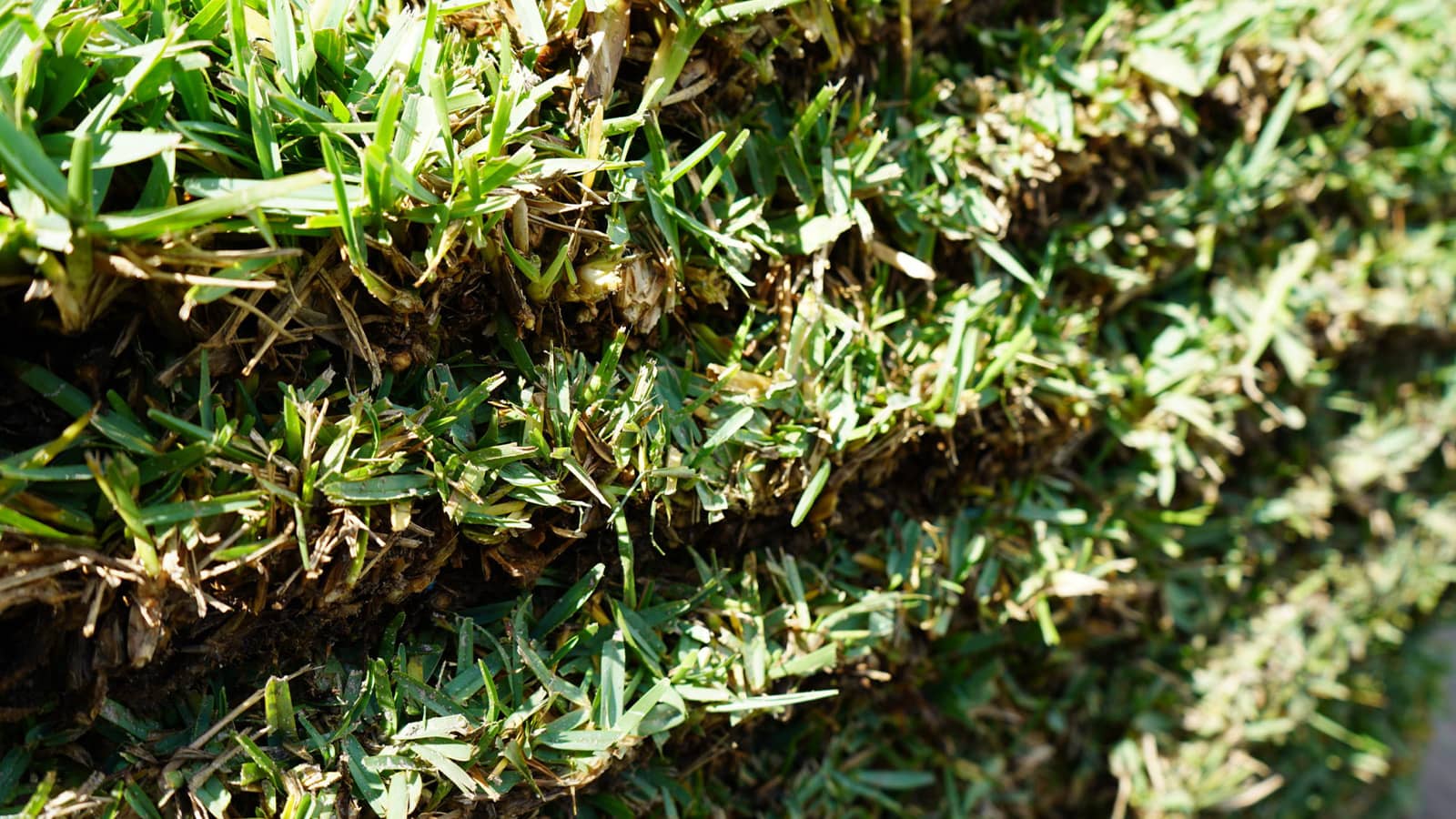
Pictured above: CitraBlue sod on top of Floratam demonstrating a difference in color and texture.
Cobalt St. Augustine
📌 Best For:
- Homeowners needing cold-resistant, disease-tolerant turf
- Coastal properties exposed to salt and inconsistent irrigation
- Yards with mixed sun and shade
- Residential or commercial landscapes requiring high durability
Key Features:
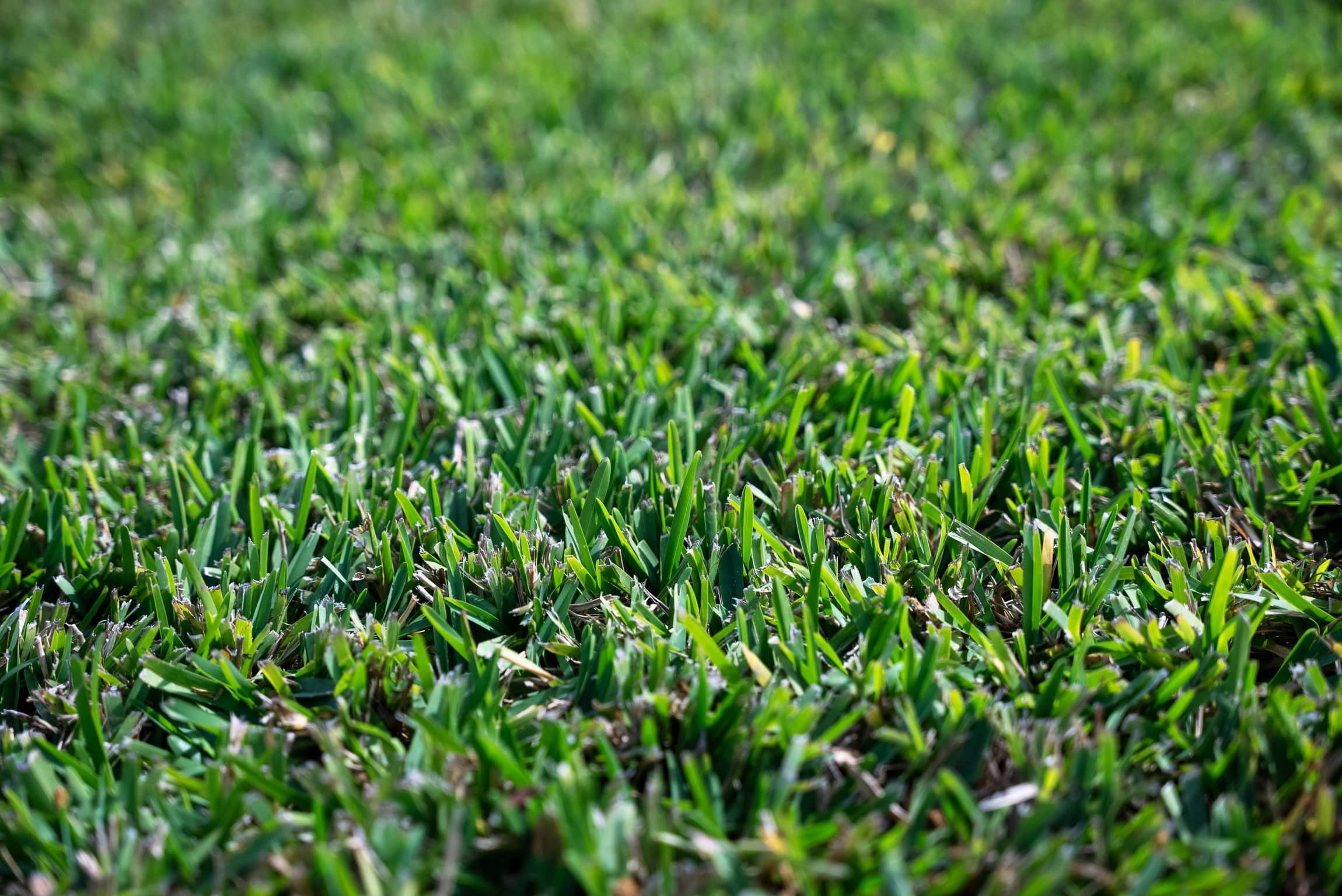
- One of the newest and toughest St. Augustine varieties
- Engineered to perform in real-world, high-stress environments
- Excellent drought and salt tolerance—ideal for coastal zones
- Thrives in cooler climates and areas with limited sunlight
- Strong resistance to common turf diseases, helping maintain a healthy, uniform lawn
Performance Strengths:
- Cold tolerance: Handles lower temperatures better than many varieties
- Shade performance: Rated Very Good for filtered or partial shade
- Drought tolerance: Excellent—great for areas with inconsistent watering
- Salt tolerance: Excellent—perfect for coastal locations
- Wear tolerance: Very Good for foot traffic and active yards
Cobalt Characteristics:
- Ideal Use: Residential lawns, commercial landscapes, coastal regions
- Mow Height: 2–3 inches
- Blade Width: Medium (6–8 mm)
- Wear Tolerance: Very Good
- Shade Tolerance: Very Good
- Drought Tolerance: Excellent
- Salt Tolerance: Excellent
Why Homeowners Choose Cobalt
- Delivers a durable, vibrant lawn in tough climates
- Stands up to heat, cold, shade, salt and drought
- Low disease pressure means less maintenance and a cleaner look
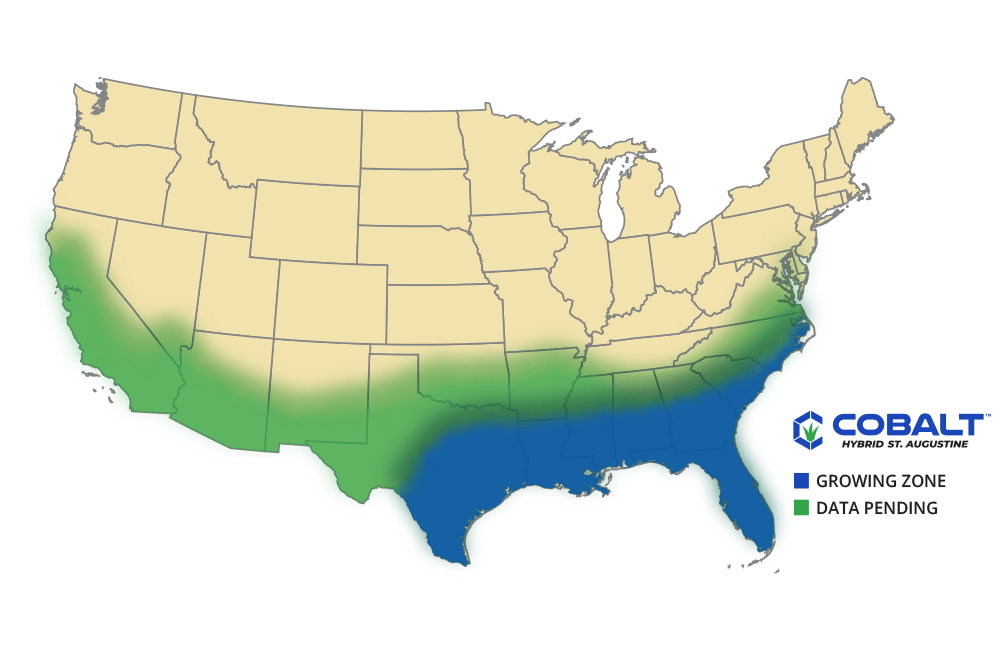
- Performs consistently from coastal areas to inland Southern lawns
Sola St. Augustine
📌Best For:
- Homeowners needing a shade-tolerant, cold-adaptive St. Augustine
- Yards with mixed sun and shade
- High-traffic areas used by kids, pets or frequent gatherings
- Lawns that benefit from reduced mowing and easy upkeep
Key Features:
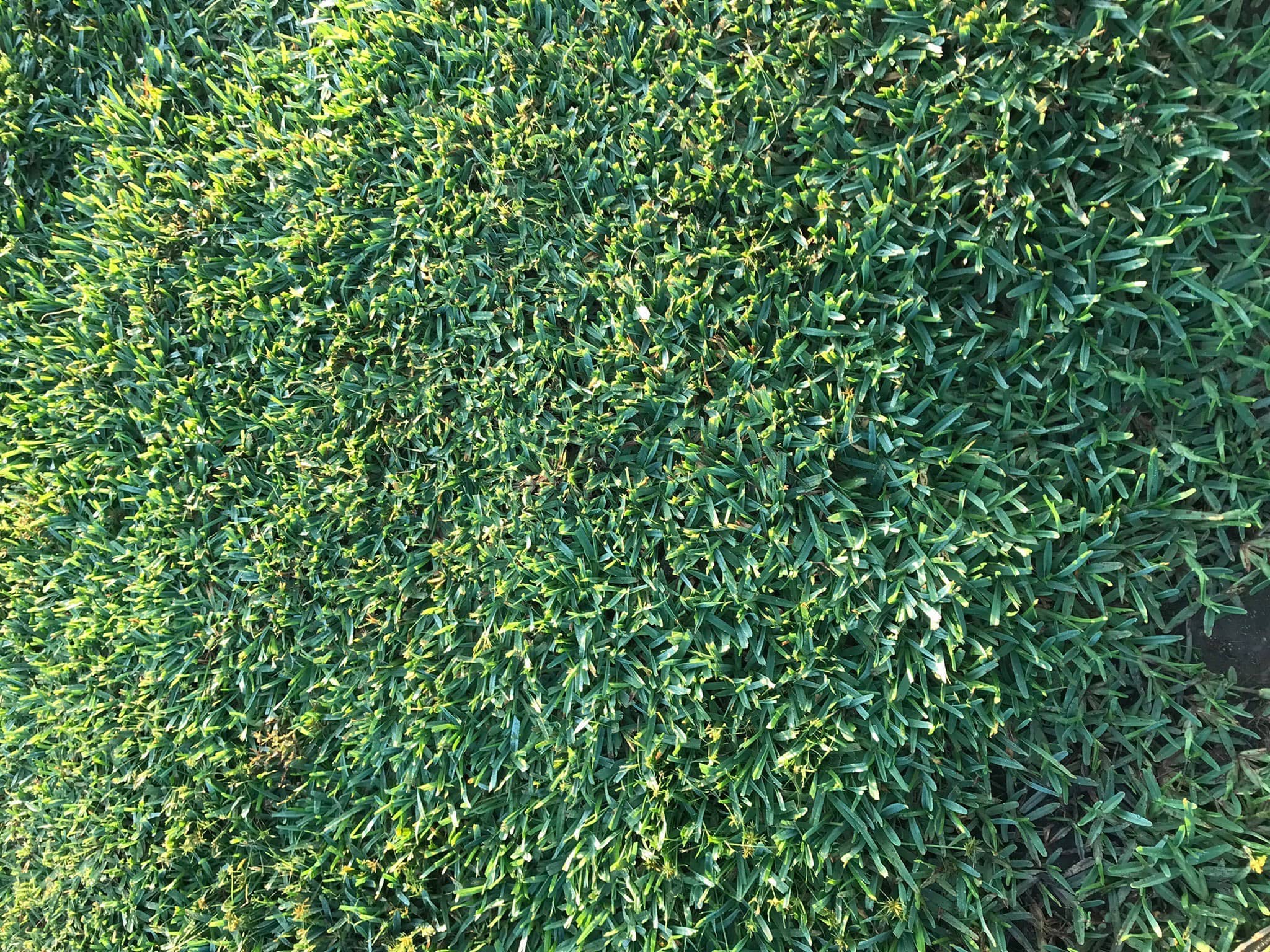
- Fine-textured, dwarf variety that creates a dense, carpet-like lawn
- Naturally requires less mowing than most St. Augustine grasses
- Performs reliably in both sunny and shaded conditions
- Ideal for active, high-use lawns
- Built-in resistance to common turf diseases and insects, lowering upkeep
Performance Strengths:
- Shade tolerance: Rated Very Good—thrives where other varieties thin out
- Wear tolerance: Excellent—great for families, pets and foot traffic
- Cold adaptability: Handles cooler conditions better than many traditional types
- Drought tolerance: Good—sustains health during dry periods
- Low maintenance: Reduced mowing + moderate fertilizer and water needs
Sola Characteristics:
- Ideal Use: Residential lawns, shaded properties, active/high-traffic yards
- Mow Height: 1.5–2.5 inches
- Blade Width: Fine (5–6 mm)
- Wear Tolerance: Excellent
- Shade Tolerance: Very Good
- Drought Tolerance: Good
- Maintenance Needs: Reduced mowing, moderate inputs
Why Homeowners Choose Sola:
- Offers an ideal mix of beauty, convenience and durability
- Maintains a green appearance with minimal effort
- Excels in shade, cold and high-traffic environments
- Provides a long-lasting, durable lawn that stays attractive season after season
Other St. Augustine Varieties (And How Alternative Options Improve on Them)
Homeowners researching St. Augustine grass will frequently come across several other widely used varieties such as Floratam, Bitterblue, Sapphire, Raleigh, Seville and even the newer ProVista line.
Newer St. Augustine varieties offer improved shade tolerance, stronger disease resistance, better color retention and easier maintenance, making them more reliable choices for today’s lawns.
Floratam St. Augustine
Floratam is known for its vigorous growth and heat tolerance, but it comes with several major limitations:
- Very poor shade tolerance—struggles under trees or cloud cover
- Prone to cold damage, especially in northern regions
- Common disease issues, including large patch
- Coarser texture and less vibrant winter color
Better Alternative: Palmetto or CitraBlue St. Augustine
Why Palmetto Outperforms Floratam:
- Greater shade tolerance
- Palmetto has increased cold tolerance and better winter color
- As a semi-dwarf with shorter and finer blades, Palmetto has a softer leaf texture and more refined appearance
- More adaptable to a wider geographic range
Bitterblue St. Augustine
Bitterblue has historically been used for its finer texture and moderately improved cold tolerance compared to Floratam. While attractive, it presents several limitations in today’s landscapes:
- Off-patent, meaning anyone can grow and sell it—so the quality you get can vary a lot depending on the supplier. Some Bitterblue on the market may not even be the true variety.
- Higher susceptibility to disease, especially large patch and gray leaf spot
- Color tends to fade in cooler months, reducing year-round appeal
- Moderate shade tolerance, but not strong enough for heavily filtered or low-light yards
- Less uniform density, which can allow weeds to establish
Better Alternative: CitraBlue St. Augustine
Why CitraBlue Outperforms Bitterblue:
- Stronger disease resistance, particularly against large patch and gray leaf spot, which commonly affect Bitterblue
- Richer blue-green color that holds better throughout the year
- Improved shade performance, giving it greater versatility under trees and filtered light
- Lower vertical growth habit, meaning less mowing and easier maintenance
- Enhanced turf density, which helps naturally suppress weeds
Sapphire St. Augustine
Sapphire St. Augustine is only found in California and occassionally in other regions. It is valued for its blue-green color and soft texture. However:
- Higher maintenance due to faster growth rates
- Can suffer winter injury in cooler regions
- Less disease resistance than alternative cultivars
- Performs inconsistently in shaded lawns
Better Alternative: CitraBlue St. Augustine
Why CitraBlue Outperforms Sapphire:
- Naturally blue-green color with better consistency
- Superior shade tolerance and lower vertical growth
- Improved disease resistance—especially against large patch
- Better cold performance and stronger year-round color
Raleigh St. Augustine
Raleigh has been a long-standing St. Augustine variety known primarily for its cold tolerance. While widely used across the transition zone, it presents several challenges in certain lawns:
- Highly susceptible to disease, especially large patch and gray leaf spot
- Prone to chlorosis (yellowing), particularly in certain soil types
- Coarser texture and less refined appearance compared to improved varieties
- Limited shade tolerance, making it difficult to maintain under tree canopy
- Slower recovery from stress or damage
Better Alternative: Sola St. Augustine
Why Sola Outperforms Raleigh:
- Improved cold tolerance, providing more reliable performance in cooler climates
- Stronger shade adaptation, allowing it to thrive in partial shade where Raleigh struggles
- Enhanced disease resistance, significantly reducing common fungal issues
- More vibrant, consistent color across soil types without frequent nutrient correction
- Better overall turf density and recovery, creating a fuller, more durable lawn
Seville St. Augustine
Seville is known for its finer texture and low growth habit, but it often presents challenges for homeowners:
- Weaker cold tolerance, restricting where it can be grown
- Inconsistent shade performance, especially in filtered light
- Susceptibility to disease in humid environments
- Struggles with weed pressure when growth density declines
Better Alternative: Palmetto St. Augustine
Why Palmetto Outperforms Seville:
- Superior shade tolerance, especially in mixed-light conditions
- Greater cold tolerance, making it more reliable across wider climate zones
- Soft texture with stronger color retention throughout the year
- More consistent density, helping naturally suppress weeds
ProVista® St. Augustine
While ProVista is newer than many traditional varieties, some homeowners find its rapid growth results in:
- Potential for deeper thatch if unmanaged
- Less shade performance compared to Palmetto or CitraBlue
Better Alternative: CitraBlue or Palmetto
Why CitraBlue & Palmetto Improve on ProVista:
- Palmetto and CitraBlue offer better shade adaptation and softer texture
- CitraBlue provides stronger disease resistance and unique color
- Both require less mowing and have more refined growth habits
Ultimately, no matter your region or lawn goals, there’s a St. Augustine variety perfectly suited to your environment. By taking the time to learn about each option, you’ll ensure you choose the turf that not only survives—but truly thrives—for years to come. Be sure to also fertilize your new lawn with the best fertilizer for new St. Augustine grass, the Lawnifi® New Lawn Starter Box.
Frequently Asked Questions About Common Types of St. Augustine Grasses
All St. Augustine are the best of warm season grasses to grow in shade with Palmetto and CitraBlue St. Augustine being the best.
Cobalt St. Augustine, developed by Texas A&M, is the best St. Augustine for drought and water savings.
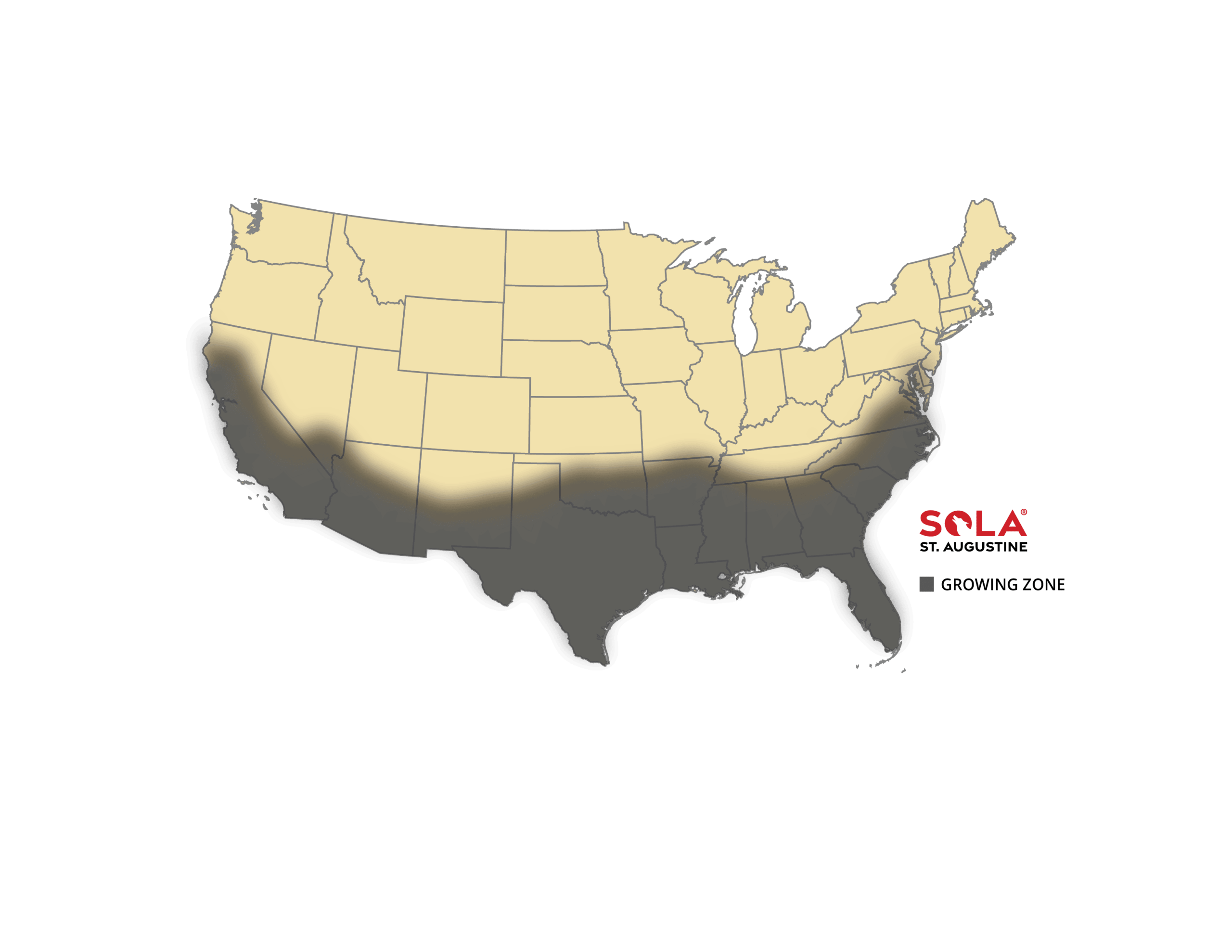
Sola St. Augustine grass, developed by NC State, is the best St. Augustien grass for colder weather—however, St. Augustine grass in general is a warm season turfgrass that thrives in the Southern two-thirds of the United States with exact regions depending on the variety.
CitraBlue St. Augustine requires the least maintenance overall. Its slower vertical growth reduces mowing frequency, and it needs less nitrogen fertilizer than most other St. Augustine varieties—making it an easy, low-input option for homeowners.
Palmetto St. Augustine has a finer blade compared to other St. Augustine grass types.
Loved this content? Get lawn care tips, updates, and more delivered straight to your inbox—subscribe to our free weekly newsletter.