Dollarweed, or pennywort, is a perennial weed that thrives in humid, warm environments and excessively wet areas. It is most commonly found in coastal regions or overwatered lawns and is known for its rapid spread and resilience. Identifying dollarweed early is crucial to preventing it from taking over your lawn.
This guide will help you recognize dollarweed by detailing its appearance, growth habits and lifecycle. You’ll also learn to distinguish it from similar-looking weeds, ensuring accurate identification and timely control.
What does dollarweed look like?
Lily Pad-Like Leaves
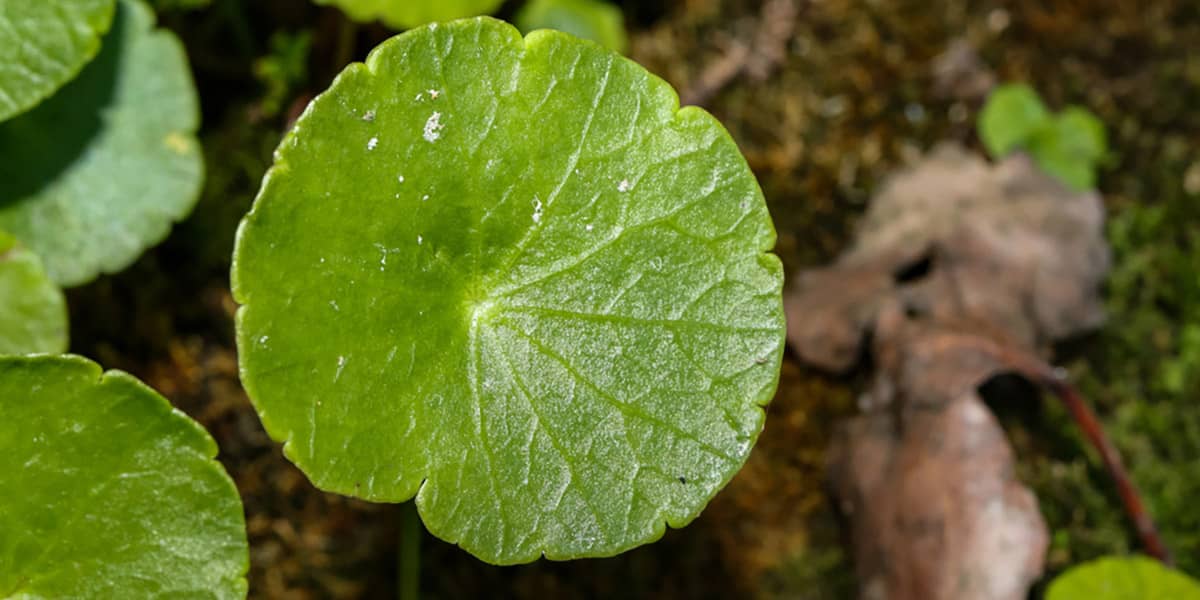
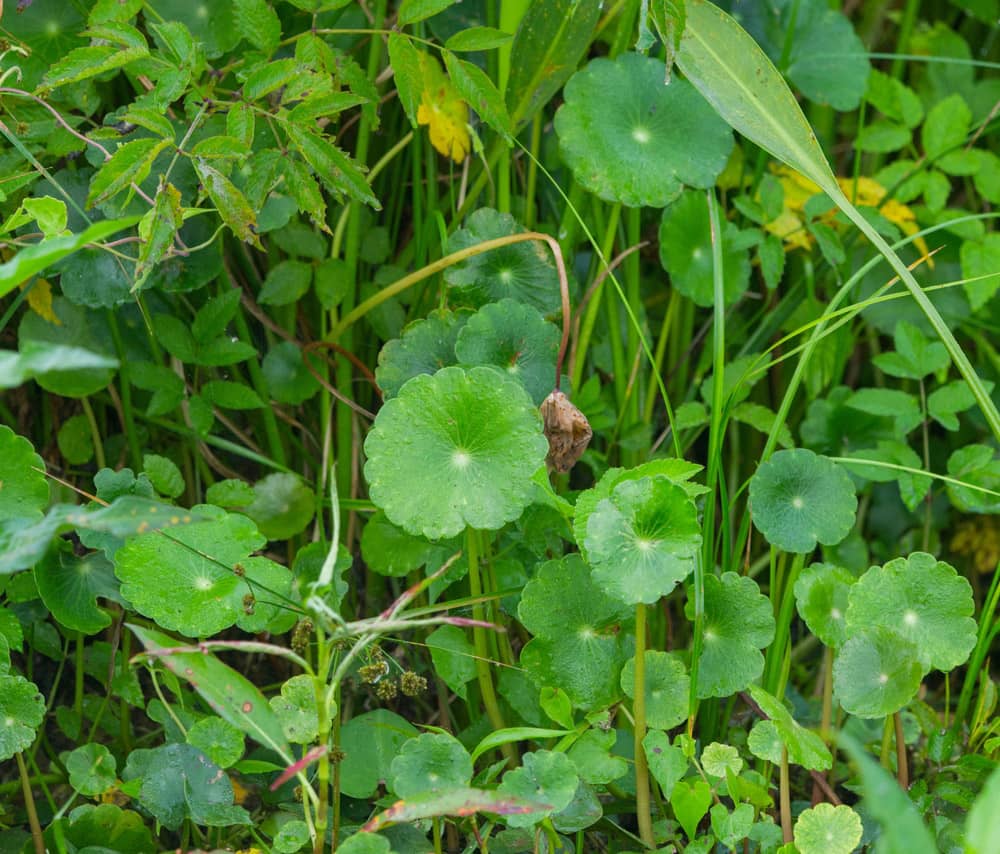
Dollarweed’s round, shiny leaves are its most distinctive feature. They resemble small lily pads. These bright green leaves have wavy edges and a smooth, glossy surface, making them easy to spot on your lawn.
Stem Growth
One important identifying feature of dollar weed is its stem growth. Dollarweed’s stem grows directly from the center of the leaf, a small but crucial detail when distinguishing it from other weeds.
Flowers
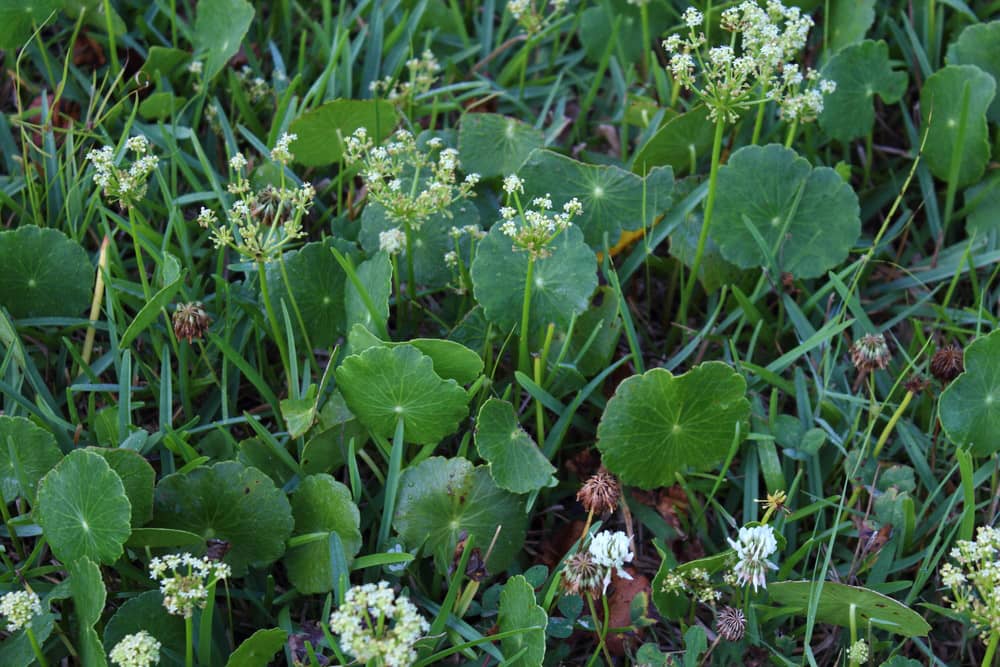
Dollarweed produces small, white flowers that bloom between July and August. These flowers are not very noticeable but can help confirm the presence of dollarweed during the summer months.
Water Tolerance
Dollarweed thrives in excessively wet areas and can even float in water, making it a common indicator of overwatering or poor drainage. If you spot dollarweed in your lawn, it’s often a sign that it is too moist or has drainage issues. Its ability to survive in soggy conditions makes controlling water levels essential in managing this weed.
What is Dollarweed?
Dollarweed, or pennywort, is a moisture-loving weed that spreads rapidly through underground tubers, rhizomes, and seeds. It is commonly found in St. Augustine lawns and other turfgrasses along the coastline or in areas prone to overwatering.
Spreading Mechanisms
Dollarweed’s underground tubers and rhizomes make it difficult to control. As it grows, the weed spreads by forming roots wherever the nodes of its creeping stems touch the soil, creating new plants.
This underground growth makes dollarweed particularly resilient and hard to eradicate by hand, as even small pieces left behind can regrow into new plants.
Growth Habits: How Dollarweed Behaves in Different Climates
Dollarweed thrives in warm, moist environments and is commonly found in lawns that are frequently overwatered or have poor drainage:
Coastal Areas
Dollarweed is commonly found in coastal regions, especially in St. Augustine lawns near bodies of water. Its ability to tolerate excessive moisture makes it a persistent problem in these areas.
Overwatered Lawns
In areas with too much irrigation, dollarweed can spread rapidly, forming dense patches that are hard to control. It is particularly problematic in lawns with poor drainage, where excess water provides the ideal environment for the weed to thrive.
Lifecycle: Understanding Dollarweed’s Growth Cycle
Dollarweed is a perennial weed, meaning it can survive for several years and spread continuously if not controlled properly:
Germination
Dollarweed can germinate throughout the growing season in warm, moist environments. It spreads quickly via tubers, rhizomes and seeds, making early identification and control crucial to prevent widespread infestation.
Underground Spreading
Dollarweed’s ability to spread underground via rhizomes and tubers makes it difficult to control by hand. Even if you pull the weed above ground, its underground parts can regrow into new plants.
Seed Production
In addition to spreading underground, dollar weed also produces seeds that contribute to its rapid spread. The seeds fall to the ground and can germinate under the right conditions, further complicating weed control efforts.
Signs of Dollarweed Infestation
Identifying dollarweed early can help prevent it from taking over your lawn. Here are some common signs of a dollarweed infestation:
Lily Pad-Like Leaves
If you notice round, lily pad-like leaves growing in your lawn; it’s likely dollarweed. These leaves are bright green, shiny and easily distinguishable from regular turfgrass.
Moist or Waterlogged Areas
Dollarweed often appears in wet or waterlogged areas of your lawn, particularly in low-lying spots where water tends to collect.
Creeping Growth
Dollarweed spreads via creeping stems that root at the nodes. These stems allow the weed to form dense mats that can quickly take over areas of your lawn if not addressed.
Distinguishing Dollarweed from Similar Weeds
Dollarweed can sometimes be confused with other weeds like dichondra or creeping Charlie. Here’s how to distinguish it:
Dollarweed vs. Dichondra
Dollarweed and dichondra have round leaves, but dollarweed’s stem grows from the center of the leaf. In contrast, dichondra’s stem grows from the edge. Dichondra’s leaves are also smaller and more delicate than the thicker, shinier leaves of dollarweed.
Dollarweed vs. Creeping Charlie
Creeping Charlie also spreads via creeping stems, but its leaves are more heart-shaped and have serrated edges. In contrast, dollarweed’s leaves are round and smooth.
Types of Dollarweed
Common Dollarweed/Pennywort
The most common type of dollarweed is characterized by its round, shiny leaves that resemble small coins. It grows in moist, poorly drained areas and spreads through seeds and underground rhizomes, forming dense mats that compete with other plants.
Whorled Marsh Pennywort
This variety has leaves that grow in a whorled pattern, with multiple leaves emerging from a single point on the stem. It thrives in wet, marshy areas and is often found in coastal regions. Its growth is similar to that of common dollar weed, spreading rapidly in moist soils.
Largeleaf Pennywort
Distinguished by its larger leaves, which are more oval than round, this type of dollarweed is often found in coastal and sandy environments. It tolerates saline conditions better than other varieties and can quickly spread across beaches, dunes and shorelines.
How to Identify Dollarweed in Your Lawn - Answered
To identify dollarweed in your lawn, look for these key characteristics:
- Round, shiny leaves: Dollarweed’s leaves resemble small lily pads with a bright green, glossy surface.
- Stem growth: The stem of dollarweed grows from the center of the leaf, unlike similar weeds like dichondra, whose stems grow from the edge.
- Moisture-loving nature: Dollarweed thrives in wet areas and can even float in water, which can indicate overwatering or poor drainage.
Dollarweed’s ability to spread via underground tubers and rhizomes makes it difficult to control, as it can regenerate even after being pulled. Early detection and moisture management are essential to prevent this weed from taking over your lawn.