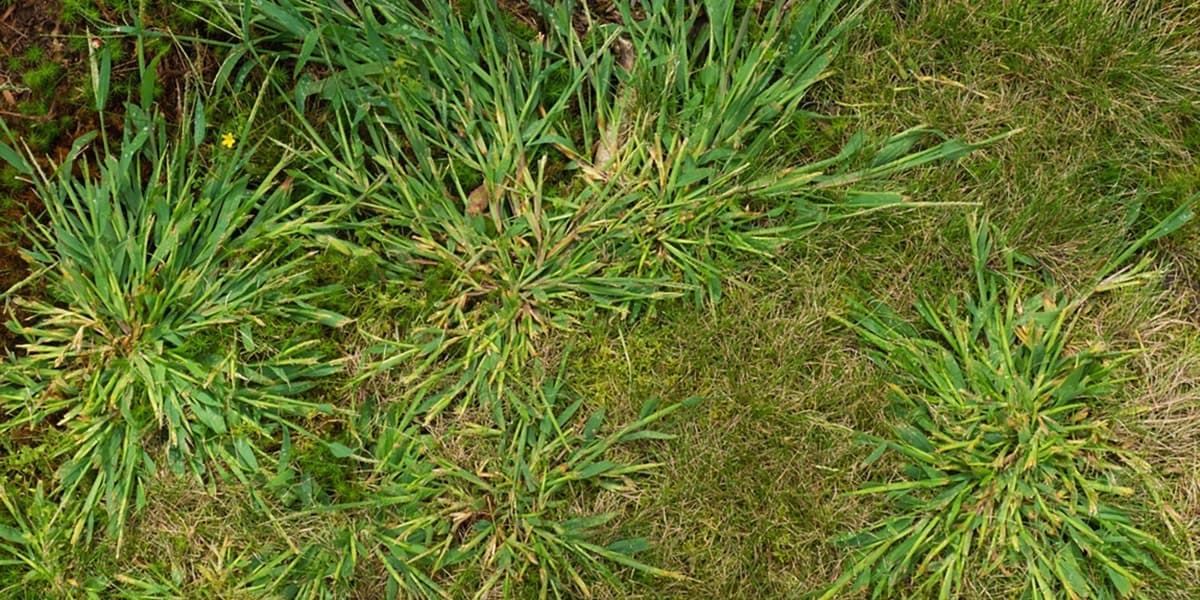
Crabgrass is one of the most common and invasive weeds found in lawns across the U.S. Properly identifying it is critical to controlling its spread before it takes over your lawn.
In this guide, we’ll explore how to spot crabgrass at different growth stages, compare it to look-alike weeds and understand its lifecycle and habits.
What Does Crabgrass Look Like?
Crabgrass gets its name from its sprawling growth habit, resembling the legs of a crab. It is a low-growing, clump-forming annual weed with distinctive features:
Stems
Crabgrass has flat, wide stems that branch out horizontally from a central point, spreading across the ground.
Leaves
The leaves are light green, wide and slightly rough to the touch. Large crabgrass often has tiny hairs on the leaves, while smooth crabgrass lacks this feature.
Seed Heads
The seed heads resemble tiny fingers extending from the stem, with small, soft spikes. The heads grow from multiple points along the stem and appear delicate.
Base color
Sometimes, you may notice a pinkish-red hue at the base where the stems meet the soil, a key identifying trait, especially for smooth crabgrass.
Crabgrass Pictures
At various growth stages, crabgrass changes its appearance, making it more challenging to identify. Below is a description of how it looks during each growth stage compared with other weeds that may resemble it, like goosegrass or dallisgrass.
Early Stage (Seedling)
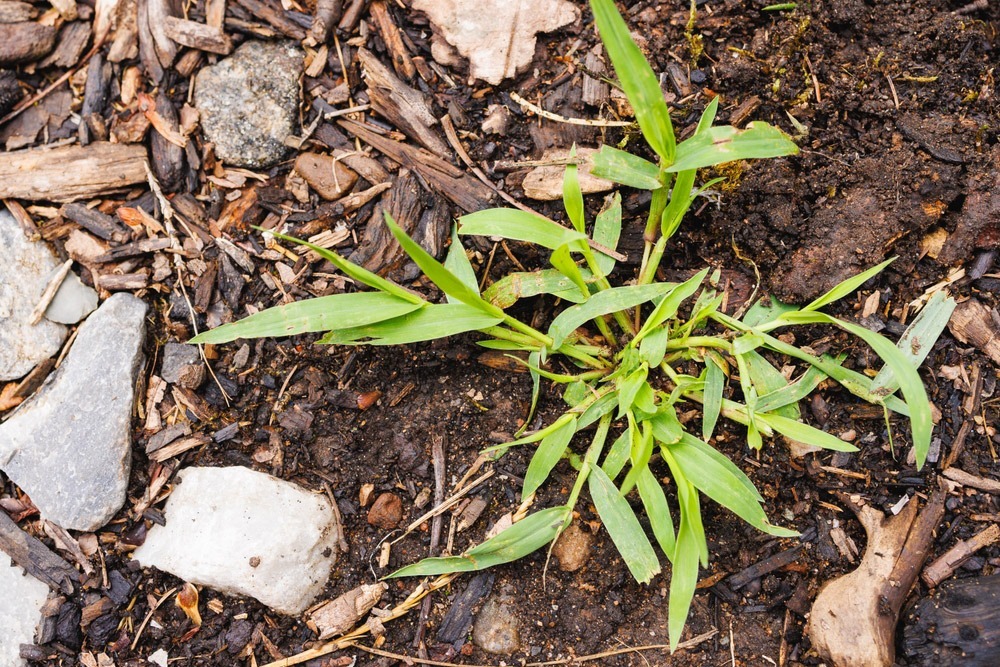
Crabgrass seedlings are small and thin, with light green leaves. At this point, they can be confused with young grass or other weed seedlings.
Mature Stage
As crabgrass matures, it grows flat against the ground, with long, wide leaves that fan out. In comparison, goosegrass often has a more upright growth habit and darker leaves.
Seed Head Stage
Once crabgrass reaches maturity, it produces seed heads that look like multiple "fingers" extending from the stem. This stage is most recognizable but also the most problematic since each plant can release thousands of seeds.
Crabgrass Growth Habits
Crabgrass behaves differently depending on the region and environmental conditions. It thrives in warmer climates but can still be found in cooler regions during the summer.
Southern States
In southern U.S. regions where warmer weather persists for a longer period, crabgrass can have an extended growing season. It typically starts germinating in late spring and can continue growing well into the summer.
Because of the heat, crabgrass spreads quickly in lawns that are overwatered or mowed too short.
Northern States
In cooler northern regions, crabgrass is often more of a summer problem. It begins to germinate in late spring as soil temperatures reach 55 to 60 degrees Fahrenheit.
While its growing season is shorter in these areas, it can still spread rapidly if left unchecked, especially in lawns that suffer from thinning or bare patches.
Lifecycle of Crabgrass
Understanding the lifecycle of crabgrass is essential for its identification and control. As an annual weed, it completes its lifecycle in one growing season. Still, its seeds persist and create new infestations the following year.
Germination
Crabgrass seeds begin to germinate when soil temperatures reach 55–60°F for at least five consecutive days. This typically happens in late spring or early summer, depending on your geographic location.
Seed Production
Once crabgrass matures, it starts producing seeds, with each plant capable of producing up to 150,000 seeds. The seed heads emerge from multiple points along the stems, usually appearing during the height of summer.
These seeds easily spread across your lawn, especially if disturbed by mowing or foot traffic.
End of Season
As the days shorten and the temperature drops, crabgrass enters its reproductive phase, focusing on producing as many seeds as possible before the first frost.
The first frost of the fall will kill the existing plants, but the seeds will remain in the soil, ready to germinate the next spring.
Signs of Crabgrass Infestation
To accurately identify a crabgrass infestation, keep an eye out for these key signs:
Patchy areas of light green grass
Crabgrass often grows in clusters and has a lighter green color compared to your lawn. If you notice irregular patches, especially in areas that are stressed or thin, it could indicate crabgrass.
Low, spreading growth
Unlike most turfgrasses, which grow upright, crabgrass spreads outward, covering the ground with flat stems. If your grass looks more like it’s crawling across the lawn, it’s likely crabgrass.
Seed heads in late summer
As crabgrass matures, you’ll start seeing the characteristic seed heads with finger-like spikes extending from the stems.
Pinkish base color
Especially in smooth crabgrass, a pinkish hue at the base of the plant can help you distinguish it from other weeds.
Types of Crabgrass
Large Crabgrass
Large crabgrass, also known as hairy crabgrass, has broader, hairier leaves and stems compared to other varieties. It grows in clumps with long, spreading stems that root at the nodes, forming dense mats.
Large crabgrass thrives in disturbed, open areas like lawns, gardens and along roadsides, especially in warm weather.
Smooth Crabgrass
Smooth crabgrass is smaller and less hairy than large crabgrass. Its leaves and stems are smooth, giving it a finer texture. Like its counterpart, it spreads quickly in thin or damaged turf during hot summer months.
Smooth crabgrass prefers well-drained soils and can tolerate a variety of conditions, making it a common invader in lawns and sports fields.
Southern Crabgrass
Southern crabgrass resembles large crabgrass but grows more aggressively in warmer climates. It has slightly narrower leaves and produces seed heads with multiple spikelets.
This variety is prevalent in the southern U.S. and other tropical regions, where it can dominate lawns and open fields.
How do I identify crabgrass in my lawn? - Answered
To identify crabgrass in your lawn, look for its low-growing, clump-forming habit, with flat, wide stems that spread horizontally from a central point. Its light green, slightly rough leaves often lie flat against the ground.
A key feature is its seed heads, which resemble tiny "fingers" extending from the stems. You may also notice a pinkish-red hue at the base of the plant where the stems meet the soil. Crabgrass is most visible in the summer when it rapidly spreads and produces seeds.
By keeping an eye on the specific growth patterns and characteristics of crabgrass, you can spot it early and take action to prevent it from spreading throughout your lawn.