
Chickweed is a common weed found in lawns and gardens across the United States. While its small, star-shaped white flowers may seem harmless, chickweed can quickly spread if not controlled.
Accurate identification is the first step in managing this weed. Here's how to recognize chickweed at various stages of its life cycle, along with tips on distinguishing it from look-alike plants.
What does chickweed look like?
Chickweed is characterized by several distinct physical features that can help you identify it:
Leaves
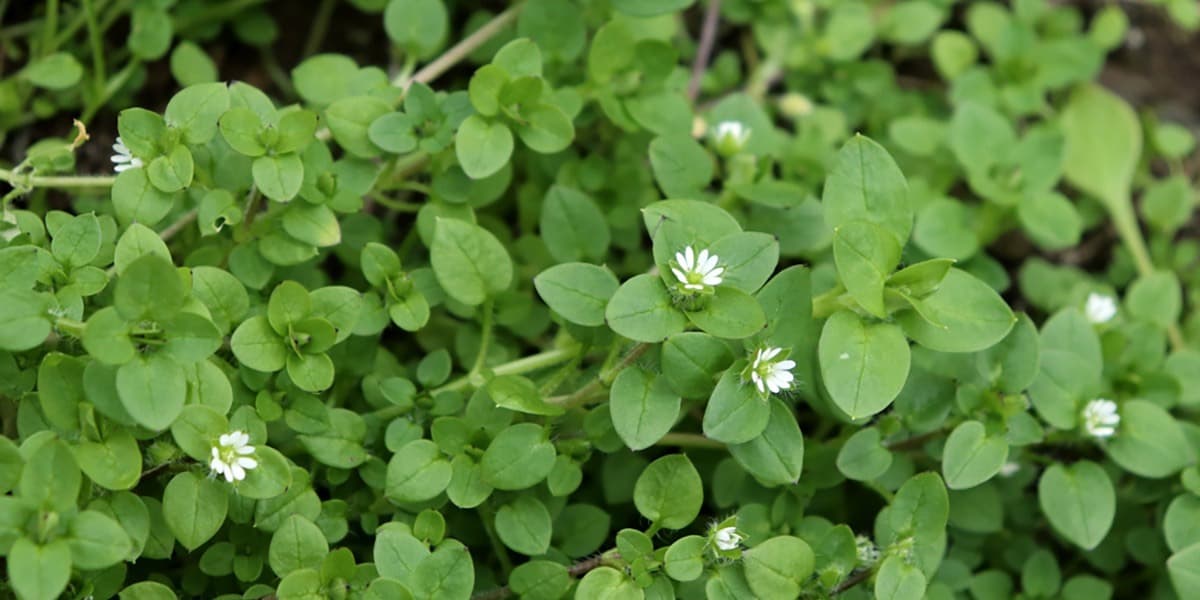
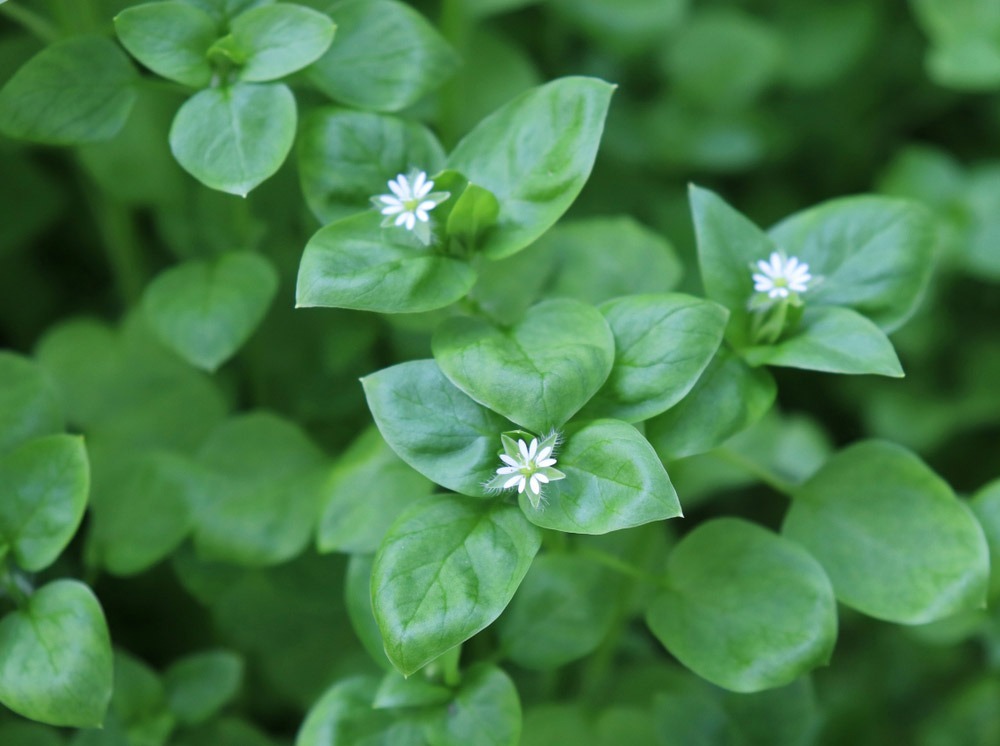
Chickweed has bright green, oval-shaped leaves with pointed tips. These leaves grow in pairs opposite each other on the stem.
Flowers
The flowers are small and white, with five deeply divided petals, giving them the appearance of having ten petals.
Stems
The stems of chickweed are slender and covered with fine hairs. They grow close to the ground, allowing the weed to form a mat-like covering.
Roots
Chickweed roots are shallow, making them easy to pull up, but the plant can regenerate quickly if not fully removed.
Chickweed’s Growth Habits
Chickweed is known for its rapid growth, particularly in cool, moist conditions. Here's how it behaves in different U.S. regions:
Northern States
In cooler northern climates, chickweed typically thrives during the spring and fall. It prefers shaded areas of the lawn with compact soil and poor drainage, making over-irrigated lawns a common hotspot for infestation.
Southern States
In warmer southern regions, chickweed tends to emerge during the winter months when temperatures cool down. Lawns that receive less sunlight and are kept damp provide the ideal environment for this weed.
Chickweed grows horizontally, spreading outward rather than upward. Its creeping habit allows it to cover large patches of ground quickly, choking out desirable grass.
Lifecycle of Chickweed
Understanding chickweed’s lifecycle is crucial for effective management:
Germination
Chickweed seeds begin to germinate in the fall when soil temperatures cool down. However, the weed often goes unnoticed during the winter months.
Seed Production
By early spring, chickweed matures and starts producing seeds. Each plant can release thousands of seeds, which can remain viable in the soil for several years, leading to repeated infestations if not managed.
Signs of a Chickweed Infestation
Look for these signs to determine if chickweed is taking over your lawn:
Sparse Lawn Growth
Chickweed often invades areas where grass is thin or struggling.
Dense, Mat-Like Growth
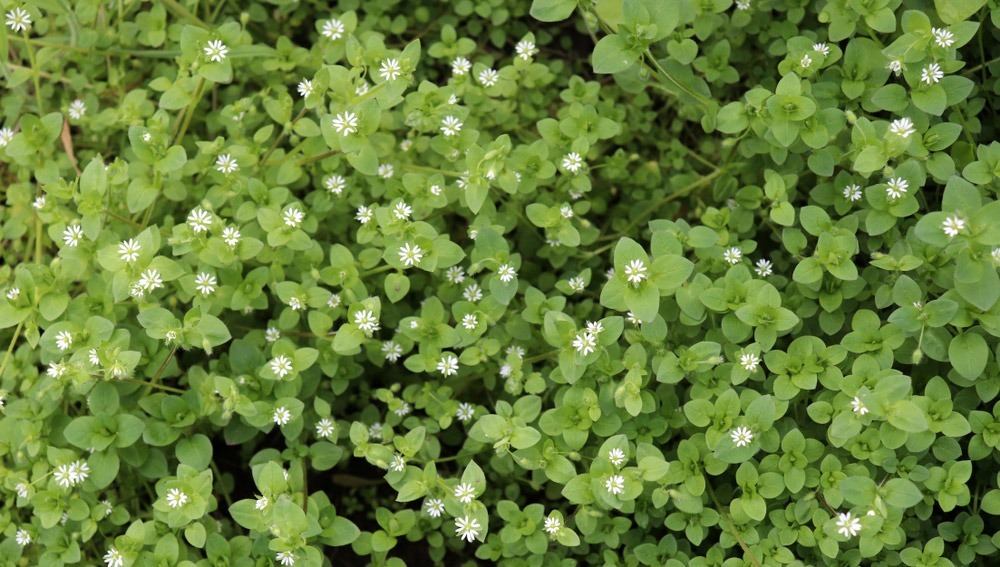
Chickweed creates a low-growing carpet that spreads laterally, especially in areas of poor drainage.
White Flowers in Early Spring
Chickweed may be present if you notice small white flowers on the grass.
Types of Chickweed
There are two common types of chickweed found in lawns and gardens: Common Chickweed and Mouse-ear Chickweed. While they share some similarities, there are distinct differences that can help identify and manage each type.
Common Chickweed
This is the most widespread variety. Common chickweed has bright green, smooth oval-shaped leaves and small white flowers with deeply split petals. It grows low to the ground and spreads quickly, especially in cool, moist conditions. Its shallow root system makes it relatively easy to pull up by hand.
Mouse-ear Chickweed
Mouse-ear chickweed gets its name from the fuzzy, hairy leaves that resemble mouse ears. Unlike common chickweed, its leaves are thicker and have a velvety texture.
This type of chickweed is more persistent and can tolerate tougher conditions. It also tends to form dense mats of growth, often in areas of the lawn with compacted soil.
Both types of chickweed can be invasive, but identifying which variety is present in your lawn can help determine the best control methods.
How do I identify chickweed in my lawn? - Answered
To identify chickweed in your lawn, look for its bright green, oval-shaped leaves with pointed tips, small white star-shaped flowers with deeply split petals and slender, hairy stems that grow close to the ground, forming a mat-like covering.
Chickweed thrives in cool, moist conditions, often invading thin or poorly drained areas, especially in shaded spots. Chickweed may be present if you notice these characteristics, particularly in early spring when the flowers bloom.
Accurately identifying chickweed is essential for early intervention and effective control. By recognizing its unique characteristics and understanding its growth habits, you can take steps to prevent it from spreading in your lawn.