May and June beetles, also known as June bugs, are a genus of about 300 scarab beetle species that thrive in the Northern Hemisphere. These pests are notorious for their appetite for ornamental plants and significant damage to turfgrass during their larval stage.
Commonly active in late spring and early summer—hence their names—these beetles are nocturnal and known for their clumsy, noisy flight, often colliding with lights and windows.
What are May and June beetles?
Belonging to the Scarabaeidae family, which includes chafers and Japanese beetles, May and June beetles are notorious both as adults and larvae.
Adults primarily feed on leaves and ornamentals, while their larvae—known as white grub worms—consume roots and decaying plant material in the soil, often damaging turfgrass and ornamentals.
What does a May or June beetle look like?
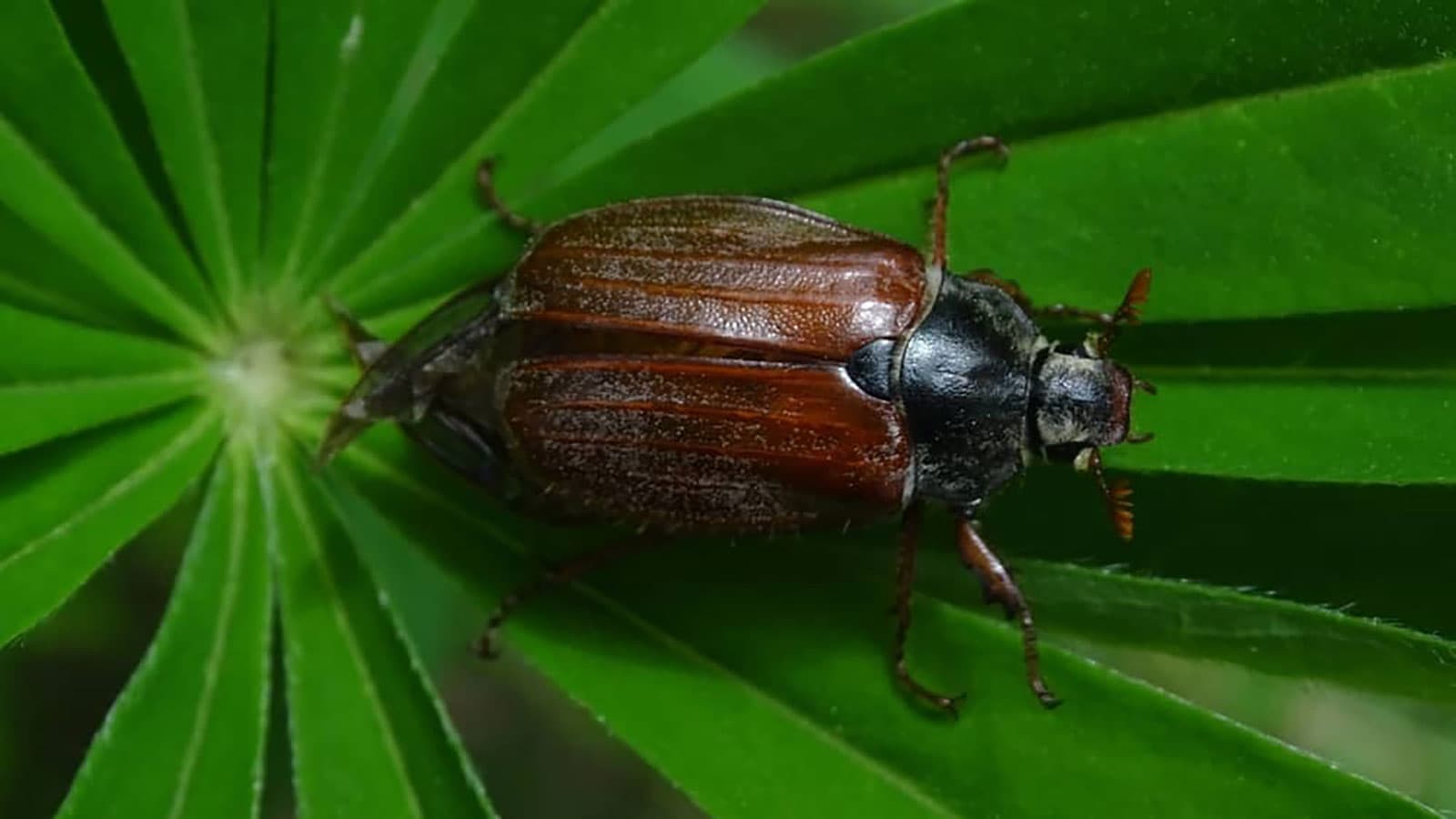
Unlike the shiny green Japanese beetles seen at this time of year, May or June beetles vary from reddish-brown to almost black and lack distinctive patterns like spots or stripes.
These beetles typically measure 0.5–1.0 inches long, slightly larger than the masked chafer.
Their larvae, known as white grub worms, are C-shaped with a brownish-red head and six legs near the front. Capable of devastating a lawn, these grubs can take up to three years to mature, posing a long-term threat to turfgrass.
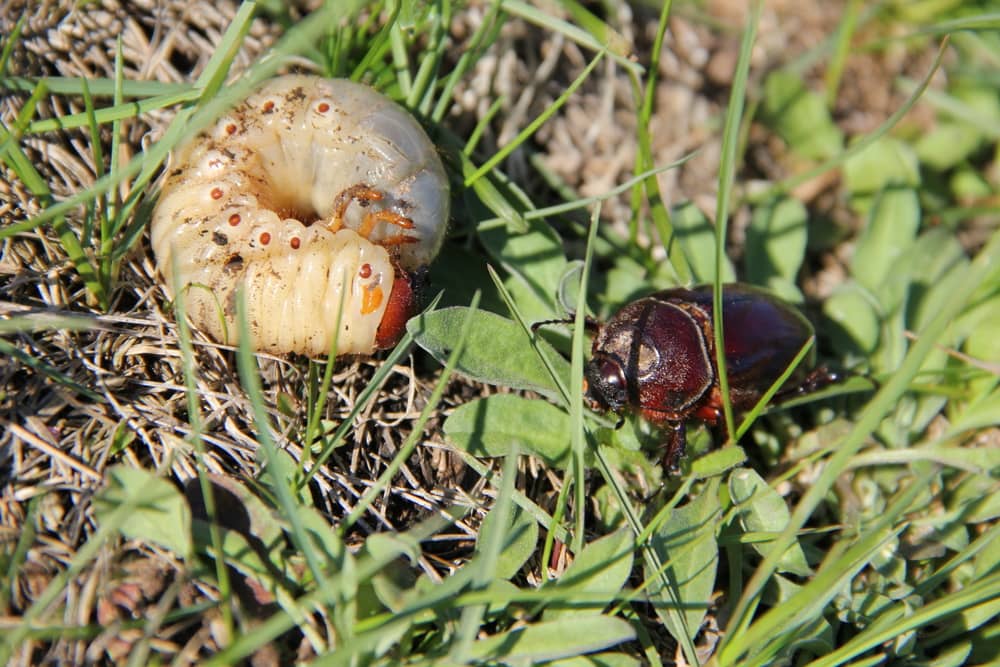
Pictured above: A May/June beetle and its larvae.
What do May and June beetles look like?
May and June beetles are strictly herbivorous, feeding on ornamentals, trees and shrubs, which makes them a significant threat to gardens. Additionally, their presence attracts various predators such as snakes, skunks, and moles.
What time of year to May and June beetles come out?
Emerging in late May and early June, hence their name, May or June beetles are nocturnal and drawn to lights. After mating, females typically lay eggs near trees. The resulting grubs live underground for 1–3 years, growing larger and more destructive through stages known as 'instars.'
By their third year, they pupate in late summer or fall, with adults emerging the following spring to restart the cycle. This overlap of generations ensures their presence every year.
How do I identify a May or June beetle problem?
To identify a May or June beetle infestation, recognize their appearance and infestation signs. Check for grub worms by digging up a small soil patch or look for brown, spongy patches of grass that lift easily, though these symptoms may not always indicate May or June beetle larvae.
Additionally, observing insect activity near outdoor lights at night may reveal their adult forms.
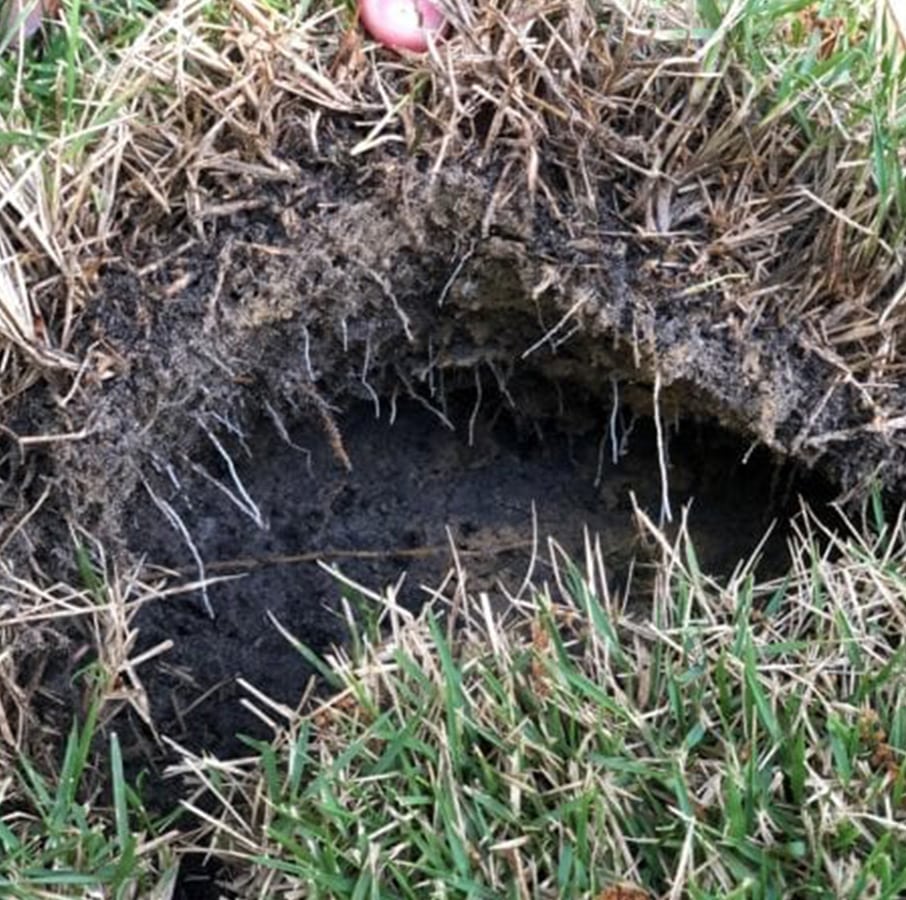
Additionally, watch for predators such as moles, skunks and snakes, as their presence can indicate May and June beetles are in the soil below.
How do I treat a May or June beetle infestation?
Identifying May or June beetles is just the beginning of achieving a beetle-free lawn. There are two primary methods for eradication: cultural and chemical. Both strategies focus on targeting the grubs before they mature into adults and multiply.
Although grubs cause more damage, they are simpler to manage if addressed early.
Cultural Treatment
Here are some cultural treatment options for controlling May and June beetles:
- Neem Oil: A natural pesticide derived from neem tree seeds, containing Azadirachtin. Effective against adult beetles, ensure to follow the application instructions on the product labels.
- Beetle Traps: High-quality beetle traps can capture May and June beetles, though they might also attract other beetle species. It's advisable to place multiple traps around your garden to prevent other beetles from entering.
Chemical Treatment
If cultural methods are ineffective, chemical control may be a more potent last resort. Understanding the life cycle of the May or June beetle helps with effective treatment.
For active infestations, apply insecticides when grubs are feeding near the soil's surface, typically in mid to late spring or early fall, to ensure effectiveness. Products applied at other times are often wasted.
Effective insecticides include Chlorantraniliprole, Trichlorfon, and Imidacloprid. Products like Dylox 6.2 are specifically effective against second or third instar grubs. Scotts GrubEx and Merit formulations also contain these active ingredients, targeting grubs that can live in the soil for multiple years.
How do I prevent May or June beetles?
The most effective control method for May or June beetles is targeting them during their larval stage. Preventing grub worms is also crucial for managing these pests.
According to Dr. J.C. Chong, an entomologist at Clemson University, "Using preventative management with a long-residual insecticide in June, or when scarab beetles begin flying, can significantly reduce grub issues with just one application per year."
Given their potential for harm to ornamentals and turfgrass, May and June beetles are a major concern for U.S. homeowners. With a better understanding of these beetles, you can now devise effective prevention and treatment strategies.