When insects start damaging a lawn, it’s tempting to reach for the strongest product you can find and hope the problem disappears overnight. Bifen XTS is often that product. It’s powerful, long-lasting and widely used by professionals, but it’s also easy to misuse.
Used deliberately, Bifen XTS can be an excellent tool. Used casually, it can disappoint, waste money, or create problems you didn’t intend.
This guide focuses on when Bifen XTS makes sense, why treatments sometimes fail and how to apply it effectively without treating it like a silver bullet.
Why Bifen XTS Is Used for Serious Insect Problems
Bifen XTS isn’t designed for light or occasional pest issues. It’s typically chosen when insects are persistent, damaging or widespread, and when shorter-lived products haven’t held up.
Long-Lasting Residual Control
One of the biggest reasons homeowners and professionals turn to Bifen XTS is its residual activity. Once applied correctly, it can continue controlling insects for weeks to months, depending on conditions. That staying power makes it useful for pests that don’t all emerge at once or that re-enter treated areas over time.
Broad-Spectrum Power
Bifen XTS controls a wide range of common lawn insects, including ants, chinch bugs, mole crickets, sod webworms, ticks, fleas, armyworms and more. That broad coverage makes it practical when you’re dealing with multiple pests at the same time or when the exact culprit hasn’t been fully identified.
Why Insect Treatments Fail
Bifen XTS has a strong reputation, but poor results are more common than many people realize. In most cases, failure isn’t about the product, it’s about execution.
Wrong Timing
Many lawn insects are only vulnerable during specific life stages. Applying Bifen XTS too early or too late can reduce effectiveness, even if the product is mixed correctly. Timing matters just as much as product choice.
Incorrect Dilution
More isn’t better. Over-diluting can reduce control, while applying too strong a mix doesn’t improve results and can increase risk. Bifen XTS is formulated to work within a narrow, intentional range, drifting outside of it often leads to disappointment.
Treating Symptoms, Not Habitat
Killing visible insects doesn’t address where they live and reproduce. Thatch, soil moisture, dense grass and shaded areas all influence insect pressure. Without addressing habitat, populations often rebound.
Ignoring Irrigation and Mowing
Some pests require irrigation after application to move the product into the soil. Others require dry conditions to remain effective on foliage. Mowing too soon or watering at the wrong time can undo an otherwise solid application.
Expecting One Application to Fix Everything
Even with residual products, insect control is rarely “one and done.” Heavy infestations often require follow-up applications spaced appropriately, not a single blanket spray.
How to Use Bifen XTS Effectively
This is where many guides turn into label rewrites. Instead, think of this as execution guidance.
Mixing Basics (Without the Math Overload)
Bifen XTS is a concentrated liquid that mixes readily with water. Accurate measuring matters. Use proper measuring tools (not kitchen utensils), mix thoroughly and keep agitation consistent so the product stays evenly suspended.
Application Timing
Apply when insects are active and conditions are calm. Avoid windy days, rain events or extreme heat. Early morning or evening applications often work best, especially for surface-active pests.
Coverage Strategy
Uniform coverage is more important than sheer volume. Dense grass may require higher carrier volumes to penetrate foliage and reach the soil surface. Spotty applications lead to spotty control.
Reapplication Expectations
Residual control doesn’t mean permanent control. Monitor activity and reapply only when insect pressure returns, and never sooner than allowed. Overapplying doesn’t improve performance and can increase environmental risk.
What About Granular Insecticides Like Bifen L/P?
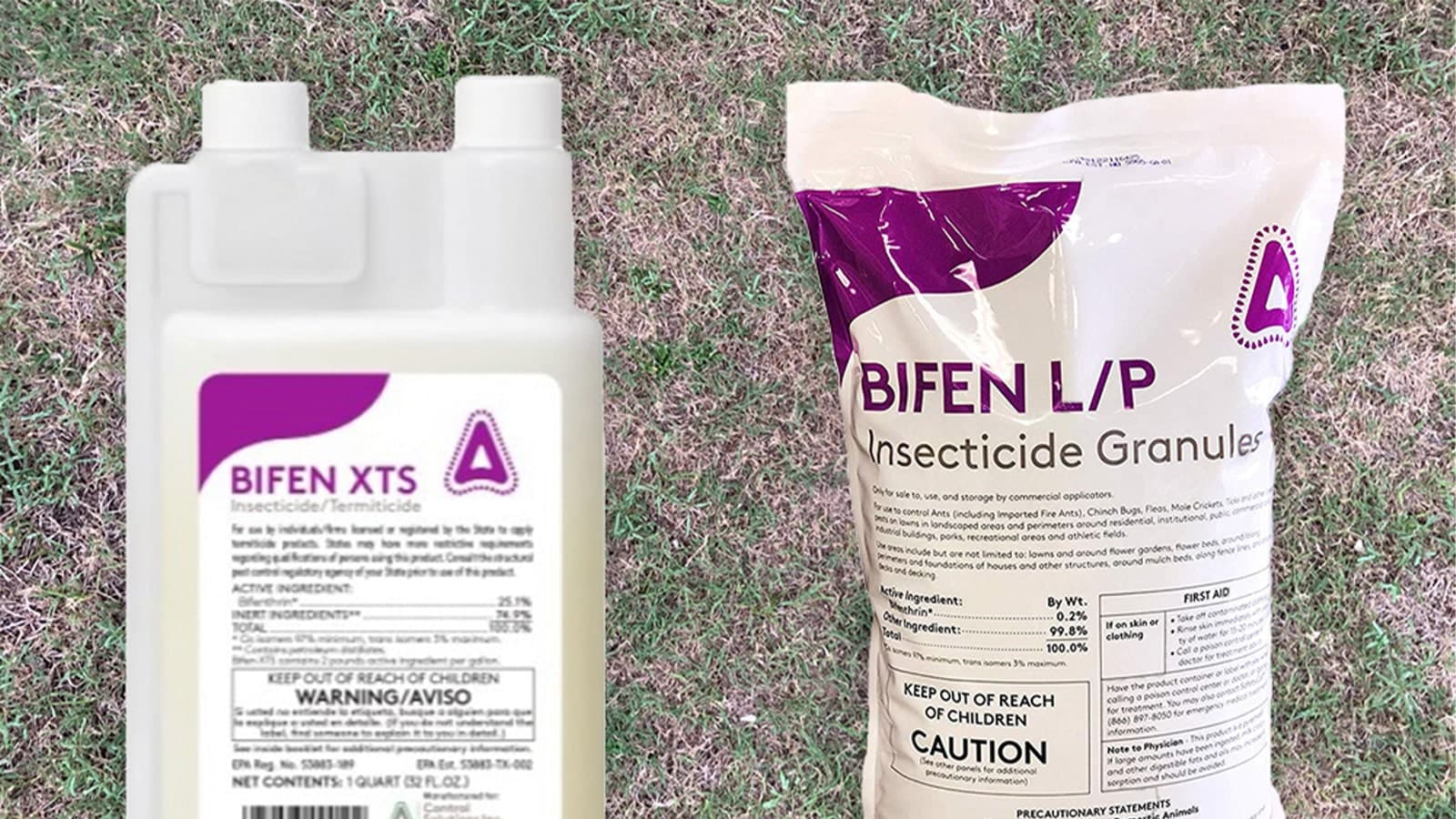
Granular bifenthrin products are still commonly mentioned online, but many are moving away from them in favor of liquid applications. Liquids offer more consistent coverage, faster knockdown and better control when applied correctly. Liquid products usually also offer more concetrated product for what you're paying for.
Granules still have a place in some programs, but they’re no longer the default choice for serious or widespread infestations.
Bifen XTS is trusted for serious lawn insect control because it delivers long-lasting, broad-spectrum protection when it's applied with intention. When the problem warrants its strength and it's used at the right time and rate, Bifen XTX can play a key role in keeping damaging insect populations under control.
Like any professional-grade product, the best results come from understanding how and when to use it, not from treating it as a quick fix.
Frequently Asked Questions About Bifen XTS
Yes, Bifen XTS is labeled for use on residential lawns and turf when applied according to the label. The key is proper dilution, correct timing, and following all safety instructions. Treated areas should remain undisturbed until the spray has dried, and applications should never result in runoff into drains or water sources.
Bifen XTS provides residual control that can last several weeks and, in some cases, longer depending on weather, mowing, irrigation and pest pressure. Heavy rainfall, frequent mowing or intense insect activity can shorten its effective window.
Some insects may be knocked down quickly, but Bifen XTS is primarily valued for its residual control rather than instant results. Insects that contact treated surfaces or soil over time are controlled as they move through treated areas.
No. Using more than the labeled rate does not improve control and can increase the risk of runoff, resistance issues and environmental harm. Bifen XTS is designed to work within a specific concentration range, and exceeding it often leads to poorer outcomes, not better ones.
It depends on the target pest. Subsurface insects like mole crickets often require light irrigation after application to move the product into the soil. Surface-feeding insects may require dry conditions for optimal control. Always match irrigation practices to the pest you’re targeting.
Reapplication should be based on insect activity returning, not on a fixed calendar schedule. Never reapply sooner than allowed by the label, and avoid treating simply because the previous application “might be wearing off.” Monitoring is essential.
Not usually. Bifen XTS is best reserved for persistent or damaging infestations. For minor or short-term issues, a lighter or shorter-residual product may be more appropriate and easier to manage.
When applied correctly and allowed to dry completely, treated areas can be safely re-entered. Pets and children should be kept off treated lawns until sprays have dried, and the product should never be applied directly to people or animals.
They contain the same active ingredient, but liquid formulations like Bifen XTS generally provide more consistent coverage, faster knockdown and better control when applied properly. Granules still have limited uses, but liquids are often preferred for serious infestations.
Most failures are related to timing, dilution errors, uneven coverage or ignoring habitat conditions such as thatch, moisture or mowing practices. Bifen XTS is effective, but only when the application strategy matches the biology of the target pest.