Hurricanes are powerful, destructive forces of nature that can leave your lawn battered and in need of serious repair. After you’ve taken steps to prepare your yard and lawn before the storm, recovery becomes the next step so your landscape bounces back.
While many of the recovery steps overlap with general storm repair, the unique impacts of hurricanes—such as prolonged flooding, saltwater damage and wind-born debris—require a specialized approach.
Below are the essential steps you should take to recover your lawn from the specific damage caused by hurricanes.
1. Survey the Damage with Safety in Mind
After a hurricane, safety comes first. Before beginning any recovery efforts, check your yard for downed power lines, dangerous debris like sharp objects and other hazards. Once the area is safe, walk through your yard to assess the damage, focusing on waterlogged areas, soil erosion, and damage to your trees and shrubs.
Documenting the damage will help guide your recovery efforts and may be useful if you need to make insurance claims for repairs.
2. Restore Proper Drainage to Prevent Further Damage
Hurricanes often result in severe flooding, which can cause standing water to persist on your lawn for days. Prolonged water exposure can suffocate your grass and lead to root rot. Your first step should be to improve drainage:
- Clear gutters and downspouts to direct rainwater away from your lawn.
- Remove debris from drainage ditches or stormwater systems that may be blocked.
- Use a garden fork or aerator to poke holes in waterlogged areas to encourage drainage and prevent root suffocation.
If standing water persists for too long, you might need to bring in professionals to help with drainage solutions.
3. Flush Saltwater from Flooded Areas
One unique challenge posed by hurricanes along coastal areas is saltwater flooding. Saltwater can drastically alter the soil composition, drying out grass roots and leaving your lawn looking scorched. Here’s how to recover from salt damage:
- Flush out the salt from your lawn by thoroughly soaking the affected areas with fresh water. Use your hose to deeply irrigate the soil, helping to push the salt below the root zone.
- Consider testing your soil to assess nutrient levels and determine if the pH has been affected by saltwater. You may need to add gypsum or other soil amendments to restore balance.
4. Repair Erosion and Replenish Lost Soil
Hurricane-force winds and floodwaters can cause significant soil erosion, especially in low-lying areas or around the edges of your yard. To address this:
- Fill in eroded patches with topsoil and gently compact it to prevent further erosion.
- Replant grass in bare or eroded areas using sod or seed that matches your existing lawn. Use landscape staples to secure sod and cover seeded areas with a breathable fabric like burlap to prevent further soil displacement.
Adding mulch to areas prone to erosion can help stabilize the soil while the grass takes root.
5. Prune and Restore Damaged Trees and Shrubs
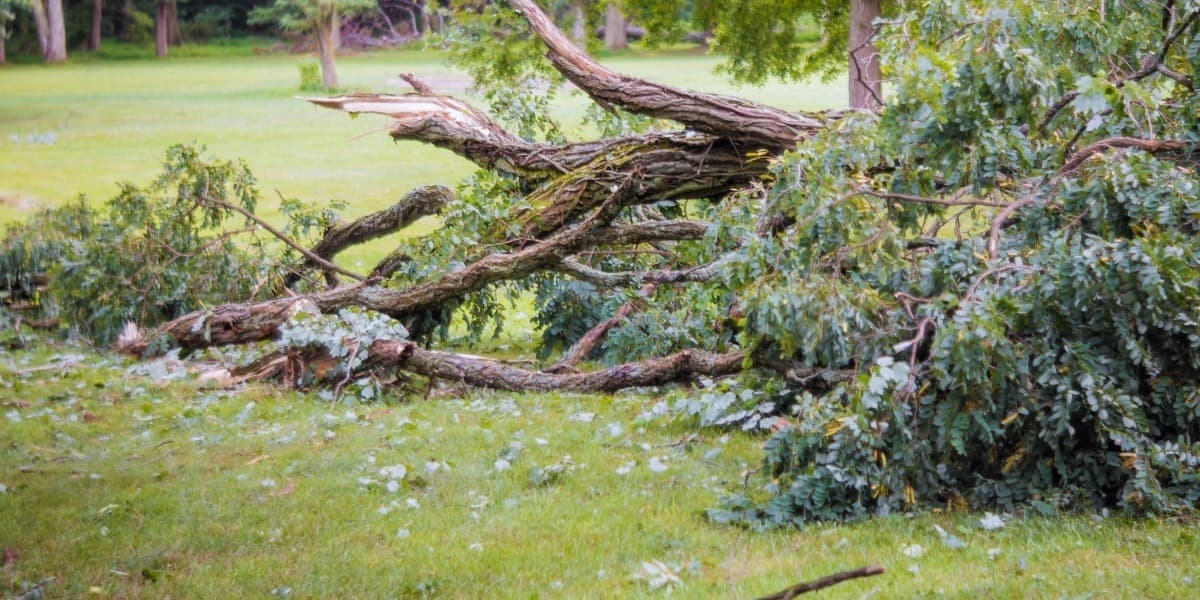
Trees and shrubs are often the hardest hit during hurricanes, with winds and rain leaving behind broken branches, uprooted plants or stripped foliage. Here’s how to help your plants recover:
- Prune broken branches to prevent further damage and to encourage healthy regrowth. Avoid over-pruning, as trees and shrubs need as much leaf surface as possible for photosynthesis during recovery.
- For partially uprooted trees, re-stake them to provide stability. Ensure the stakes allow the tree to move slightly in the wind to encourage strong root regrowth.
- If shrubs and other plants are heavily damaged, consider cutting them back to promote new growth. Apply an organic mulch to the base of the plants to retain moisture and replenish nutrients.
6. Aerate Compacted Soil
Heavy rain combined with foot traffic or equipment used during cleanup can compact the soil, making it difficult for your grass to recover. To alleviate this:
- Use a lawn aerator or garden fork to aerate compacted areas, which improves soil permeability and allows grass roots to breathe and recover more quickly.
- Avoid walking on waterlogged or newly aerated soil to prevent further compaction.
7. Replant Damaged Grass
Depending on the severity of the hurricane damage, portions of your lawn may need to be reseeded, plugged, or re-sodded. Once the soil has dried out and been aerated:
- For smaller damaged patches, reseeding or plugging are effective methods.
- Larger areas of damage may require laying new sod. Ensure that the sod is securely anchored with landscape staples to prevent it from washing away in case of additional rain.
Give newly planted grass time to establish, and avoid mowing until the roots are fully anchored in the soil.
8. Hold Off on Fertilization and Mowing
After a hurricane, your lawn is in recovery mode. While it might be tempting to fertilize right away to stimulate growth, wait at least a few weeks to avoid adding stress to already weakened grass. Additionally:
- Set your mower to a higher setting to avoid scalping damaged grass. Taller grass blades provide more surface area for photosynthesis, which is critical for root recovery after storm damage.
9. Monitor for Disease and Pests
Post-hurricane conditions, especially prolonged moisture, can create the perfect environment for lawn diseases and pests to thrive. Be on the lookout for fungal diseases such as brown patch or root rot, as well as increased insect activity like fall armyworms or chinch bugs.
- If you notice signs of disease or pests, treat the affected areas with the appropriate fungicide or insecticide as soon as possible to prevent further lawn damage.
10. Implement Long-Term Hurricane Mitigation Strategies
Once your lawn has recovered, consider long-term solutions to minimize future hurricane damage:
- Install windbreaks like sturdy fences, dense shrubs or other barriers to shield your yard from high winds.
- Ensure your landscape is designed with proper drainage in mind to reduce the risk of flooding and erosion.
How do I help my lawn recover from hurricane damage? - Answered
To recover your lawn from hurricane damage, first ensure safety by checking for hazards like downed power lines and debris. Improve drainage in waterlogged areas by clearing gutters and aerating soil.
If your lawn was exposed to saltwater flooding, flush the affected areas with fresh water to restore soil balance. Repair erosion by filling in bare patches with topsoil and replanting grass with sod or seed.
Prune damaged trees and shrubs to encourage regrowth, and aerate compacted soil to promote healthy lawn recovery.
Hold off on fertilizing and mowing immediately, and monitor for lawn diseases and pests in the weeks following the storm.
Finally, consider long-term mitigation strategies like installing windbreaks and improving drainage to protect your yard in the future.