Bare spots in your lawn don’t automatically mean it’s failing. Before you assume the worst, take a step back. The real question is whether you’re dealing with a one-time issue…or a pattern that keeps coming back.
Here’s how to tell the difference.
Expert Tip:
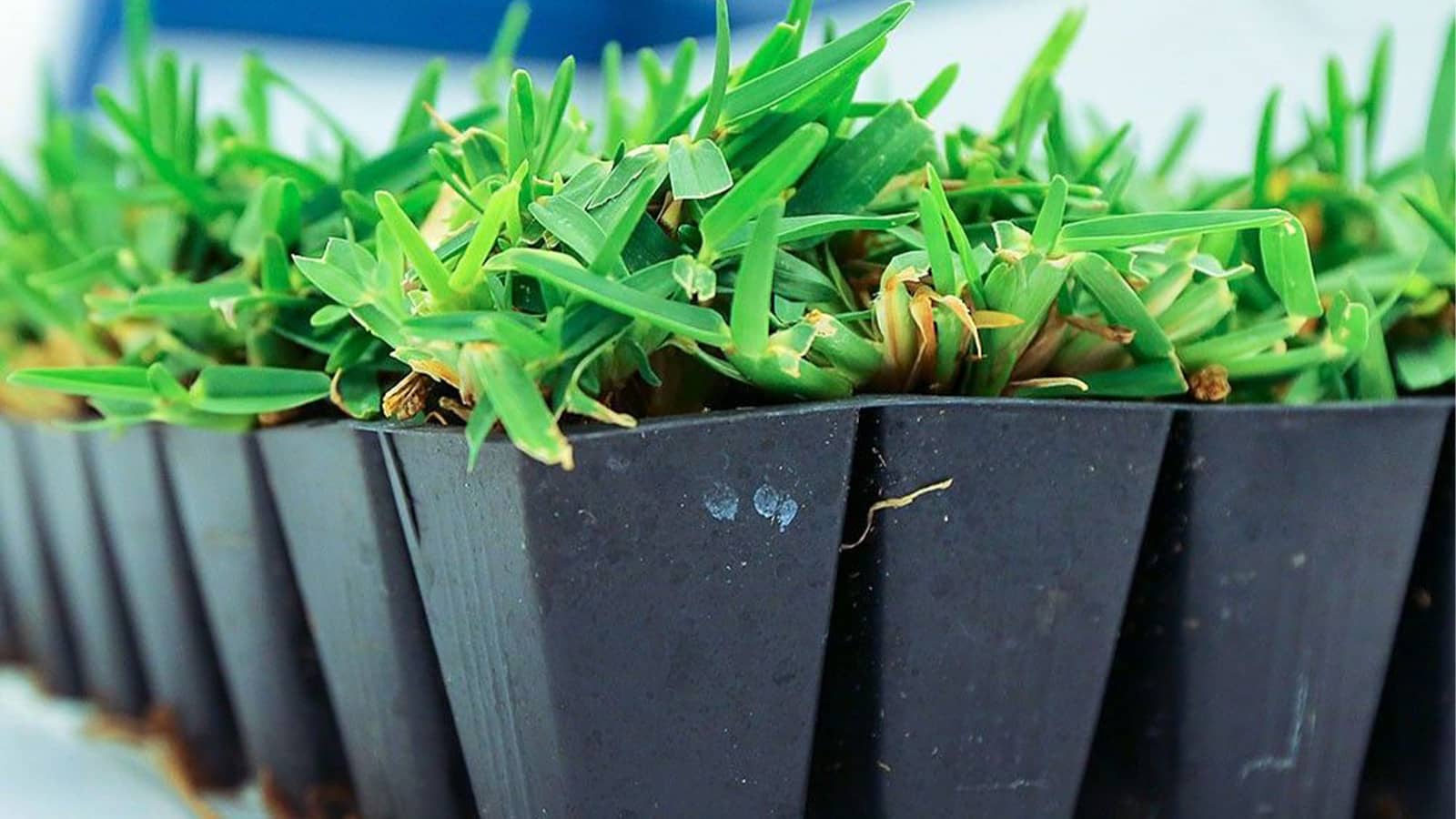
When most of the lawn is still healthy, use grass seed or plugs to fill in bare spots and reinforce the surrounding grass. Targeted repair works best when the issue is patchy, not widespread.
1. If → The Damage Is Isolated to Dog Spots
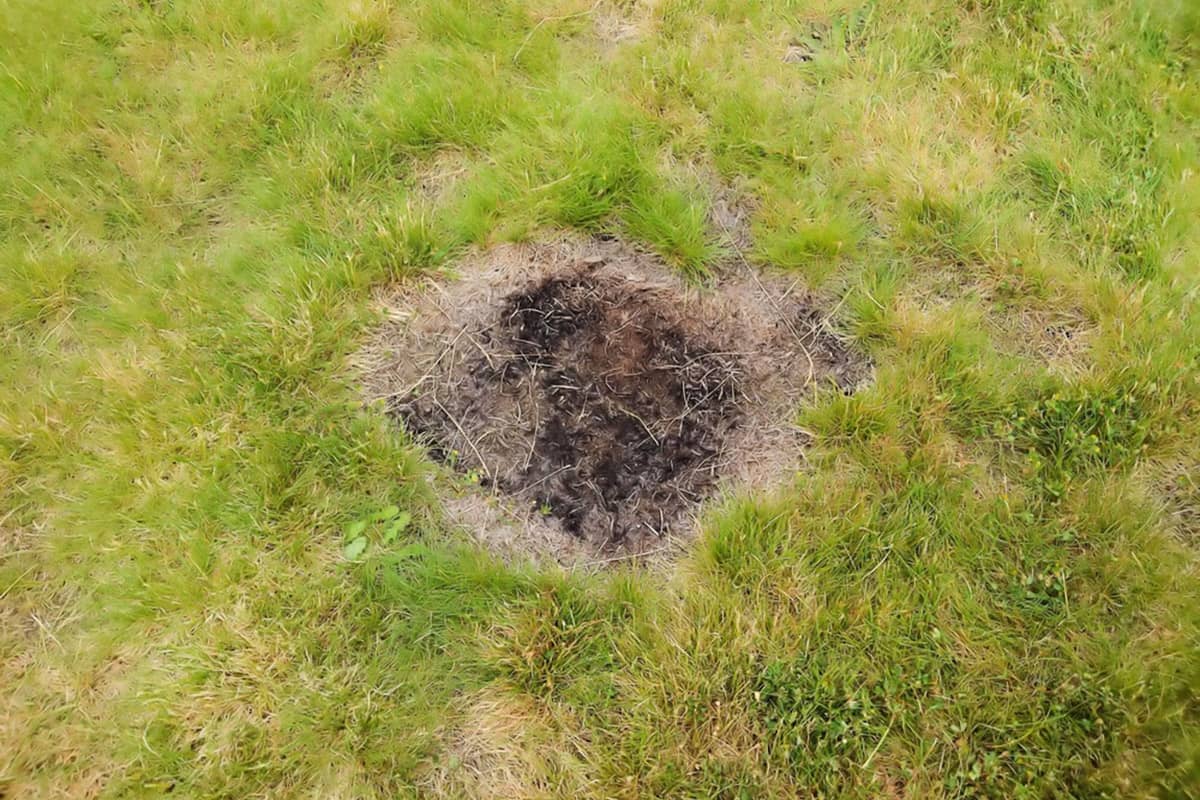
If you’re seeing small, circular yellow or dead spots where your dog frequently goes…
Then → Patchwork Makes Sense
Dog urine damage usually looks worse than it is. It’s almost always localized and surface-level. If the rest of your grass is thick, rooted and healthy, your lawn is just reacting to a concentrated hit of nitrogen in one small area.
You don’t need to start over. You just need to correct that spot.
✅ Solution:
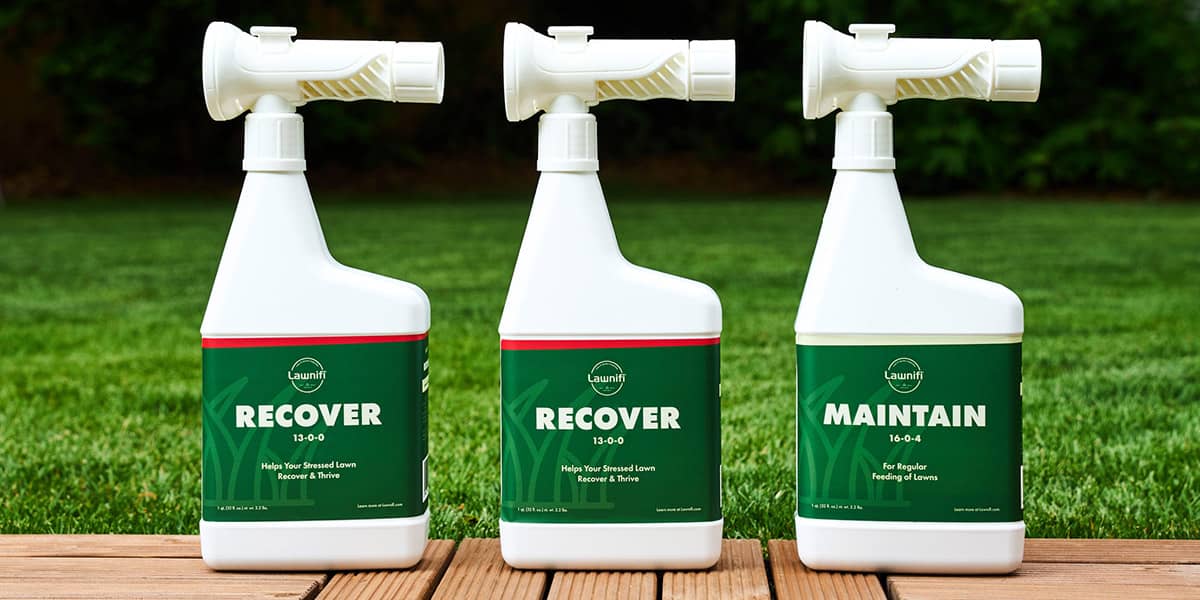
Rinse affected areas thoroughly to dilute excess salts, then apply a nutrient-balancing treatment like Lawnifi® Recover to help stressed grass bounce back and encourage new growth. For a deeper look at prevention and repair, check out our guide on repairing dog pee spots.
2. If → Disease Appears in Patches, Not Across the Entire Yard
If you notice spotted areas of discoloration or disease, but the majority of the lawn still looks strong…
Then → Targeted Repair Is Appropriate
Disease happens, especially in warm, humid weather. The key is how your lawn responds. If you treat the affected areas and new growth starts filling back in, you’re likely dealing with a temporary outbreak, not a full-blown collapse.
But if disease keeps popping up in new areas year after year, that’s when you pause and ask whether airflow, drainage or soil conditions are contributing to the problem.
✅ Solution:
Treat active outbreaks with a labeled fungicide such as Heritage® G Granular Fungicide or Propiconazole 14.3 Select Fungicide, and always follow the label carefully. If disease becomes recurring, rotate fungicide classes to reduce resistance buildup.
3. If → Insect Damage Is Limited to Certain Areas
If you find chinch bugs, grubs or other insect activity in specific zones while the rest of your yard looks fine…
Then → Repair and Monitoring Are Usually Enough
Pests usually start in concentrated pockets. If you catch them early and treat correctly, those sections often recover without you having to tear up the entire lawn.
The bigger red flag? When grass pulls up easily in large sections because roots have been eaten away. That’s when you start thinking bigger.
✅ Solution:
Use a labeled insect control product targeted to the specific pest you’re dealing with, and confirm identification first. Our Insect Identification guide can help you make sure you’re treating the right problem.
4. If → Shade Is Causing Thinning in One Section
If grass only struggles under a tree, along a fence or next to your house…
Then → Patch the Area or Adjust Sunlight Exposure
Shade stress in one corner doesn’t mean your whole yard needs a reset. It usually means that specific area needs a different approach.
You might need to prune for better light, tweak irrigation or introduce a more shade-tolerant variety in that section.
✅ Solution:
Fill thinning areas with shade-tolerant grass plugs or seed that align as closely as possible with your existing grass. Just know that mixing grass types, like adding St. Augustine plugs or a finer-bladed zoysia, can create a slight texture difference. For a deeper look at selecting the right grass and managing light limitations, read our guide to growing grass in shaded areas.
5. If → Heat or Drought Hit Certain Spots Harder
If bare or thin areas showed up after a heat wave or inconsistent watering…
Then → Give Repair a Chance First
Before you panic, look at how the rest of your yard is responding. If most of it greens back up once watering stabilizes, you’re probably dealing with stress.
Some grasses, like Empire® Zoysia, will actually go dormant during drought as a defense mechanism and rebound once irrigation resumes. St. Augustine is less forgiving, so recovery depends heavily on whether roots stayed alive.
If large sections don’t bounce back even after consistent watering, that’s when you start investigating deeper soil or drainage issues.
✅ Solution:
Start with an irrigation audit to ensure your lawn is receiving even, adequate coverage. If you notice standing water or uneven areas contributing to stress, consider correcting grade issues by following our steps on how to level your yard without ripping it up.
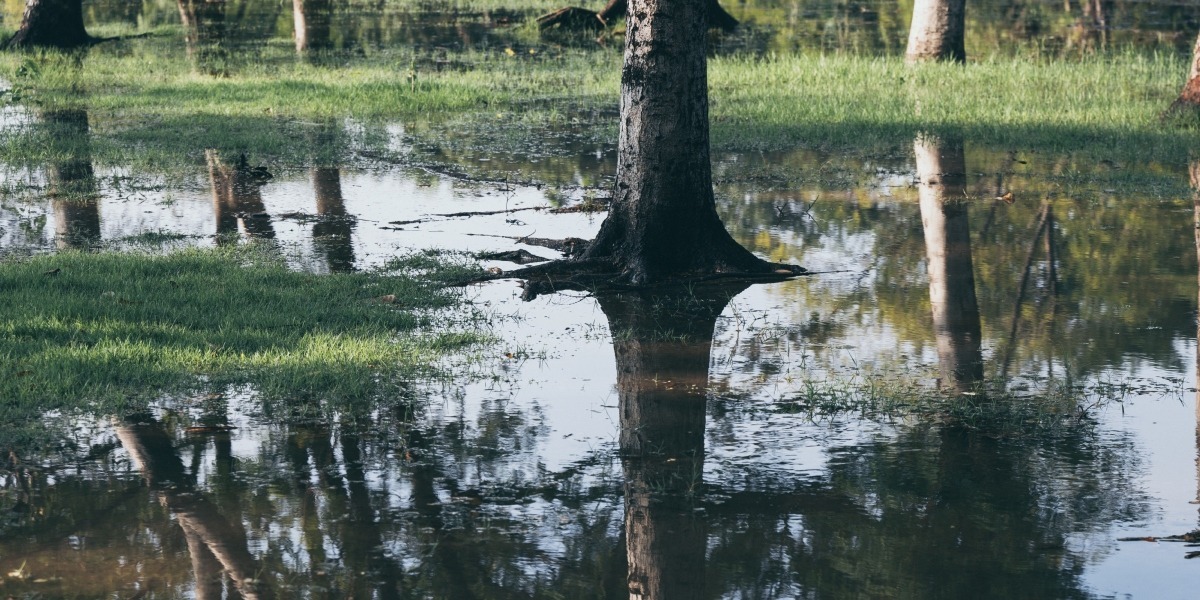
6. If → Overwatering or Drainage Issues Affect the Whole Lawn
If you’re seeing widespread thinning, standing water or persistent soggy soil across multiple areas…
Then → Renovation May Be Worth Considering
Grass can’t thrive where roots are constantly starved of oxygen. If drainage problems impact most of your yard, small patch repairs won’t fix the underlying environment.
Before jumping straight to renovation, check for compaction. Sometimes your need to release the pressure underneath it.
✅ Solution:
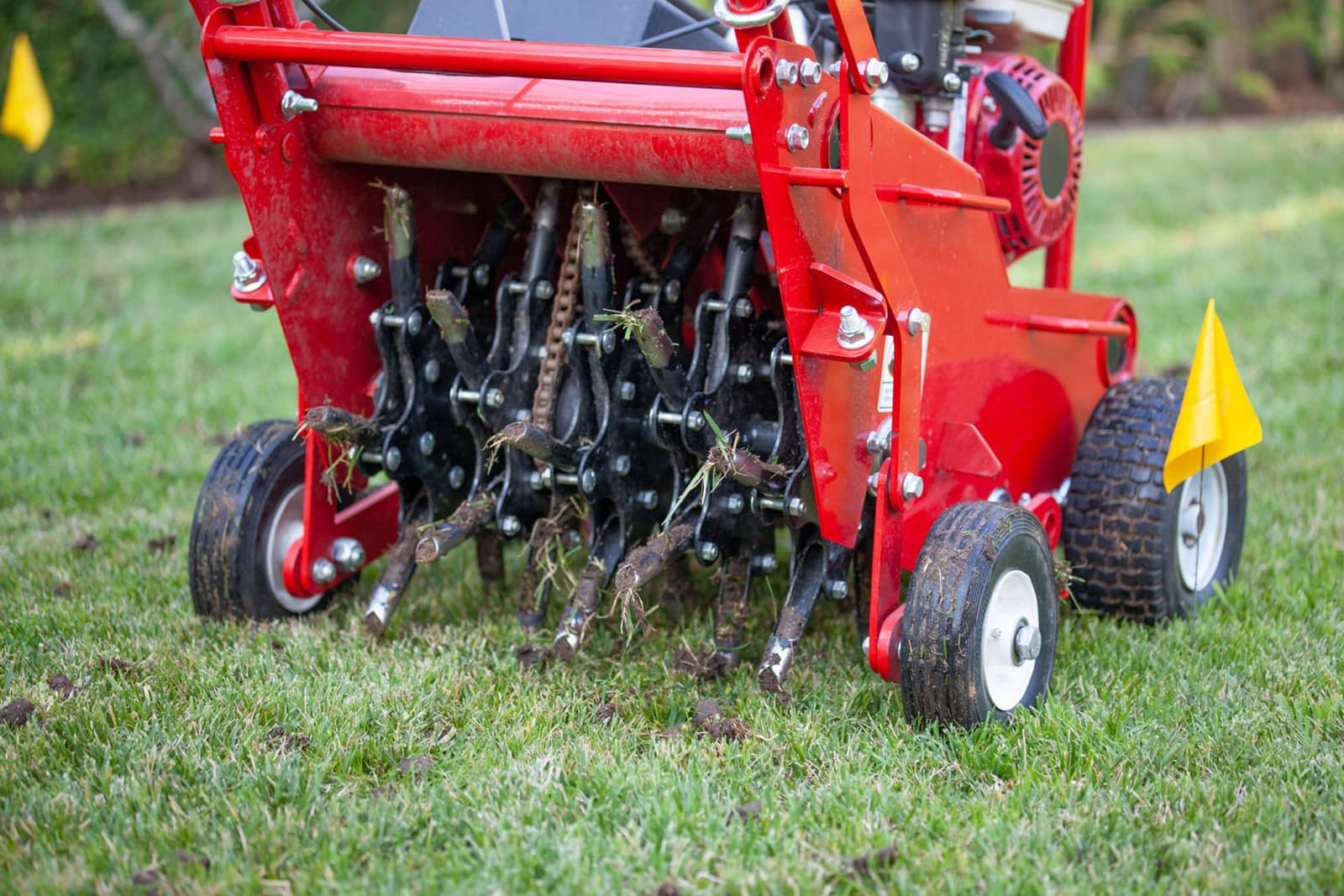
Core aeration improves drainage, reduces compaction and restores airflow to the root zone. Learn when and how to aerate properly in our aeration guide.
7. If → Scalping or Mowing Mistakes Caused the Damage
If the lawn thinned out after being cut too short, mowed while wet or trimmed with dull blades…
Then → Slow Down and Adjust
Scalping can make your yard look like it’s in serious trouble. But most of the time, it’s cosmetic stress.
When you cut off too much leaf blade, the grass loses its ability to produce energy efficiently. That’s why it looks shocked and thin. But if the roots are still intact, your lawn can recover.
Now, if scalping is happening repeatedly across the whole yard, that’s different. Chronic stress weakens the lawn over time and opens the door to weeds and disease.
✅ Solution:
Raise your mowing height to match your specific grass type and avoid removing more than one-third of the leaf blade at a time.
You can find recommended mowing heights in our guide to proper mowing practices for your grass type. Sharpen blades regularly and avoid mowing when the grass is wet to reduce additional stress.
8. If → Fertilizer Burn or Herbicide Misuse Is Limited
If yellowing or dead spots appeared shortly after fertilizer or herbicide application — but only in certain areas…
Then → Give it time to bounce back
Chemical injury usually shows up where product was overapplied or overlapped. Before you assume that section is gone for good, figure out whether the grass is dead or just stressed.
Try a gentle tug test. If the grass resists and the crown feels firm, there’s a good chance it can recover. If it lifts easily and the roots look brown or brittle, that area likely won’t bounce back.
And a quick reminder: herbicides should never be used on newly established lawns unless the label specifically allows it. Young grass is much more sensitive to injury.
✅ Solution: If fertilizer burn is the issue, flush the area deeply with water to dilute excess salts and give it time. If herbicide damage is suspected, stop applications and wait a few weeks to see if new growth appears.
If those areas stay completely dead, patch them. If the damage spans most of the yard and roots are gone, renovation may be the cleaner reset.
9. If → Compaction and Traffic Are Concentrated
If thin or bare areas line walkways, play zones or high-use sections…
Then → Repair and Aeration Are Logical First Steps
Compaction from repeated foot traffic is usually predictable and confined to specific paths. When the surrounding lawn remains healthy, relieving soil pressure in those areas often restores growth.
✅ Solution:
Core aerate larger compacted areas to open the soil and improve airflow. In smaller spots, loosen the soil by hand and rake in organic topsoil or compost before reseeding or plugging. Once roots can breathe again, recovery usually follows.
10. If → Weeds Are Overtaking Large Sections
If weeds are scattered but grass still dominates most of the yard…
Then → Patchwork and Targeted Control Can Work
When grass still dominates, your first move should be removing the competition. Once weeds are controlled, watch how your grass responds. Healthy lawns often thicken when they’re no longer fighting for space.
But if weeds cover large sections, return every season and your grass never regains control… that’s when you pause.
At that point, you’re not just dealing with weeds. You’re dealing with a yard that’s shifted away from supporting grass altogether.
✅ Solution:
Apply a labeled weed control product and give your lawn time to respond. Follow product label instructions carefully. If bare areas remain afterward but the majority of the lawn is still healthy, fill them in with seed or plugs. If weeds come back stronger and grass won’t reestablish, renovation may be the more reliable option.
Regardless of the Type of Damage, Start With the Big Picture
No matter what caused the damage (dogs, drought, disease, weeds or compaction) the real question is simple: is most of your lawn still healthy?
If more than half your yard is actively growing, reasonably dense and rooted, patchwork is usually the smarter first step. Localized thin spots often point to specific stress events, not total lawn failure.
✅ Check the Foundation - Don’t judge by color alone. If the grass resists a gentle tug and you see healthy white roots, your foundation is still intact.
✅ Watch the Response - After you seed, plug, aerate or correct the issue, pay attention to how the lawn reacts. If new growth establishes and thin areas begin filling in, repairs are working.
✅ When the Pattern Spreads - If thinning expands, the same areas fail year after year, or grass pulls up easily with weak roots, it may be time to think bigger. Repeated, widespread decline usually signals deeper soil, drainage or grass-type mismatches.
✅ Match the Fix to the Foundation - Patchwork reinforces a strong lawn. Renovation resets one that isn’t functioning properly.
In many cases, you don’t need to tear everything out. You just need to reinforce what’s already working. Use grass seed or plugs that match your existing turf to fill in damaged spots and help the lawn regain density. When the foundation is solid, targeted repairs are often all it takes to get your yard back on track.