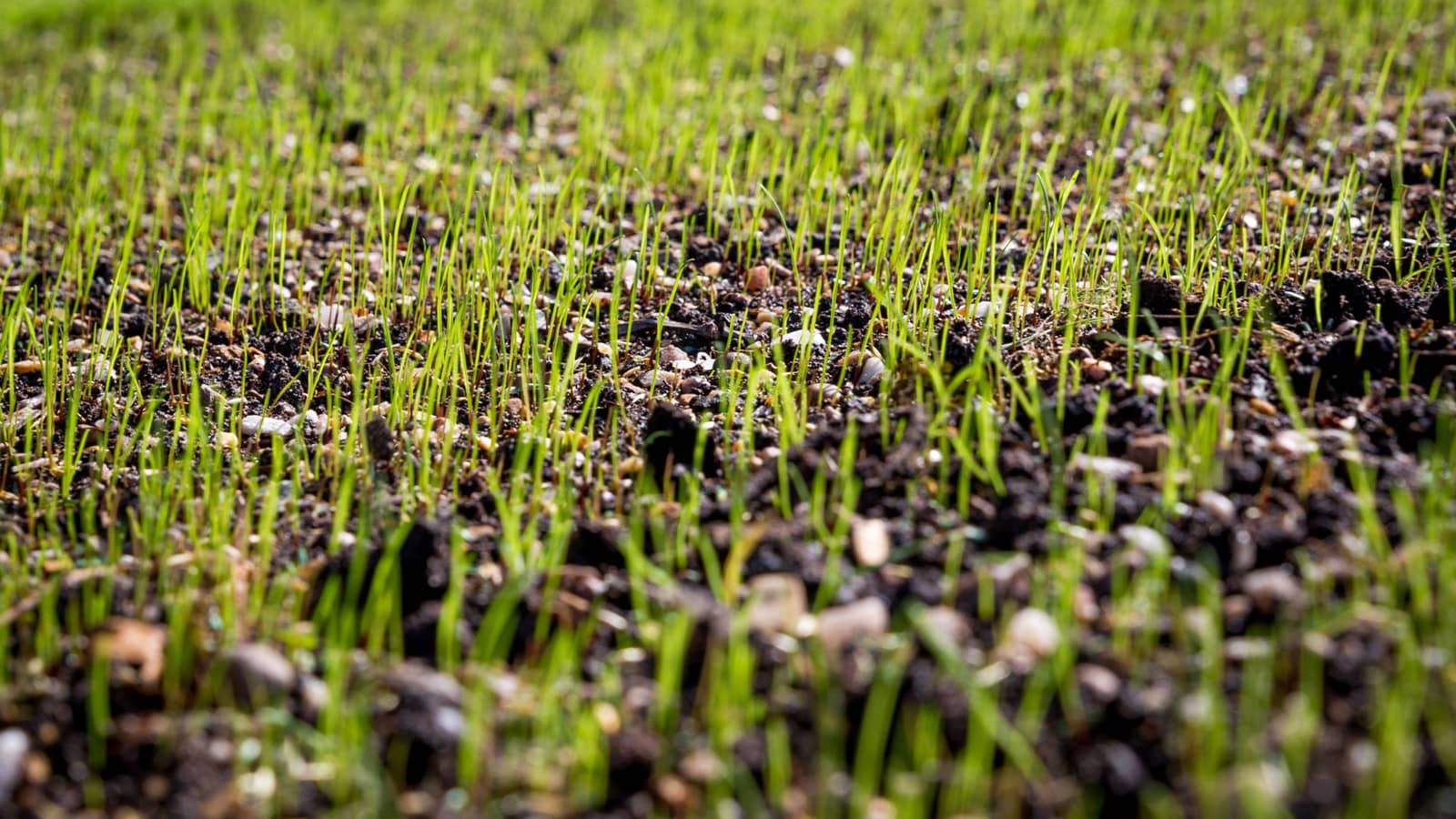
Your warm season lawn stays green in spring and summer, but typically turns brown in cool weather as it goes dormant—a natural process for these grasses. Still, no one wants a brown lawn for months. The solution? Overseed with a cool season grass when dormancy begins to keep your lawn green year-round.
Overseeding is simple and DIY-friendly. Here’s a quick guide to get you started.
How to Overseed Your Lawn for Winter
Step 1: Test Your Soil

The first step we recommend is testing your soil. Your soil’s health is what determines the overall health of your grass. Working from the ground up is the best way to ensure superior grass quality.
A simple soil analysis will tell you about the soil and any deficiencies you may need to address before tackling your overseeding project. Be sure to check out our article on How to Test Your Soil.
Step 2: Choose the Right Ryegrass Seed
Choosing the right ryegrass seed is key to a successful overseeding project. In warm season regions, ryegrass keeps your lawn green through winter dormancy.
Annual ryegrass is fast-germinating, affordable and provides quick, vibrant color. However, it typically lasts just one season and dies out in late spring. Perennial ryegrass, on the other hand, establishes quickly like annual but offers finer texture, richer color and can return year after year in cooler climates. In warm season areas, perennial ryegrass will still fade in late spring, but it tends to hold color longer than annual varieties.
Select the type that fits your budget, desired look and seasonal needs—annual for a temporary, economical green-up or perennial for a more refined, longer-lasting winter lawn.
Step 3: Rid Your Lawn of Any Current Issues
Make sure any disease or pest issues are resolved prior to overseeding. Sadly, the disease or pest issue won’t go away when you plant new seed and will likely hinder your overseed project's success.
This can be as simple as pulling the weeds out by hand or as difficult as treating the area with an herbicide, insecticide or fungicide. Browse through our online control products here.
Step 4: Plant the Seed
Use a broadcast or drop spreader in a tic-tac-toe formation to ensure the ground is covered thoroughly. Be sure to follow instructions on both your seed and spreader so that the right amount of seed per square foot is distributed.
Step 5: Double-Check for Even Distribution
Be sure to go back and rake in the seed. Double-check the area you’ve applied seed in and fill any bare spots in by hand for an even application.
Step 6: Water and Fertilize
Select a grass seed fertilizer that provides the necessary nutrients your soil may need, according to the soil analysis results you should’ve received by now. Your new seed needs plenty of phosphorus at this time.
Phosphorus helps roots grow so that the new sod can establish successfully. Sometimes, a fertilizer label can be hard to understand, so we discuss a few ways to interpret it and find what you’re looking for here.
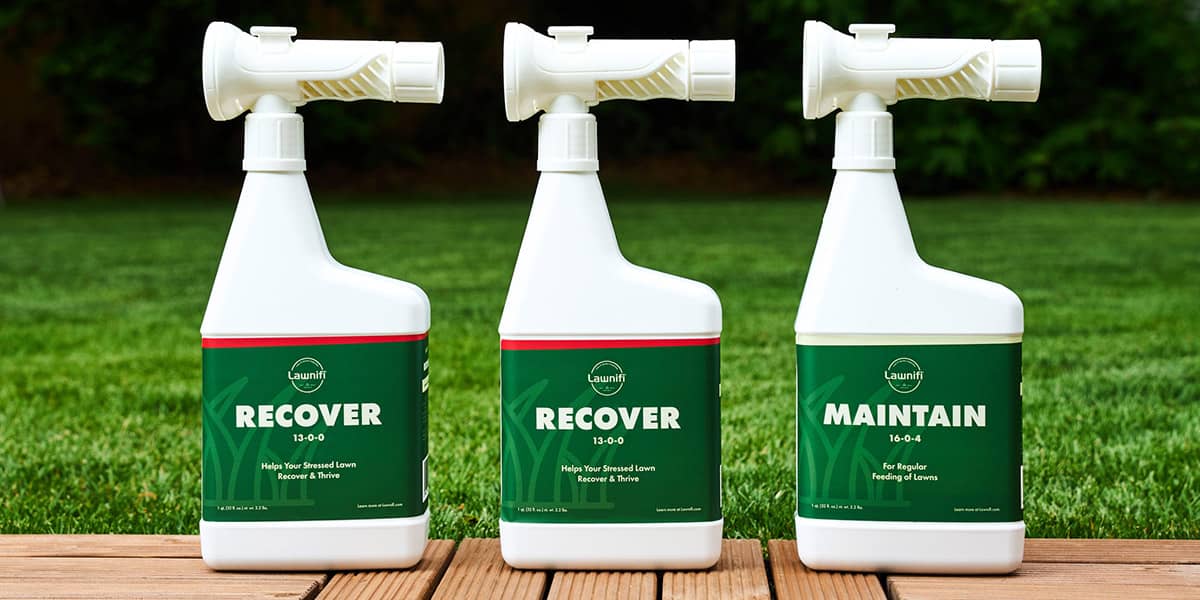
We recommend using Lawnifi’s New Lawn Starter Box, which comes with three bottles of liquid grass seed fertilizer.
Grow, the first and second bottles of the New Lawn Starter Box, is especially useful during the establishment process. It provides nutrients like phosphorus, potassium and carbon to promote healthy root growth of newly planted seeds.
Apply the first bottle of Lawnifi Grow at half rate (only use half of the bottle). The soil should be moist, 3–4 inches deep.
Step 7: Maintain During Establishment
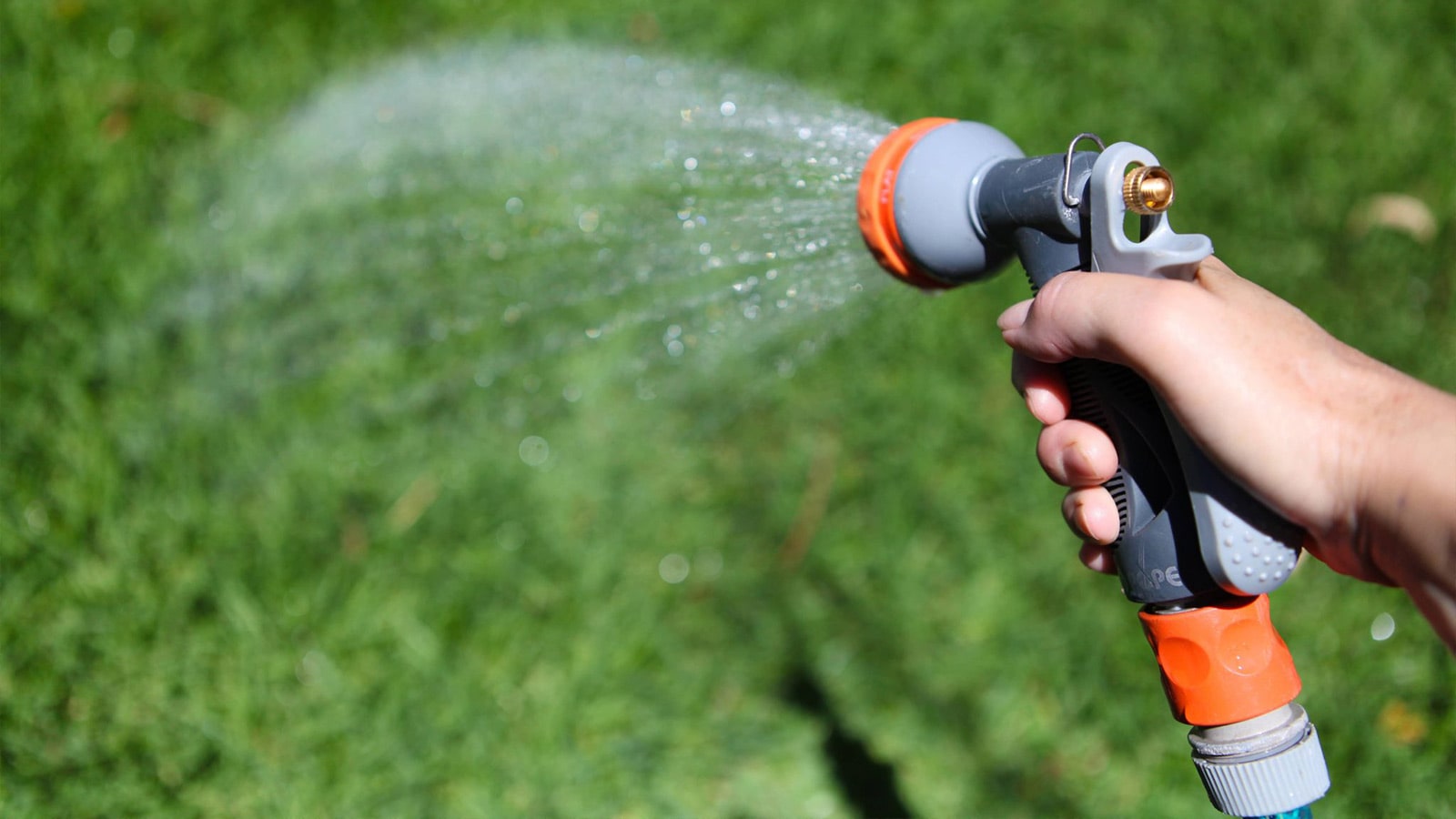
For the next 10–20 days, water your newly planted seed about 1 inch deep into the soil’s surface every day. Take rainfall into consideration. Use a sprinkler to mist over the surface of the soil so that it is moist, but not soggy.
We also recommend using the remainder of your New Lawn Starter Box in accordance with the application schedule during establishment. Once the seed starts to germinate, keep the top 2 inches of soil moist until the grass reaches a mowing height of around 3 inches.
After that, water should be decreased to twice weekly, and the soil should be soaked about 6–8 inches deep. Then, transition to a regular maintenance schedule based on the grass type you have selected. Review our maintenance calendars here.
The Best Time to Plant Grass Seed
The best time to overseed your lawn is when temperatures begin to cool down and your warm season grass begins to slip into dormancy—late fall/early winter. The rule of thumb when planting grass seed is that you should do it before the first freeze of the winter season. Learn more here.