
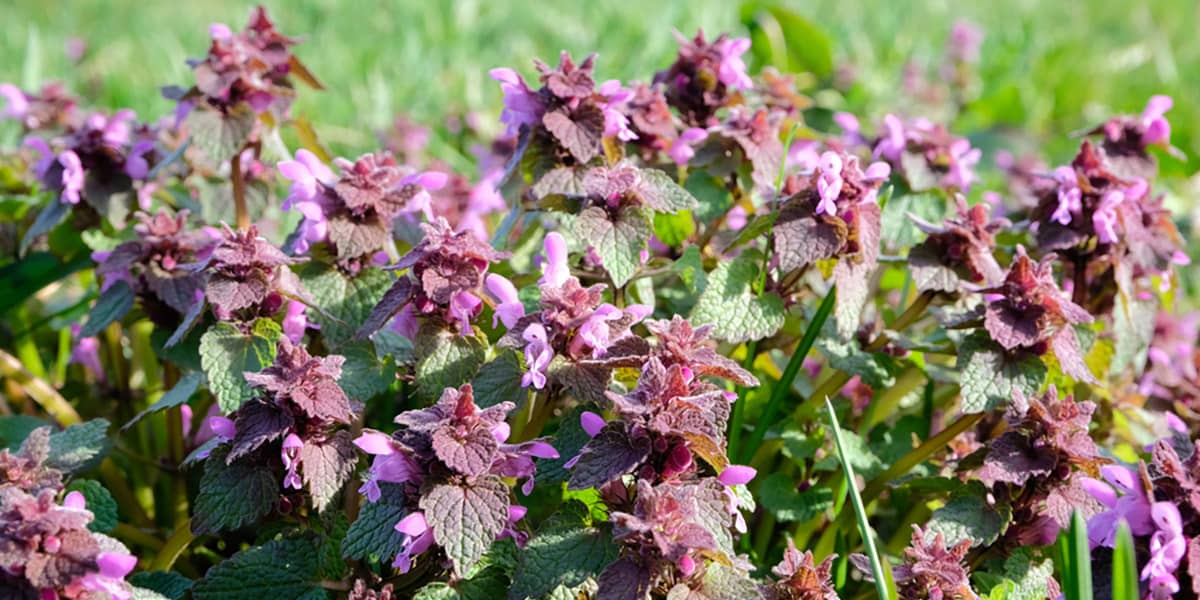
Purple deadnettle is a common winter annual weed that can invade lawns and gardens, especially in cooler seasons. Recognizing this weed early is crucial for managing its spread.
This guide will help you accurately identify purple deadnettle at various growth stages, distinguish it from look-alike weeds and understand its growth habits and lifecycle.
What does Purple Deadnettle look like?
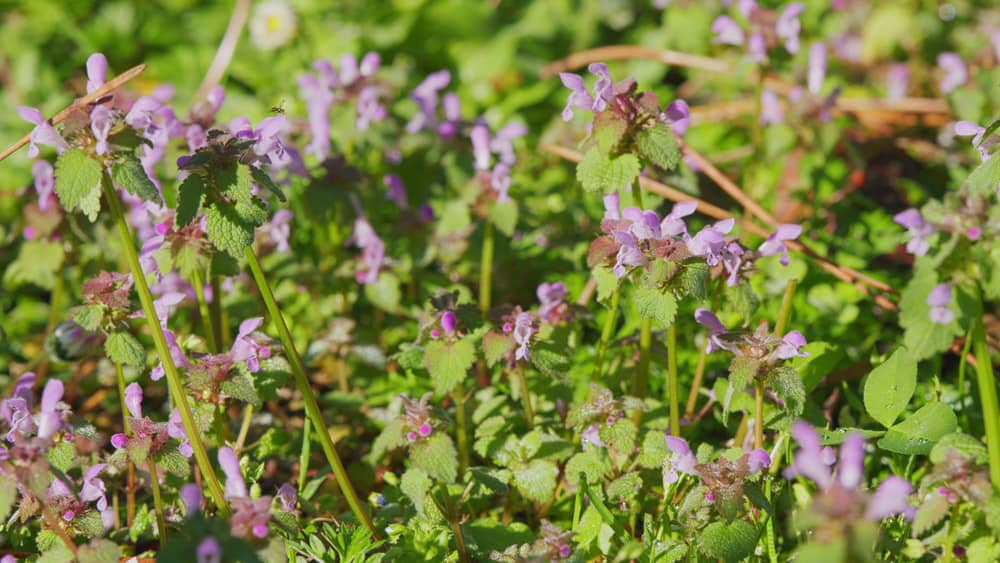
Purple deadnettle is easy to identify by its distinct physical features. It is a member of the mint family and has several characteristics that set it apart from other weeds:
Leaves
The leaves are triangular or heart-shaped with serrated edges and a soft, fuzzy texture. The upper leaves have a noticeable purple or red hue, particularly as the plant matures. In contrast, the lower leaves remain bright green.
Flowers
The plant produces small, tubular, purple-pink flowers that grow in clusters at the top of the stem. These flowers typically bloom in early spring and last for several weeks.
Stem
Purple deadnettle has a square stem, a common trait in the mint family. The stem is soft and covered with fine hairs, growing close to the ground but rising slightly as the plant develops.
Roots
The shallow roots make it relatively easy to pull up by hand. However, if left untreated, it can still spread quickly.
Visual Gallery: Purple Deadnettle Identification at Different Growth Stages
Early Growth Stage
Purple deadnettle starts as a low-growing plant with bright green leaves. The leaves appear in pairs along the square stem, with fine hairs visible up close.
Mid-Growth Stage
As they mature, the upper leaves develop a reddish-purple hue, and small purple flowers bloom. This is when the plant becomes most noticeable in the lawn.
Mature Stage
In full bloom, purple deadnettle stands out due to its purple-tinted upper leaves and clusters of tubular flowers. It can cover large areas of thin or struggling turf at this stage.
These stages are essential for identifying purple deadnettle before it can spread and go to seed.
Growth Habits of Purple Deadnettle
Purple deadnettle’s growth habits vary depending on climate and region. It thrives in cool, moist conditions and is most commonly found in thin, neglected areas of lawns and gardens.
Northern U.S.
In cooler northern climates, purple deadnettle germinates in the fall and stays dormant throughout winter. In early spring, it grows rapidly, blooming before temperatures rise in summer, after which the plant dies off naturally.
Southern U.S.
In warmer southern regions, purple deadnettle can emerge in the cooler fall and winter months. It remains active during these cooler seasons and dies off in late spring when temperatures rise. Shaded areas of the lawn and spots with poor drainage are especially vulnerable.
Lifecycle of Purple Deadnettle
Understanding purple deadnettle’s lifecycle is key to managing it effectively. Like other winter annuals, it follows a predictable growth pattern:
Germination
Purple deadnettle seeds begin to germinate in the fall as soil temperatures cool. During the winter, the weed remains relatively small and inconspicuous, often going unnoticed by homeowners.
Seed Production
By early spring, purple deadnettle matures and starts producing seeds. It flowers quickly and prolifically, releasing thousands of seeds before dying off in the summer. These seeds can remain dormant in the soil for several years, waiting for the right conditions to germinate again.
Signs of Infestation:
- Look for clusters of low-growing, purple-tinged leaves in early spring.
- Purple deadnettle often invades bare or thinning patches in the lawn, particularly in shaded areas.
- As the weed blooms, the appearance of purple flowers is a clear sign of infestation.
- It tends to form dense mats of growth, which can smother desirable grass if left unchecked.
Different Types of Deadnettle
While purple deadnettle is the most common species found in U.S. lawns, homeowners should be aware of other varieties of deadnettle. The key differences between them lie in their leaf structure, flower color and overall growth habits:
Yellow Deadnettle
This species has yellow flowers and is more commonly found in shaded garden areas than in lawns. Its leaves are often variegated with silvery markings.
White Deadnettle
White deadnettle is less common in the U.S. but can be identified by its white flowers and serrated, heart-shaped leaves.
Purple Deadnettle vs. Henbit: Key Differences
Purple deadnettle is often confused with henbit, another mint family member with similar characteristics. However, there are several key differences to help you tell them apart:
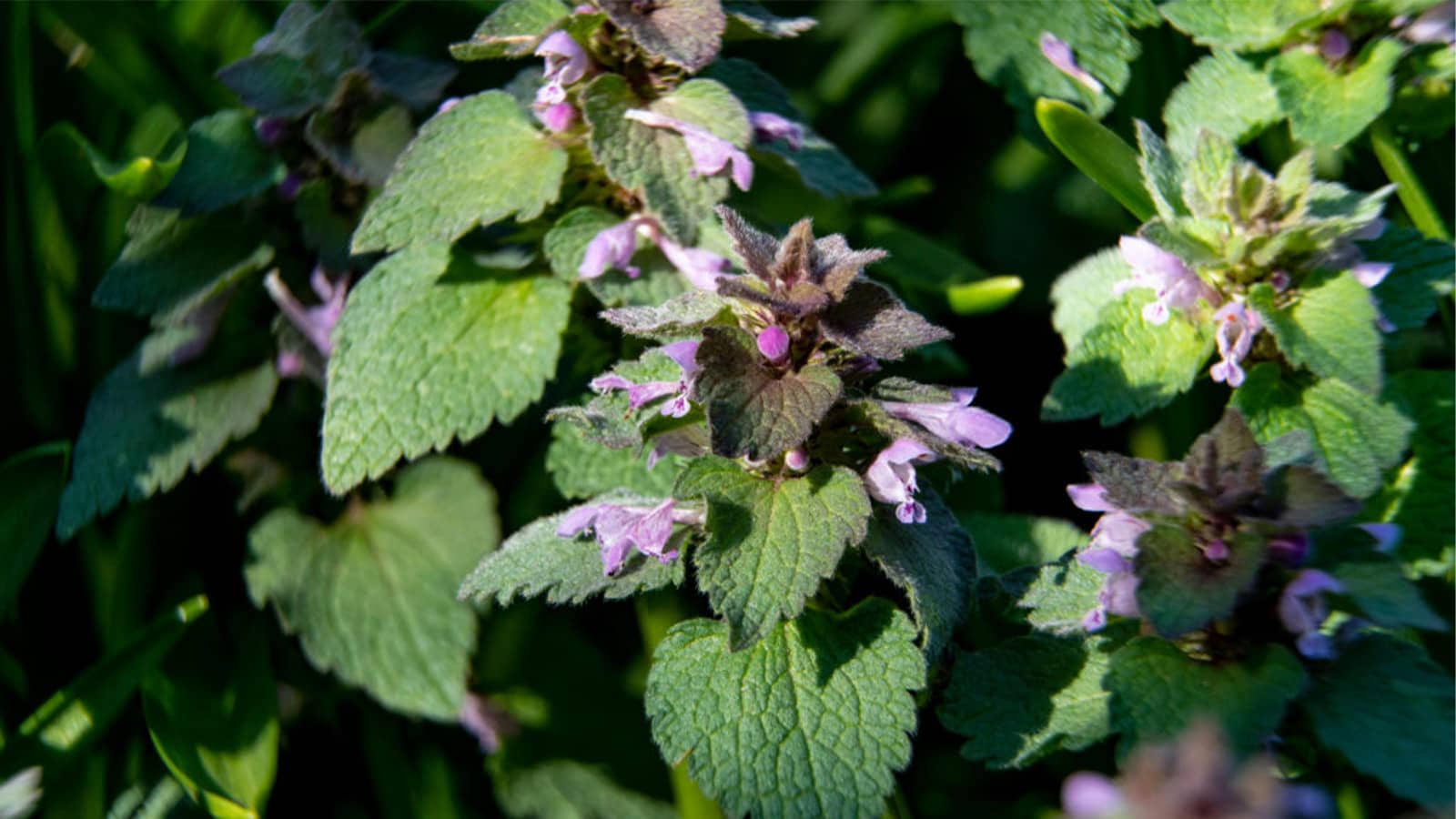
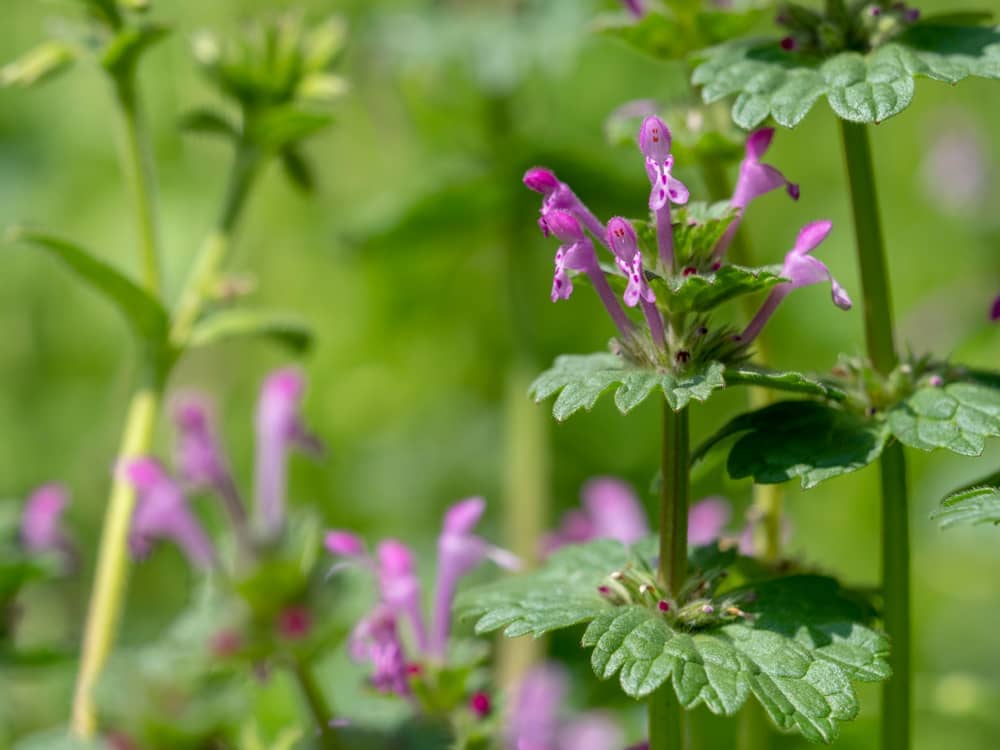
Pictured above from left to right: Purple Deadnettle and Henbit.
- Leaf Shape: While purple deadnettle’s leaves are triangular and turn reddish-purple at the top, henbit’s leaves are rounder and remain green throughout the plant’s life cycle.
- Flowers: Both weeds have purple flowers, but henbit’s flowers are a darker, more vivid purple and are smaller than those of purple deadnettle.
- Stem Growth: Henbit grows taller and tends to sprawl more horizontally, while purple deadnettle often forms a denser, more upright mat-like growth.
Signs of Purple Deadnettle Infestation
The signs of purple deadnettle infestation are typically noticeable in early spring when the weed is in full bloom:
Sparse Lawn Growth
Purple deadnettle often invades thin or stressed areas of turf where the grass is weak or patchy.
Dense Matting
The weed forms dense mats, especially in areas with poor drainage or too much shade, preventing the growth of healthy grass.
Clusters of Purple Flowers
In early spring, the appearance of purple flowers among your grass is a telltale sign of purple deadnettle. The flowers often bloom before mowing season, making them especially visible.
How do I identify purple deadnettle? - Answered
To identify purple deadnettle, look for its triangular, serrated leaves that turn purple or reddish at the top, small purple-pink tubular flowers that bloom in clusters and its distinctive square stems, common in the mint family.
It often forms dense, low-growing mats, particularly in cool, moist areas of the lawn during early spring. Purple deadnettle can be distinguished from similar weeds like henbit by its purple-tinted upper leaves and more upright growth, whereas henbit has rounder green leaves and darker purple flowers.
Identifying purple deadnettle early is crucial for controlling this weed before it spreads throughout your lawn. By understanding its distinct appearance, lifecycle and how it behaves in different regions of the U.S., you can take the necessary steps to manage and prevent it.
Keep an eye out for the purple-tinged leaves and tubular flowers in the early spring and remember that this weed thrives in cool, moist and shaded conditions.
With proper lawn care and timely intervention, you can keep purple deadnettle under control and enjoy a healthy, vibrant lawn year-round.