Dallisgrass is a persistent, perennial grassy weed that thrives in warm climates, especially in the southern United States. Due to its rapid spread and aggressive growth, it's important for homeowners to accurately identify dallisgrass to manage it effectively.
This article will guide you through recognizing dallisgrass at various growth stages, understanding its growth habits, and learning how to spot signs of an infestation.
What does dallisgrass look like?
Dallisgrass is often mistaken for other grassy weeds, but it has several distinguishing features:
- Leaves: Dallisgrass has coarse, wide blades that are grayish-green in color. The leaves are rough to the touch and often stand taller than the surrounding turfgrass.
- Growth Pattern: It grows in unattractive, circular clumps. As the clump expands, the center of the plant may die off while the edges continue to grow, giving it a patchy appearance.
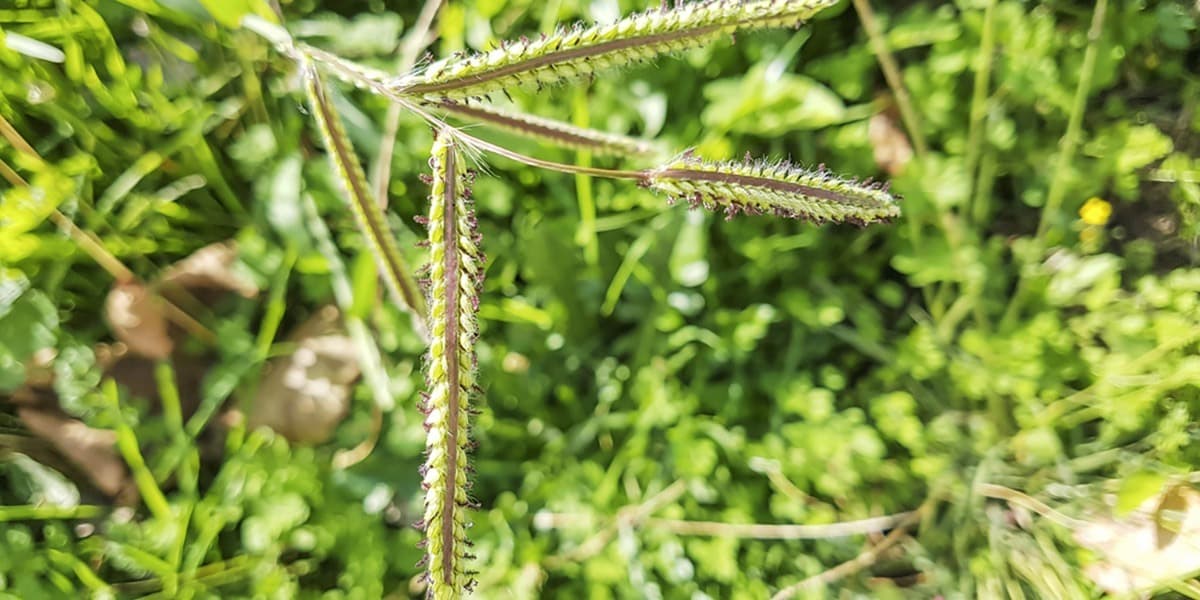
- Seed Heads: One of the most distinctive features of dallisgrass is its seed heads. The seed head consists of several spikes arranged along a central stem, often with black spots on the seeds. The seed heads can grow tall and stand out above the lawn.
- Rhizomes: Dallisgrass has short rhizomes (underground stems) that allow it to root quickly and spread across the lawn.
Visual Gallery of Dallisgrass at Different Growth Stages
To aid in identification, here are common visual markers of dallisgrass throughout its lifecycle:
- Early Growth: In its early stage, dallisgrass appears as small, individual shoots with broad, upright blades.
- Mature Growth: As the weed matures, it forms dense clumps that stand out from the surrounding turf due to their height and coarser texture.
- Seed Production Stage: In late spring and summer, dallisgrass produces tall seed heads that are often mistaken for other grassy weeds like crabgrass. The distinctive black spots on the seeds are a key identifier.
Dallisgrass vs. Crabgrass
- Crabgrass: Unlike dallisgrass, crabgrass has broader, flatter leaves that tend to grow close to the ground. Crabgrass seed heads are smaller and grow from the top of the stem, while dallisgrass seed heads are larger and grow along the sides of the stem.
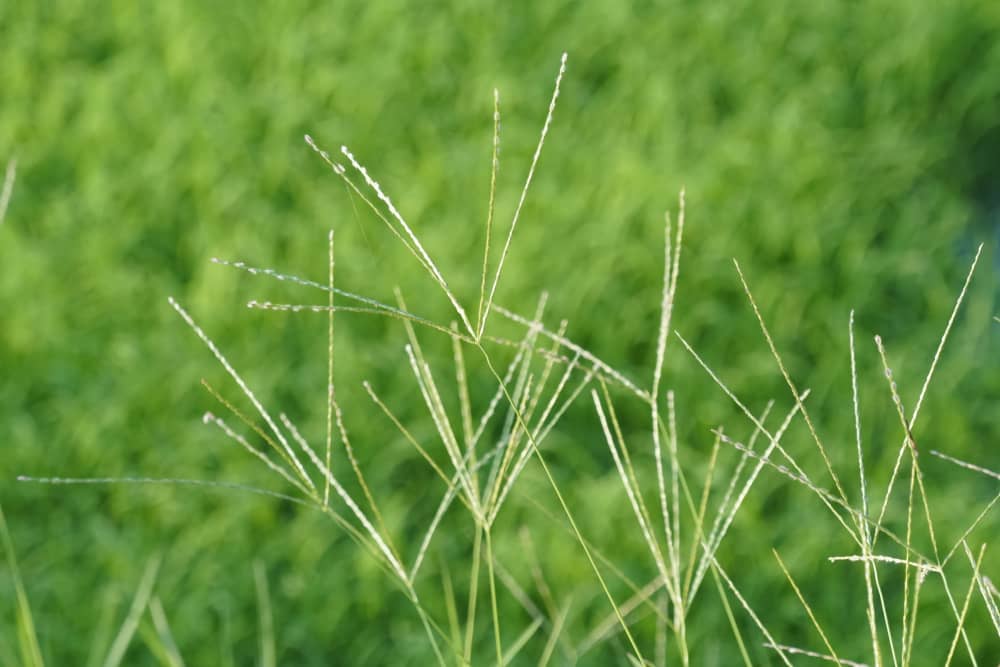
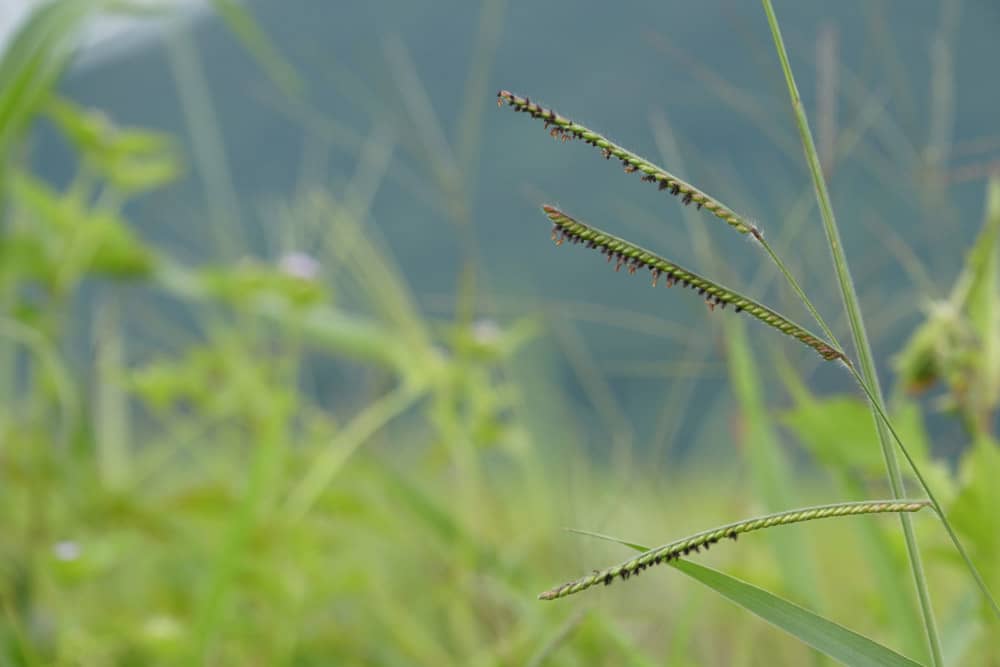
Pictured from left to right: Crabgrass seed heads and dallisgrass seed heads.
Growth Habits of Dallisgrass
Dallisgrass is a warm-season weed that thrives in disturbed or poor-quality soils, often in areas with compacted clay or sandy soils. It grows rapidly in sunny areas but can tolerate a range of environmental conditions, including frost.
- Clumping Habit: Dallisgrass grows in circular clumps that can quickly spread across a lawn if left untreated. It competes aggressively with turfgrass, especially in poorly maintained lawns with bare spots.
- Adaptability: This weed can adapt to different soil types and climates, making it particularly challenging to manage in diverse regions.
Types of Dallisgrass
Though all dallisgrass is of the same species, it may exhibit slightly different characteristics depending on the region:
- Southern U.S.: In warmer southern states, dallisgrass thrives year-round, with peak growth occurring in spring and summer. The warm temperatures and higher soil moisture levels in these regions allow it to spread more aggressively. The weed typically stays green until late fall, even after many turfgrass species have gone dormant.
- Northern U.S.: In northern states, dallisgrass is still problematic but grows more slowly due to cooler temperatures. It may die back in the winter but will reemerge in spring. Dallisgrass in northern areas has a shorter growing season compared to the South but can still spread if left unmanaged.
Dallisgrass Lifecycle
Germination
Dallisgrass germinates in the spring when soil temperatures reach 60–65°F. Its seeds are typically spread by wind, water, or mowing equipment. Seeds can remain viable in the soil for several years, making it difficult to control through a single-season effort.
Seed Production Habits
Dallisgrass produces seed heads in late spring through summer, continuing into fall. Each plant can produce a large number of seeds, which are often spread by lawn mowers, water runoff, or even attaching to clothing or shoes. The seed heads grow tall and above the height of typical turfgrass, making them highly noticeable.
Lifecycle Summary:
- Germination: Spring, once soil temperatures hit 60°F.
- Growth Season: Spring to late fall, with rapid growth in warmer temperatures.
- Seed Production: Late spring through summer, producing numerous seeds.
- Dormancy: In colder climates, dallisgrass may go dormant in winter but reemerges in spring.
Signs of Dallisgrass Infestation
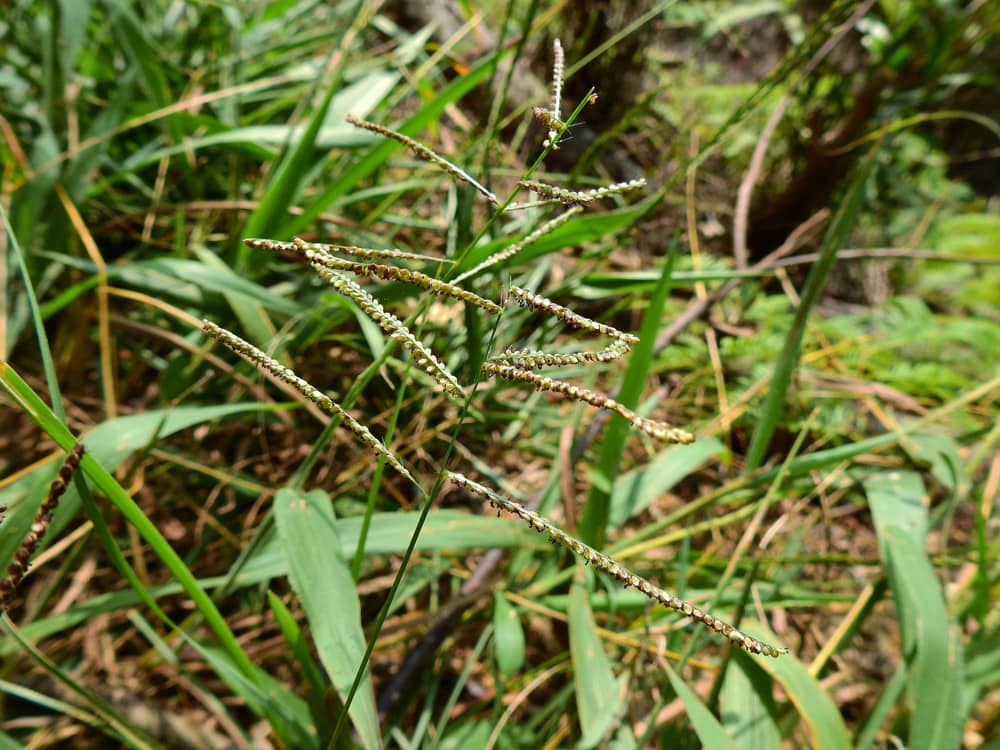
Spotting dallisgrass early can prevent a small problem from turning into a full-blown infestation. Here are some key signs to look for:
- Circular Clumps: Dallisgrass forms noticeable circular clumps that look different from the rest of the lawn due to their coarse, upright blades.
- Height Difference: Dallisgrass often grows taller than turfgrass, especially when it produces seed heads. If you notice areas of your lawn where the grass is growing much taller and coarser, it could be dallisgrass.
- Seed Heads: If you see tall, thin stems with multiple seed spikes during the growing season, it's a strong indicator of dallisgrass.
- Spread in Poor Soils: Dallisgrass thrives in compacted or low-quality soils. If parts of your lawn have bare patches or compacted soil, keep an eye out for the emergence of dallisgrass.
How to Identify Dallisgrass - Answered
Dallisgrass is identifiable by its coarse, grayish-green leaves that grow in circular clumps, often taller than surrounding turfgrass. It produces tall seed heads with multiple spikes along a central stem, often featuring distinctive black spots on the seeds.
Unlike similar weeds like crabgrass, which has broader, low-growing leaves, dallisgrass grows more upright and clumpier. It thrives in compacted soils and spreads rapidly through short rhizomes and seeds, particularly in warmer regions.
Dallisgrass is a tough, resilient weed that can overtake your lawn if not identified and managed early. Understanding its appearance, growth habits, lifecycle, and the regions it thrives in is key to controlling this invasive weed. By learning to distinguish dallisgrass from look-alike weeds, homeowners can implement the appropriate control measures to keep their lawns healthy and weed-free.