
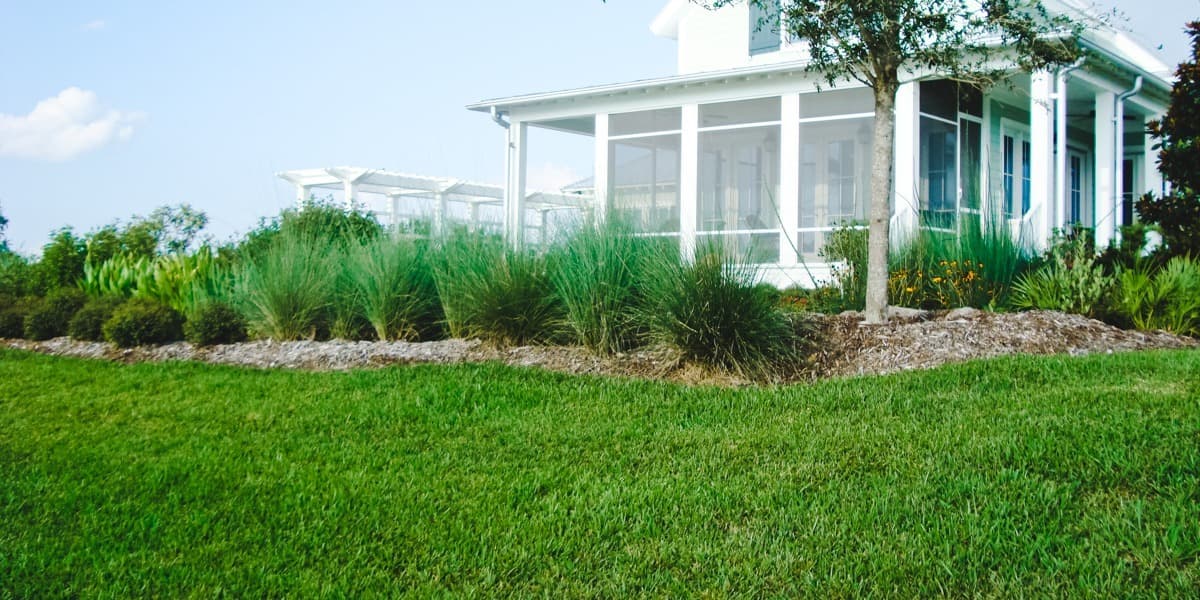
St. Augustine grass is popular for lawns in warmer climates due to its beautiful tropical look, shade tolerance, and relatively low maintenance needs. This guide will discuss the pros and cons of each way to plant it and provide tips for soil preparation, planting techniques and ongoing care.
Why Choose St. Augustine for Your Backyard?
St. Augustine is a tropical-looking grass with wider blades and a deep green color. It makes an astounding lawn in neighborhood settings. Certain cultivars may have a blue-green color, and others may appear dark or emerald-green.
In general, however, St. Augustine has distinct, coarse grass blades. It’s a warm season turfgrass that thrives in tropical and subtropical areas.
St. Augustine adapts well to most soils in southern parts of the United States. It’s most commonly found along the coastlines and has a good salt tolerance. You can find St. Augustine grass in states like Florida, Georgia, South Carolina, Texas, California, and more.
Pros and Cons of Planting St. Augustine Sod, Plugs, and Seed
Installing St. Augustine Sod
Pros:
- Provides an instant lawn with established grass.
- Offers a uniform and thick appearance quickly.
- More effective in controlling weeds and erosion.
Cons:
- Requires a larger investment compared to other methods.
- Installation may involve more finesse, attention to detail or even professional help.
Planting St. Augustine Grass Plugs
Pros:
- Plugs are homeowner DIY-friendly.
- Quick installation compared to seed.
- More cost-effective than sod.
- Suitable for filling in small and large areas.
Cons:
- Initial patchy appearance until plugs grow in.
- Requires more time and patience for plugs to fill larger areas compared to sod or seed.
- May need more maintenance to keep weeds at bay.
Sowing St. Augustine Grass Seed
St. Augustine grass is vegetatively propagated, meaning it can only be established as sod or grass plugs. There is no such thing as St. Augustine grass seed available to the homeowner or in commercial markets. Although it produces some seed, St. Augustine doesn’t produce enough seed to make it viable or commercially available.
Preparing for Planting
Test Your Soil
- Ensure the soil has the right balance of pH and nutrients with a soil test.
- Necessary items include:
- Seed Spreader
- Auger bit for plugs
- Sod or Plugs in the appropriate amount
- Appropriate Fertilizer
- Helping hands for larger areas
Soil Preparation
- Remove debris and rake the soil level.
- Add a layer of organic compost or use half of the first bottle in the Lawnifi New Lawn Fertilizer Box on the soil before installing or planting St. Augustine sod or plugs.
Best Practices for Planting a St. Augustine Yard
St. Augustine Soil Prep is Key
Ensure good drainage, nutrients and a balanced pH to create the best environment for root establishment and growth.
Neglecting soil preparation can lead to poor grass establishment, slower growth and a lawn more susceptible to pests and diseases.
Water Properly
Consistent moisture is needed initially but avoid overwatering. Keep the soil consistently moist during the first few weeks but not waterlogged.
Install St. Augustine in the Right Season
The best time to plant is during the spring or fall months to avoid extreme temperatures. Planting during these times ensures optimal conditions for germination and root establishment. It can be installed in other seasons but may require additional care and consideration to ensure successful growth.
Uniform Planting or Installation
When installing sod, lay pieces tightly together without overlapping and maintain consistent spacing. For plugs, space them 6 to 12 inches apart to promote uniform growth.
Initial St. Augustine Yard Care & Establishment
Watering New St. Augustine Grass
Water well initially to soak the soil up to 3-4 inches deep. Maintain consistent moisture for the first few weeks.
Fertilizing New St. Augustine Lawns
To support initial growth, use a balanced fertilizer, like those in the Lawnifi New Lawn Starter Box. The ideal fertilizer should promote root growth rather than just top growth.
Monitoring Your New St. Augustine Yard
Watch for signs of stress, such as discoloration or patchiness, and adjust watering and fertilization practices accordingly. Check rooting progress by gently lifting a corner to see if white roots are established.
Your Path to a Lush St. Augustine Lawn is Around the Corner
Establishing a vibrant St. Augustine lawn is about preparation and care. Each step is essential, from choosing the optimal planting time to soil preparation and the right balance of watering and fertilization.
Patience and attention to detail are your greatest allies. By following these tips, you’re not just planting grass; you’re creating a living tapestry that enhances the beauty and value of your home. Get planting, and soon, you’ll be enjoying a lush St. Augustine grass lawn.