
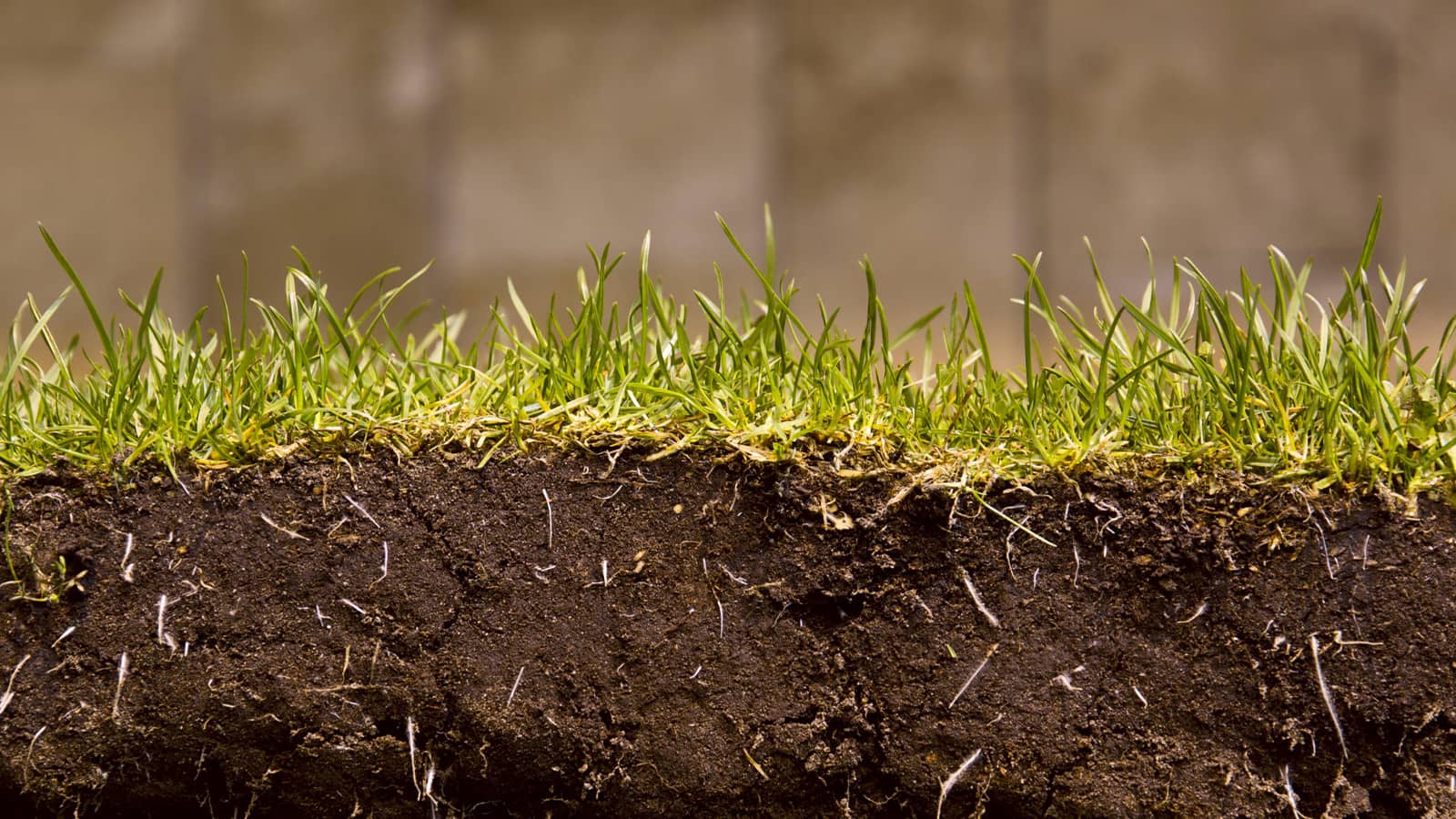
These days, sustainability is a top priority for many homeowners—it’s also important to us! A lawn that considers the health of the environment has many benefits that extend well beyond earth-friendly intentions.
Earth Day falls on April 22nd, and Sod University focuses on some of the key benefits natural turfgrass brings to the environment.
The Benefits of Natural Turfgrass
For starters, natural grass cooling properties make a huge difference in areas that experience extreme heat during summer months. Natural grass also has the unique ability to rid carbon dioxide from the air, as well as keep other pollutants, such as pollen and dust, from entering the water supply en masse.
Lastly, a natural turfgrass lawn provides an aesthetically pleasing look for a home that can be enjoyed by the entire family. While artificial grass is becoming more popular, don’t be fooled by the allure—there are many reasons why it’s best to stay away from this trend. Natural grass is the more sustainable option and the way to go! When it comes to caring for a sustainable lawn, there are a few aspects that make all the difference.
How Natural Lawns Improve Air Quality
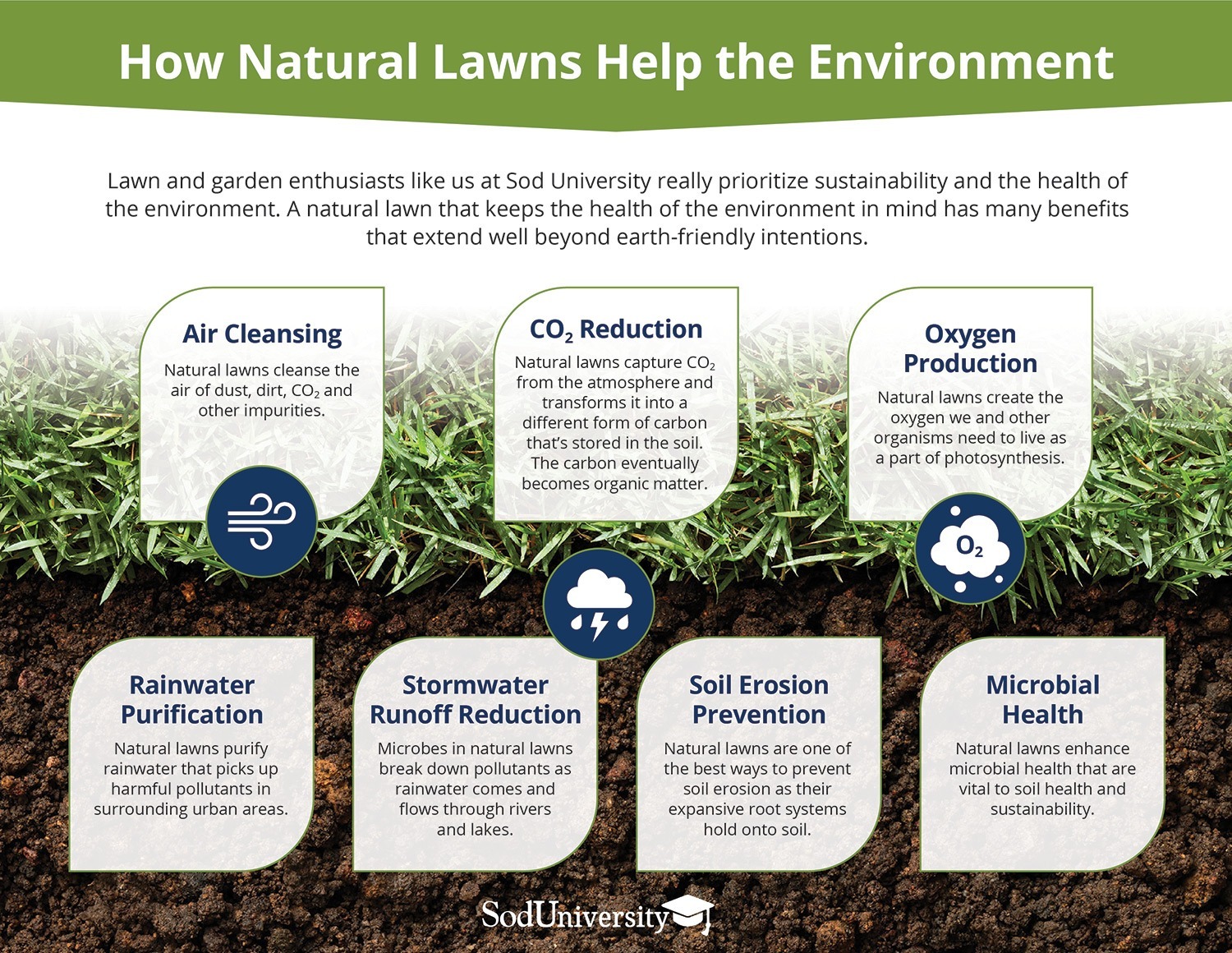
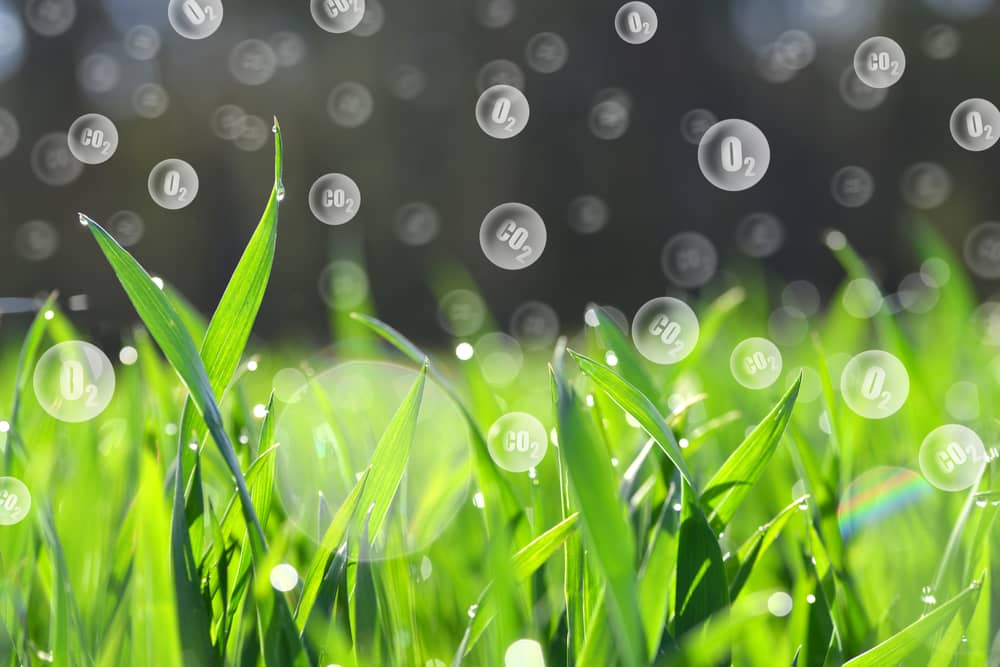
Natural lawns and turfgrass act as sponges for impurities in our air. On an annual basis, natural turfgrass significantly cleanses the air of dust, dirt, CO2, and other impurities.
Grass blades capture impurities and move them into the root zone, where microbes help break them down. This promotes a clean atmosphere for us to breathe.
Natural lawns also capture a significant amount of CO2 from the atmosphere annually—300 pounds per year!
The grass transforms the CO2 into a different form of carbon that is then stored in the soil and eventually becomes organic matter, which is extremely beneficial for your lawn. Learn more about the importance of carbon in your lawn here. This carbon sequestration helps reduce contributions to global warming.
Natural grass is a living organism, so it can provide oxygen through photosynthesis. In fact, it is estimated that a 25 sq. ft. lawn will provide enough oxygen for one person each day during the grass's active growing season.
How Natural Lawns Conserve and Filtrate Water
A common misconception about natural turfgrass is that it takes gallons and gallons of water to keep it healthy and thriving. While it’s true that watering is an essential component of lawn care, overwatering isn’t beneficial—in fact, it can harm the grass.
Fortunately, several innovative turfgrass varieties exist that can thrive in the heat with less water than others.
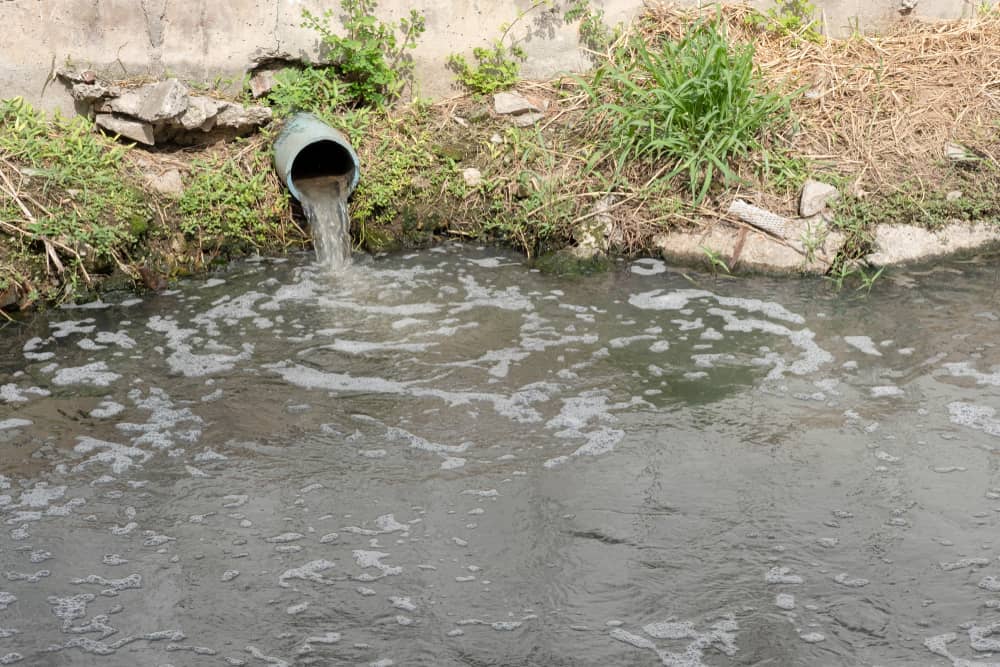
Another benefit of natural turfgrass is that it helps to purify the rainwater that comes in. Acidic rain caused by air pollutants can harm the environment, but a natural lawn helps to serve as a filter for groundwater quality. Microbes within the soil break down pollutants as rainwater comes in. This helps to purify groundwater as it moves through the roots and into rivers and lakes.
How Natural Lawns Prevent Stormwater Runoff and Soil Erosion
Additionally, water absorbed into a natural lawn also prevents runoff and soil erosion, a major issue that artificial lawns and xeriscaped lawns are unable to do. Natural lawns are one of the best ways to prevent soil erosion as their expansive root systems hold onto soil. Microbes in natural lawns also break down pollutants as rainwater comes in and flows through rivers and lakes.
Ways to Provide Natural Lawns with Earth-Friendly Nutrition
With trending alternative options for natural turfgrass, such as artificial turfgrass or xeriscaping, it’s important to understand that there are ways to feed your natural lawn with earth-friendly nutrition while reducing harmful environmental effects.
Some of these methods include:
- Starting by testing your soil to see which nutrients your soil is in need of
- Adding more organic matter to your lawn as a source of nutrients (i.e. compost, topdressing or manure)
- Using fallen leaves as compost
- Leaving mower clipping in the lawn
- Reducing nitrogen inputs
- Including micronutrients in your soil
- Using carbon-based fertilizers like Lawnifi®
All in all, maintaining sustainable practices in your lawn doesn’t take very much time or money. Zoysia, St. Augustine grass, centipede grass, bermuda grass, bluegrass and other natural sod varieties are great options to ensure you have the best lawn for the environment.
Sod Solutions has an abundance of grass types you can shop for online. With a little forethought and planning, you can care for your lawn sustainably in a way that will yield fantastic results.
Sources:
- Milesi, C., S.W. Running, C.D. Elvidge, J.B. Dietz, B.T. Tuttle and R.R. Nemani, “Mapping and Modeling the Biogeochemical Cycling of Turf Grasses in the United States," NASA Ames Research Center, 2005.
- Zirkle, Gina, Ratan Lal and Bruce Augustin, 'Modeling Carbon Sequestration in Home Lawns', 46 (5) HortScience, May 2011.