Whether you’re dealing with worn-out patches, building a new lawn from scratch, or just looking for a budget-friendly alternative to sod, centipede grass seed is a smart, low-maintenance option. Thanks to its low maintenance characteristics, dense growth and crabapple-green color, it’s a favorite for homeowners across the Southeast and into the transition zone.
In this guide, we’ll break down what makes the best centipede grass seed for home lawns—and how to pick the right one for overseeding or a fresh start.


Why Pick Centipede Grass Seed?
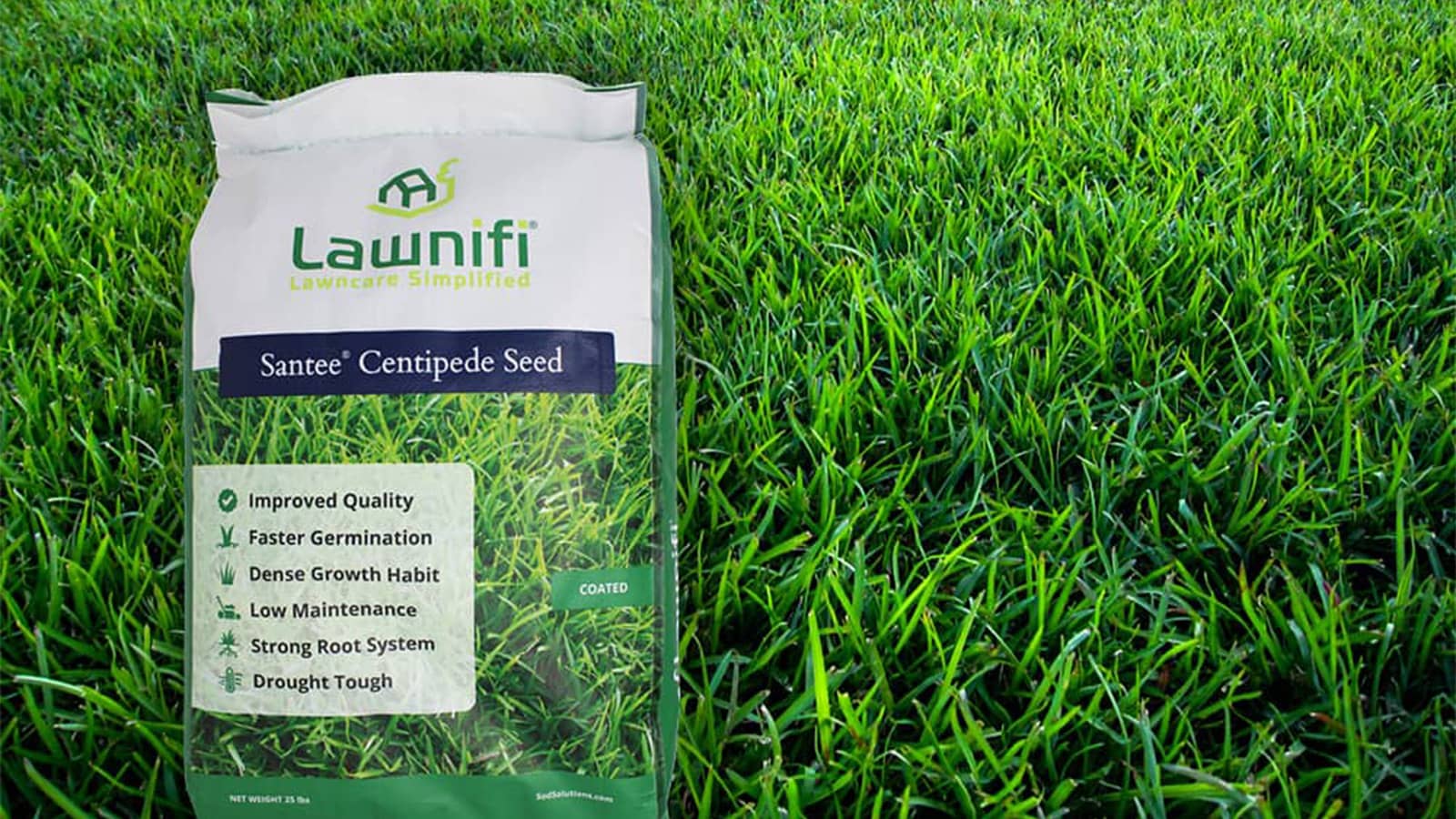
Centipede grass is a staple across the southeastern U.S.—thanks to its low-maintenance nature, excellent color and ability to thrive in acidic, sandy soils. Santee® Centipede, in particular, is an upgraded variety that offers improved durability and visual appeal over common centipede grass.
While sod is still an option, many homeowners prefer using grass seed for its affordability and ease of application. And with today’s advanced formulations like Santee Centipede Seed, getting a dense, healthy lawn is simpler than ever.
This premium centipede seed is coated with Lawnifi® fertilizer, accelerating root development and promoting quick establishment. With high germination rates, it's perfect for filling in thin spots or growing a beautiful lawn from scratch.
What Sets High-Quality Centipede Grass Seed Apart?
When selecting grass seed, these characteristics are key to ensuring long-term success:
Fast Germination & Establishment
High germination rates mean you won’t be waiting long for results. Santee Centipede Seed is designed for quick establishment, with coated seeds that encourage rapid root development and healthy early growth.
Drought Resistance
Santee Centipede is incredibly drought-tolerant thanks to its deep and extensive root system. Once established, it can handle dry spells with ease, making it a top pick for areas with inconsistent rainfall or watering restrictions.
Resilient Root System
The strong root network also helps it recover quickly from wear and tear caused by foot traffic, insects or disease. This makes it a dependable option for both residential and light commercial applications.
Visual Appeal
Santee Centipede has a medium blade width (about 5.5 mm) and a distinct crabapple-green color. It maintains this vibrant appearance into the fall and greens up quickly in the spring, giving you year-round curb appeal.
Low Maintenance Needs
With a mowing height of just 1–2 inches and reduced fertilizer requirements, this grass practically takes care of itself once established. It’s ideal for homeowners who want a great-looking yard without constant upkeep.
How to Plant Centipede Grass Seed
Whether you’re patching up bare spots or creating a thick lawn from seed, Santee Centipede Seed makes the job straightforward and satisfying.
Overseeding Bare Areas
Have a few trouble spots that need some help? Overseeding is a simple and effective fix.
- When to Overseed: Late spring through early summer, when soil temperatures are warm but not scorching.
- How Much Seed to Use: Use 0.5 lb of seed per 1,000 sq. ft. for overseeding.
- Tools You’ll Need: For small areas, use a hand spreader like the Scotts Whirl or a broadcast spreader for larger ones.
Application Tips:
- Trim the existing grass short.
- Lightly rake the soil to improve seed-to-soil contact.
- Distribute seed evenly.
- Cover lightly with topsoil or straw.
- Keep the area moist with daily watering until germination.
Starting a New Lawn
Seed is a great budget-friendly choice for a total lawn makeover or new installations.
- Best Time to Seed: Late spring to early summer, when the soil is warm.
- Seeding Rate: Use 1 lb of seed per 1,000 sq. ft. for new lawns.
- Coverage: A 25 lb bag covers up to 50,000 sq. ft. for new lawns.
Step-by-Step Instructions:
- Clear away weeds and debris.
- Loosen topsoil 2–3 inches deep.
- Apply a starter fertilizer like the Lawnifi New Lawn Starter Box.
- Spread the seed evenly.
- Lightly rake and cover with soil.
- Water daily in early morning until grass begins to grow.
- Continue fertilizing for 30 days using the Lawnifi schedule.
Pro Tip: Avoid mowing for the first 2 months. After 3–4 mowings, you can apply post-emergent weed control if needed.
Why Santee Centipede Outperforms Common Centipede
- Faster germination and establishment
- Stronger, more expansive root system
- Better drought and stress recovery
- Improved seasonal color retention
- Low fertility and mowing requirements
- Thicker, more uniform turf appearance
This isn’t your typical centipede grass—it’s a high-performance variety built to look better and last longer.
To plant centipede grass seed, prepare your soil by clearing debris, loosening the top 2–3 inches, and applying a starter fertilizer. Spread the seed evenly, lightly rake it in, cover with soil or straw, and water daily until germination begins.
The best time to plant centipede grass seed is in late spring through early summer when the soil is warm but not overly hot. This timing ensures optimal conditions for seed germination and establishment.
Growing centipede grass from seed involves daily watering to maintain soil moisture, applying fertilizer according to a set schedule, and avoiding mowing for the first two months. Using high-quality coated seed like Santee Centipede promotes fast root development and dense turf growth.
In South Carolina, late spring to early summer is ideal for planting centipede grass seed, aligning with warm soil temperatures typical of the southeastern U.S. This timing supports fast germination and healthy early growth.
Centipede grass seed begins germinating quickly due to high germination rates and fertilizer-coated seeds like Santee Centipede. With daily watering, you’ll typically see growth within a few weeks, with full establishment taking several months.