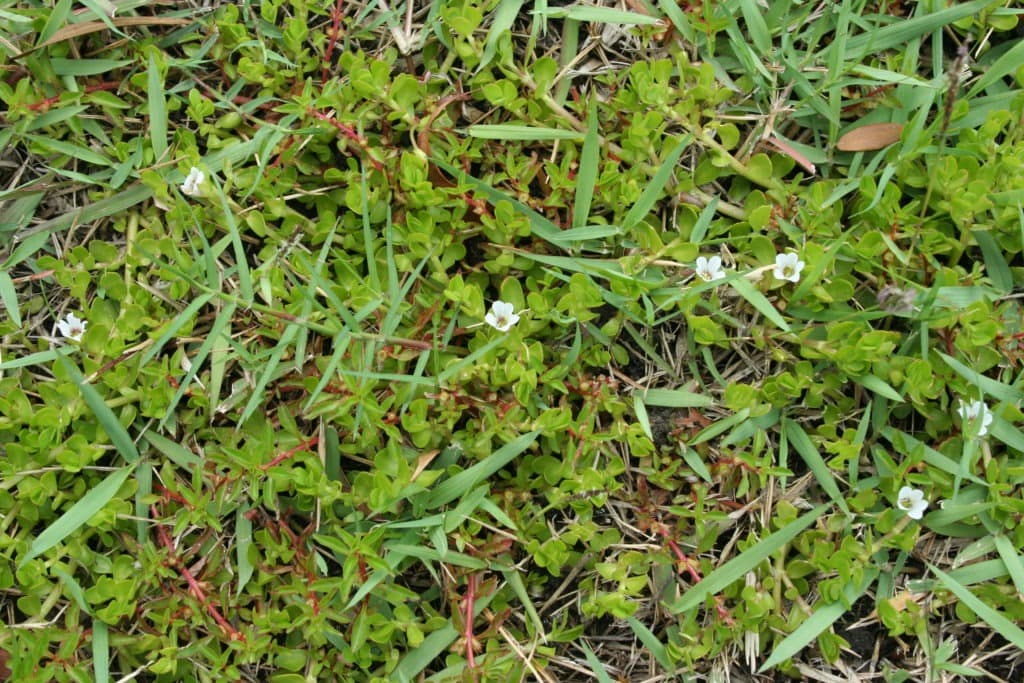
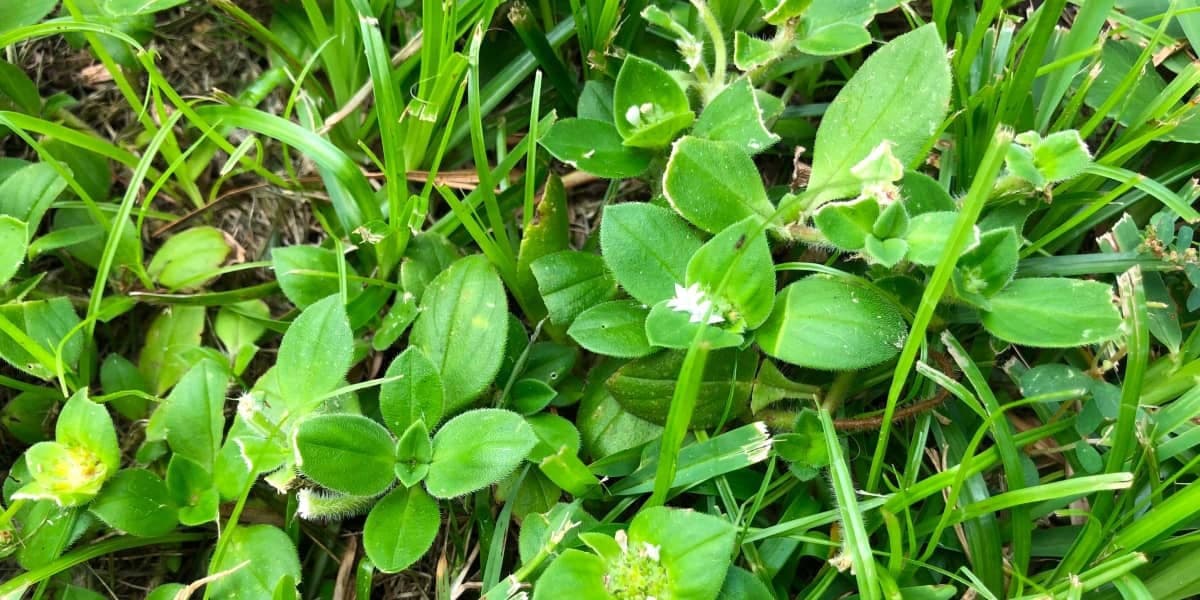
Chickweed is a persistent lawn weed that can quickly take over your lawn if left unchecked. While its tiny white flowers may seem harmless, chickweed can crowd out desirable grasses, especially in thinner lawn areas.
The best approach to tackling this weed is prevention. Maintaining a healthy lawn and using strategic control methods can keep chickweed at bay before it becomes a problem. Pre-emergent weed controls like prodiamine or atrazine can prevent chickweed before it takes hold of your lawn.
Key Strategies to Prevent Chickweed
Maintain a Healthy Lawn
A thick, healthy lawn is your best defense against chickweed. Weeds like chickweed thrive in weak or stressed turf, so make sure your grass is well-maintained by following these steps:
- Regular Mowing: Mow at the recommended height for your grass type to encourage dense growth. Regular mowing prevents chickweed from flowering and spreading seeds.
- Proper Irrigation: Water deeply and infrequently to avoid creating the moist, shallow-rooted environment that chickweed favors. Performing an irrigation audit can help ensure you're not overwatering any areas.
- Fertilization: Use the right fertilizer for your lawn’s needs. A balanced fertilizer like Lawnifi can strengthen your turf, allowing it to outcompete chickweed.
Conduct a Soil Test
Healthy soil is essential for a thick, weed-resistant lawn. By testing your soil’s pH and nutrient levels, you can adjust your fertilization practices accordingly. Correcting imbalances will promote stronger grass growth and reduce the likelihood of weed infestations.
Aerate and Dethatch Your Lawn
Chickweed seeds often settle in thatch, the layer of organic material that builds up between the soil and grass. Regular aeration and dethatching can help break up this layer, improving airflow and water penetration while making it harder for chickweed to establish roots.
Hand-Pull Chickweed in Small Areas
If chickweed does start to appear, you can remove it by hand. Because chickweed has shallow roots, it is relatively easy to pull up by hand. However, remove the entire plant, including the roots, to prevent regrowth. Wear protective gloves and consider using a hoe for larger patches.
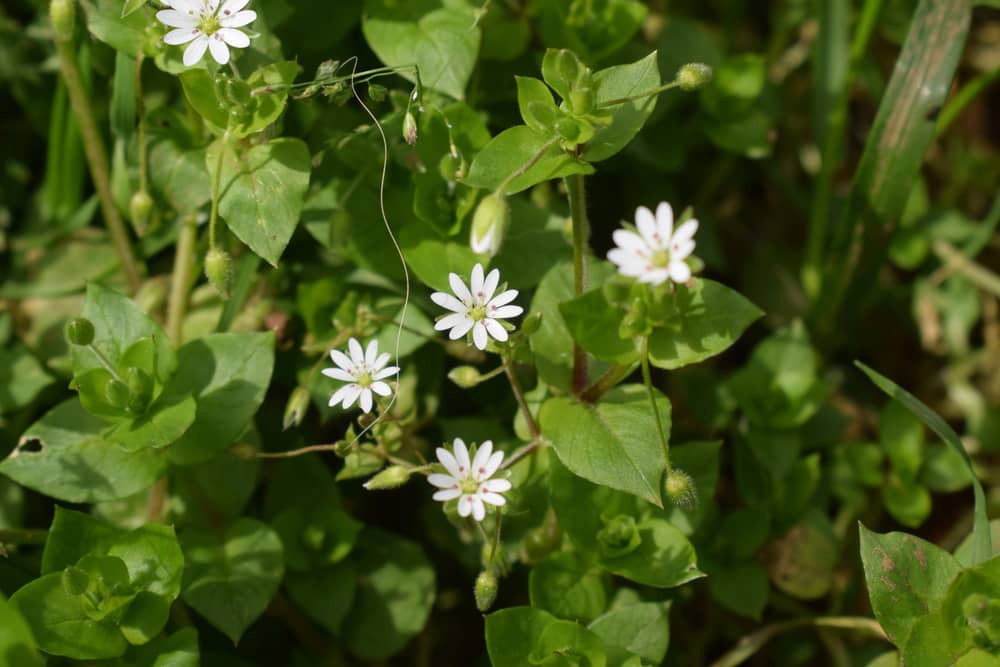
Use Chickweed Pre-Emergent
One of the most effective ways to prevent chickweed is to apply a pre-emergent weed control product in the fall. Pre-emergents work by creating a chemical barrier that stops weed seeds from germinating.
Apply it before the seeds sprout, usually in late fall or early spring. Some standard pre-emergent weed controls for chickweed prevention include products with prodiamine or atrazine. Atrazine is best for St. Augustine and centipede grass lawns.
Overseed with Thicker Grass Varieties
Introducing thicker, more competitive grass varieties can help crowd out chickweed. Consider overseeding with warm-season grasses like bermuda or zoysia, which form dense turf that leaves little room for growing weeds. A well-established lawn naturally prevents weed growth by blocking light and limiting space.
How do I prevent chickweed? - Answered
To prevent chickweed, maintain a healthy lawn by mowing regularly, watering deeply but infrequently and fertilizing appropriately. Conduct a soil test to ensure your grass gets the nutrients it needs. Aerate and dethatch your lawn to reduce thatch buildup, and hand-pull any small chickweed patches early.
For added protection, apply a pre-emergent weed control product in the fall to stop chickweed seeds from germinating. Additionally, overseeding with thick grass varieties can help crowd out chickweed naturally.