Choosing between coated and uncoated grass seed quietly affects moisture, coverage and early growth in ways most people never see. Grass seed success depends on more than just watering and timing. The way a seed is built affects how it handles moisture, soil contact, spreader application and early growth.
That is where the choice between coated and uncoated grass seed matters.
Both options can produce a healthy lawn. The difference is how they behave once they leave your hand or spreader and hit the soil. Understanding that behavior helps you choose the option that fits your lawn conditions, equipment and expectations.
Why Grass Seed Fails More Often Than People Think
Most grass seed problems show up before you ever see green growth. Seeds can dry out too quickly, wash away, get eaten or fail to make consistent contact with the soil.
None of that means the seed itself is bad. It means something in the process worked against it.
In many cases, failure comes down to operational issues during planting or early care, including:
- Uneven spreader settings that leave bare or overcrowded areas
- Inconsistent watering during the first two weeks
- Seeding into soil that was not loosened or prepared properly
- Applying seed right before heavy rain or strong wind
- Mowing too soon or walking on newly seeded areas
Environmental factors add another layer of complexity:
- Soil texture that drains too quickly or holds too much moisture
- Sloped areas where seed shifts before it can settle
- Wind that moves lighter seed after application
This is why two lawns seeded the same day with the same grass type can produce very different results.
Coated and uncoated seeds are designed to respond to these conditions differently, which is why understanding the role of the coating matters.
What Seed Coatings Are Designed to Solve
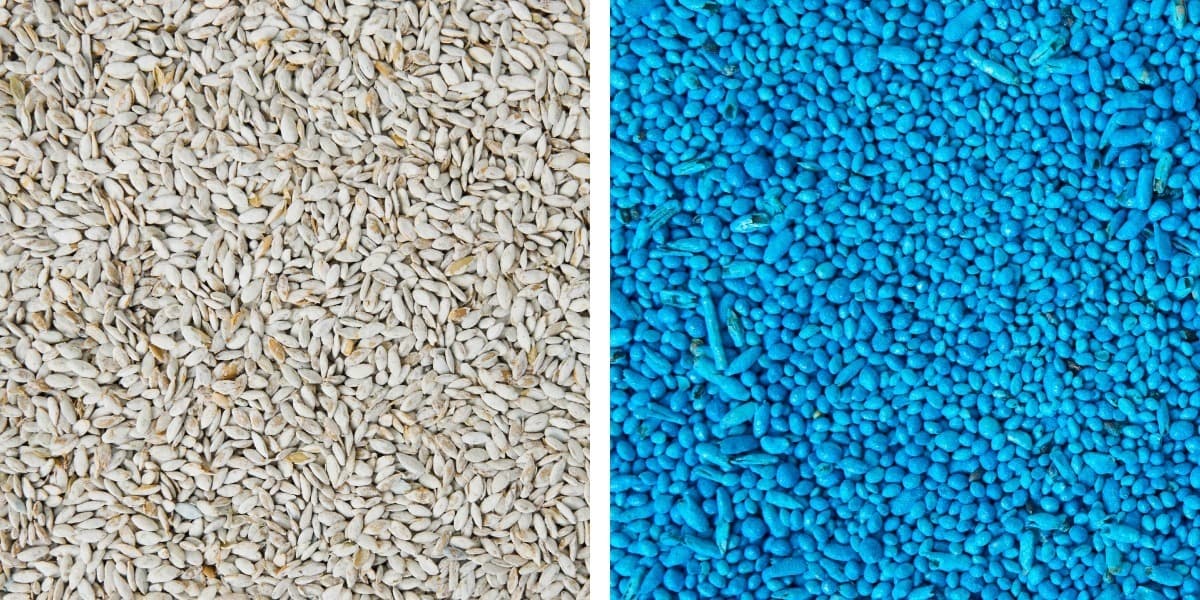
When you buy coated grass seed, you are not just buying seed. You are buying extra weight, added nutrients, and a protective layer that changes how that seed behaves once it hits the soil.
That coating is designed to make the early stages of seeding more forgiving.
In practical terms, coated seed helps address:
- Uneven application, since the added size improves spreader flow
- Moisture challenges, by helping the seed retain water longer
- Early nutrient needs, supporting initial root development
- Seed movement, reducing how easily seed is blown or washed away
This is especially useful for warm-season grasses like centipede grass, which establish best when moisture and soil contact remain consistent.
For example, Santee Centipede Grass Seed is coated to support rapid establishment and early root development, helping the seed stay in place and germinate more uniformly during the critical first weeks after planting.
In short, coatings are designed to support consistency when conditions or application methods are less than perfect.
When Coated Seed Can Make Things More Complicated
Where Uncoated Seed Often Performs Better
Uncoated grass seed offers simplicity and flexibility.
Because the seed is smaller and lighter, you are spreading more individual seeds per pound. This can be useful when overseeding or filling thin areas where dense coverage matters.
Uncoated seed flows easily through most spreaders and is often easier to calibrate for precise application. For experienced applicators or controlled conditions, that predictability is a benefit.
In environments where moisture is reliable and soil contact is easy to maintain, uncoated seed can establish just as successfully as coated seed without the added variables of size and weight.
Uncoated seed does not lack performance. It simply relies more on the surrounding conditions being managed well.
How to Decide Based on Your Lawn
The right choice comes down to how your lawn behaves, not which option sounds better.
Coated seed may be the better fit if you are dealing with:
- Sloped or uneven terrain
- Inconsistent watering
- Sandy or fast-draining soils
- Broadcast seeding with standard spreaders
Uncoated seed may make more sense if you are:
- Overseeding an existing lawn
- Working with precise application equipment
- Confident in consistent moisture management
For homeowners establishing or repairing centipede grass lawns, a coated option like Santee Centipede Grass Seed can help support uniform germination and strong early growth, especially in challenging conditions.
Both coated and uncoated grass s