
Sod Installation Guide
Whether you're doing sod installation on your lawn yourself, or using a professional, it's helpful to know what's involved.
Whether you’re doing sod installation on your lawn yourself, or using a professional, it is helpful to know what is involved.
If you choose to have a sod installation company install your sod, it is good to have an idea of what the installers should be doing so you know how to choose the right installation company for you. Make sure you review everything with your landscaper to avoid issues or dead grass in the future. You can request a free quote to get a better idea of what you will be paying for. When comparing quotes, be sure that both companies are providing the same level of service.
Steps at a glance
- Test the Soil (30 min)
- Choose the Grass (30 min)
- Measure (30 min)
- Kill and Remove Old Grass (1 hr)
- Prep Soil and Level (1 hr)
- Lay and Roll Out New Sod (2–4 hrs)
- Water and Fertilize (30 min)
Materials
- Soil Analysis Kit (optional)
- Sod Cutter, Roto-tiller, or Glyphosate
- Top Soil
- New Lawn Starter Box
- Sod Knife or Landscape Edger
- Sod Roller (optional)
Step-by-step
Step 1: Test the Soil
The first step we recommend is testing your soil—before you apply chemicals to kill off your old grass and before you install the new sod. Your soil’s health is what determines the overall health of your grass. Working from the ground up is the best way to ensure superior grass quality.
Be sure to check out our article on How to Test Your Soil for more information on soil tests.
Step 2: Choose a Grass
Selecting the kind of turfgrass you want in your lawn is probably one of the most enjoyable parts. You don’t want to just pick a grass that is aesthetically appealing to the eye though—make sure the grass you select fits the environment and climate you live in and matches the right amount of maintenance and time you want to put into it. Here is a list of some things to do and think about before selecting a new turfgrass:
- Research the area and climate you are located in.
- Familiarize yourself with the different grass characteristics.
- Understand the visual differences between grass colors, textures and other physical aspects.
For more information on the different types of grasses, visit our grass varieties.
Step 3: Measure Your Planting Area
The third step involves finding out how much sod you will need to order. One of the most efficient tools available for measuring outdoor spaces is the Area Calculator Tool. This tool helps you understand how much sod you will need to purchase.
- Start by entering your address.
- Draw an overlay shape for where you plan to install new sod.
- You can now move forward with this square footage number and request a free quote.
Step 4: Kill and Remove Old Grass
Before you install new sod, it is important to clear the area of any currently existing grass, vegetation or debris in the area you want to replace with new sod. If you are removing grass, we recommend following these steps:
- Begin by making an application of a glyphosate-based product 10–14 days before sod installation takes place.
- Wait 3–4 days and then make a second application if the grass isn’t dying quickly enough.
- Once your grass is dead, use a sod cutter or roto-tiller to remove the top layer of grass and debris.
We have a few product recommendations and rental locations for roto-tillers and sod cutters on our Sod Installation Tools page to get you started with sod removal equipment.
Step 5: Prep Soil and Level
Proper site preparation makes it easier for new grass roots to penetrate deeply and evenly. Deep roots will make the lawn more dense and drought resistant, allowing for more efficient use of water and nutrients. A dense lawn will outcompete weeds and resists insects and disease a little better. Follow these steps to begin prepping and leveling your soil:
- Reduce compacted soil with a rake or hoe.
- Pull up or add organic matter.
- Smooth out the soil’s surface to get a visual for how leveled your yard is.
- Wait for rain or irrigate with a sprinkler to help settle the soil a little more.
- Smooth the soil’s surface one last time.
Step 6: Lay and Roll Out New Sod
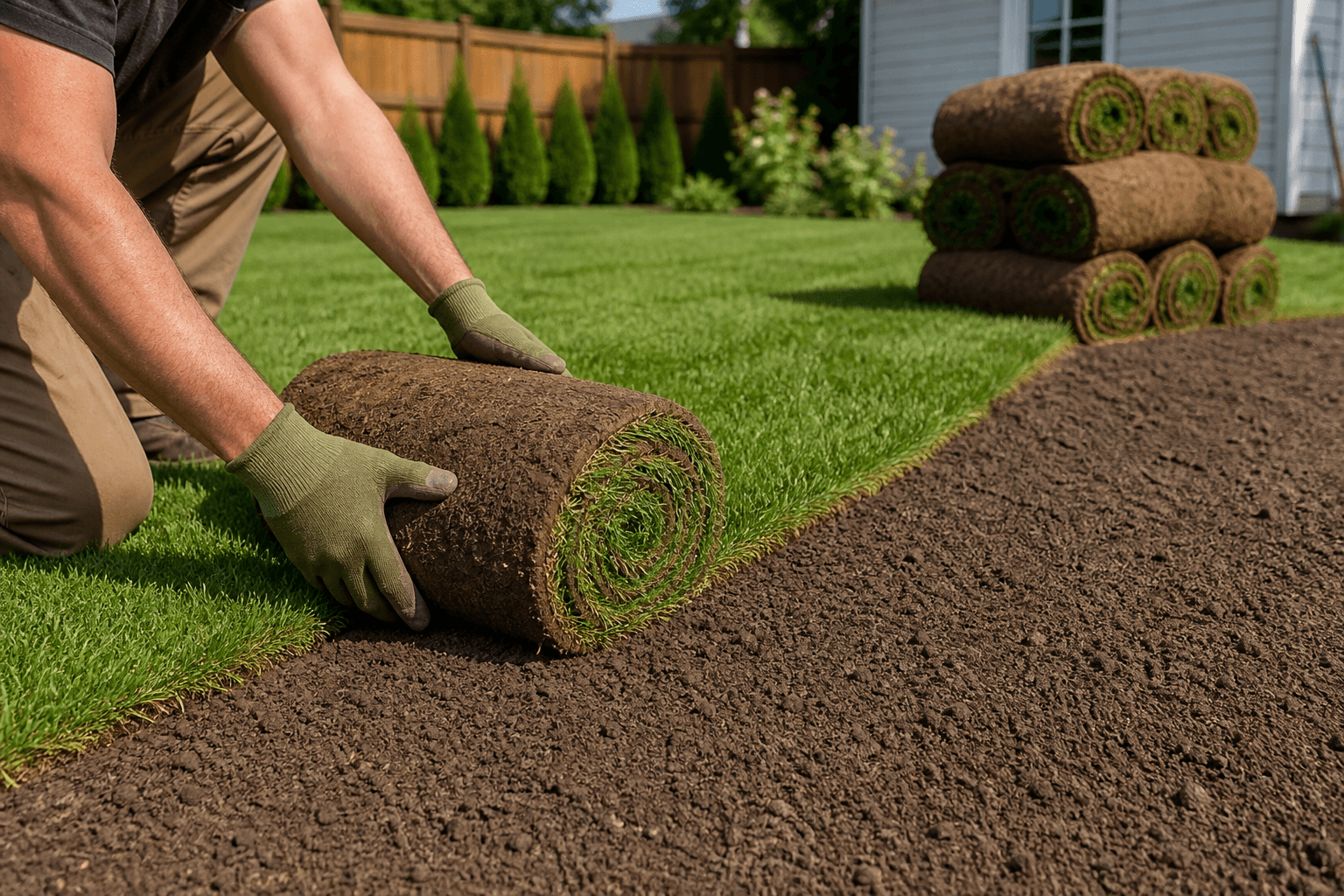
Once you have done all of the preparation work, it is now time to have your sod delivered and installed. Be sure to have the grass off the pallet and in your lawn in 48 hours or less. When laying out the new sod, it is recommended to follow these tips:
- Plan on where the sod will be delivered and place it in a convenient location in your yard.
- Use wagons or wheelbarrows to help transport slabs to where you’re working as you move around.
- Plan on having the appropriate amount of people handy to help out with labor.
- Have the right hand tools, such as a utility knife box-cutter, to cut oddly shaped pieces to fit around curbs or other landscaping.
- Use a brick pattern when laying, with offsetting seams.
- Use a landscape edger or machete to cut around corners and at the edges.
- Place the pieces together as tightly as possible to prevent weeds from pushing through the seams and to retain moisture.
Once installed, the grass should be rolled for smoothness. The Lawnifi New Lawn Starter Box will help give your lawn the nutrients it needs for establishment. You can read more about some handy tips when laying your new sod in our Tips for Your Next Sod Job article.
Step 7: Water and Fertilize
During sod installation, it is essential that turf be watered thoroughly. Soak upon installation as water is needed to keep your grass from drying out. Select a fertilizer that provides the necessary nutrients your soil may need according to the soil analysis results you should’ve received by now. We recommend using Lawnifi Grow as a part of the New Lawn Starter Box applied at ½ rate on your already-installed turf. Grow promotes healthy root growth of newly installed grass by providing nutrients like phosphorus, potassium and carbon. The soil should be moist three to four inches deep. Overwatering for an extended period of time, however, will severely damage the turf, inducing disease and rotting roots.
Congratulations on your new lawn!